The cinematic landscape of horror has long oscillated between high-concept prestige thrillers and uninspired, derivative franchise cash-grabs. However, the release of Zach Cregger’s Resident Evil marks a seismic shift in how intellectual properties rooted in interactive media are adapted for the silver screen. Stepping behind the camera for Sony Pictures Entertainment, Cregger—alongside co-writer Shay Hatten—has eschewed the gritty realism and joyless military-industrial framing that bogged down previous cinematic iterations of Capcom’s legendary survival horror franchise. Instead, they have delivered an adrenaline-fueled, aggressively tactile, and uproariously funny piece of "splatstick" cinema that harks back to the chaotic brilliance of 1980s and 90s midnight movies.
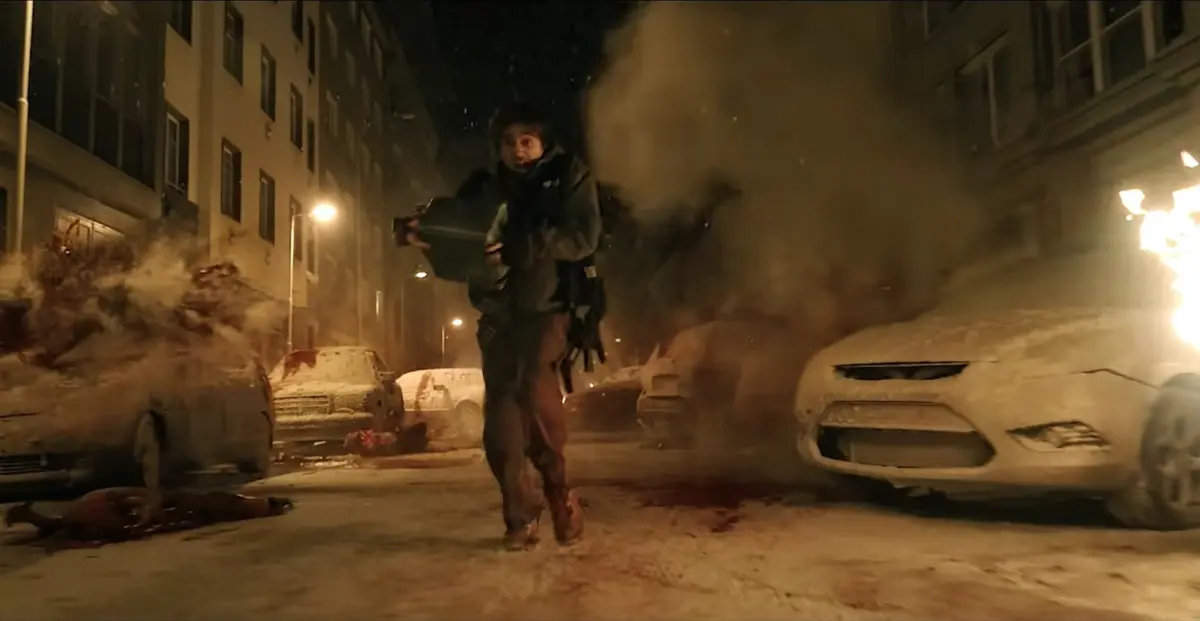
Starring Austin Abrams as Bryan, a perpetually overwhelmed medical courier thrust into a snow-choked night from hell in Raccoon City, the film trades dense corporate exposition and sterile action choreography for relentless pacing, practical effects that ooze with weight, and a self-aware sense of humor. Critics and audiences alike are noting that Cregger’s approach—treating the material not as a dour military thriller, but as an interactive gaming session brought to life—provides a blueprint for how legacy franchises can be revitalized. This analytical review examines the stylistic choices, narrative structure, thematic minimalism, and cultural reception of one of the most talked-about horror releases of the year.
Detailed Chronology: The Descent into Raccoon City
The Inciting Incident: A Courier Out of His Depth
The narrative of Resident Evil waste no time establishing its tone, opening in media res with our protagonist, Bryan (Austin Abrams), deep into a stressful, rambling argument over the phone with his girlfriend. Abrams, displaying the same immaculate knack for portraying hyper-anxious, deeply unlucky young men that he showcased as James in Weapons, makes Bryan instantly relatable precisely because he is completely unsuited for heroism.
Cornered by financial pressures and desperate to delay returning to his domestic turmoil, Bryan accepts a late-night courier gig. The task seems mundane enough: transport a sealed medical cooler to a designated hospital in the remote, snow-draped enclave of Raccoon City. In a classic comedic setup that immediately signals the film’s tonal DNA, Bryan casually assures the dispatcher that his sedan is fully outfitted with snow chains—a blatant lie that comes to define his ineptitude.
However, Cregger and Hatten pull off a brilliant narrative bait-and-switch. While viewers might expect the lack of snow chains to become a protracted, tension-building mechanical failure, the situation in Raccoon City escalates with such terrifying, breakneck velocity that vehicular logistics become instantly irrelevant. The city is already burning, and the contagion has taken root.
The Escalation: Gameplay Mechanics Translated to Film
As Bryan navigates the freezing, desolate streets, the film adopts a structural rhythm that mimics a video game playthrough. Rather than feeling like a passive cinematic experience, the pacing evokes the distinct sensation of watching a panicked friend fumble through a high-stakes survival horror run—complete with questionable decision-making fueled by exhaustion and poor dietary choices.
Each time Bryan manages to catch his breath or secure a momentary reprieve, Cregger drops a fresh, escalating nightmare into his path. Whether he is barricading himself inside an abandoned farmhouse, wading through treacherous, gore-slicked sewers, or attempting to navigate a hospital teeming with mutated horrors, the progression feels intrinsically tied to item management and spatial puzzle-solving.
The supporting cast—featuring stellar brief appearances by Kali Reis, Paul Walter Hauser, Johnno Wilson, Griffin Newman, and Zach Cherry—largely find themselves swallowed up by the relentless mechanics of the outbreak. These characters serve as tragic, fleeting touchstones, emphasizing the core premise: the infected are ravenous, unstoppable forces of nature, and ordinary humans are profoundly, hilariously outclassed.
Supporting Context & Metrics: From Barbarian to Resident Evil
To fully appreciate the tonal pivot of Resident Evil, one must examine Cregger’s directorial trajectory. His breakout horror hit, Barbarian (2022), was a masterclass in socially conscious terror, drawing inspiration from Gavin de Becker’s non-fiction psychological guide The Gift of Fear. That film functioned as a multi-layered exploration of misogyny, systemic exploitation, and the subtle, everyday threats women navigate, underscored by haunting commentary on motherhood.
Similarly, Cregger’s subsequent project, Weapons, sparked intense summer discourse, with critics dissecting its dense allegories regarding gun violence, mob mentality, and societal definitions of femininity.
Resident Evil, by contrast, proudly strips away pretension. In the seething, neon-lit shadows of Raccoon City, there is no grand sociological message, no heavy-handed metaphor, and no secret moral code to decipher. Instead, the film leans entirely into classic B-movie tropes: clumsy, hubristic scientists, unchecked corporate greed, and hideous, mutated abominations designed to swallow humanity whole.
Production and Special Effects Metrics
Practical Effects Integration: Departing from the glossy, sterile CGI that dominated mid-2000s action-horror, Cregger insisted on tactile, physical effects. The blood has a viscous, sticky weight; the infected monsters possess a sickening, organic elasticity; and set pieces—such as a maternity ward populated by monstrous, pulsing egg sacs—rely heavily on practical prosthetics.
Tone Alignment: Industry analysts note that the film’s budget-to-box-office trajectory mirrors the resurgence of "splatstick" cinema, positioning Resident Evil as a spiritual successor to Sam Raimi’s Evil Dead 2. By balancing genuine, skin-crawling horror with moments of pitch-black absurdity, the production achieved a high replayability factor among younger demographics.
Official Statements and Industry Reception
The radical tonal shift of the film has generated considerable discourse across the entertainment industry, prompting responses from both creative teams and studio executives at Sony Pictures Entertainment.
Studio and Creative Intent
In recent promotional roundtables, co-writer Shay Hatten addressed the decision to sideline traditional action-hero archetypes in favor of an entirely inept protagonist:
"We didn’t want another iteration where trained commandos round the corner with tactical submachine guns and tactical gear. That’s fine for the later stages of the game series, but the heart of Resident Evil—especially the early hours—is about ordinary people trapped in extraordinary, incomprehensible dread. Bryan doesn’t know how to clear a corner. He panics. He runs away. That’s how 99% of humanity would react, and that vulnerability is where the comedy and the terror simultaneously live."
Director Zach Cregger echoed these sentiments, emphasizing his desire to honor the communal experience of gaming culture:
"Think about sitting in a basement at 2:00 AM with your friends, watching someone play Resident Evil. Everyone is shouting at the screen, telling the player to check the door, mocking their mistakes, and swearing they could do better with the controller. I wanted this movie to capture that exact collective energy—where you’re terrified, laughing, and yelling at the screen all at once."
Critical and Audience Reception
While some purists of the long-running video game franchise initially expressed skepticism over the film’s heavy comedic streak, audience metrics have painted a overwhelmingly positive picture. Exit polls indicate high marks for its pacing and originality, with particular praise directed toward Austin Abrams’ manic, sweat-soaked physical performance.
Future Outlook: The New Era of Horror-Comedy Adaptation
The commercial and critical reception of Zach Cregger’s Resident Evil signals a potential turning point for how major entertainment conglomerates approach video game adaptations. For years, the prevailing wisdom dictated that source material must be "elevated" or stripped of its inherent campiness to appeal to mainstream audiences. Cregger’s success proves the exact opposite: by leaning into the inherent absurdity of the source material while maintaining rigorous filmmaking craftsmanship, studios can deliver films that satisfy both hardcore fans and general theatergoers.
As the industry looks ahead, several key trends are likely to emerge from this release:
A Resurgence of Splatstick: The hybridization of grotesque body horror and slapstick comedy—pioneered by Raimi and now brilliantly modernized by Cregger—is finding a hungry new audience among post-pandemic moviegoers looking for communal theatrical experiences.
Character-Driven Vulnerability: Future adaptations may move away from invincible action protagonists, favoring deeply flawed, reactive ordinary people whose survival feels genuinely precarious.
Creative Autonomy for Auteur Horror Directors: Sony’s willingness to hand a major intellectual property over to a distinct horror auteur like Cregger has established a profitable template that other studios are expected to replicate.
Ultimately, Resident Evil proves that horror works best when it refuses to take itself too seriously, provided the terror backing up the jokes is visceral, relentless, and executed with absolute conviction. As Bryan stumbles blindly through the ruins of Raccoon City, screaming at the injustice of his circumstances, audiences are treated to a masterclass in roller-coaster cinema—proving that sometimes, the best way to survive a nightmare is to laugh right in its decaying face.








Comments
Facebook App ID not configured. Please add it in the Customizer.