
Executive Overview
The modern e-reader landscape is defined by a continuous struggle between hardware longevity and software relevance. For years, users of compact, monochrome e-readers have faced an inevitable expiration date dictated by operating system deprecation. As major mobile application developers phase out support for legacy Android iterations—most notably Android 11—compact devices risk becoming isolated islands, cut off from essential updates for modern reading, note-taking, and productivity apps.
Onyx Boox is directly challenging this paradigm with the rollout of Firmware Update 4.2.2.
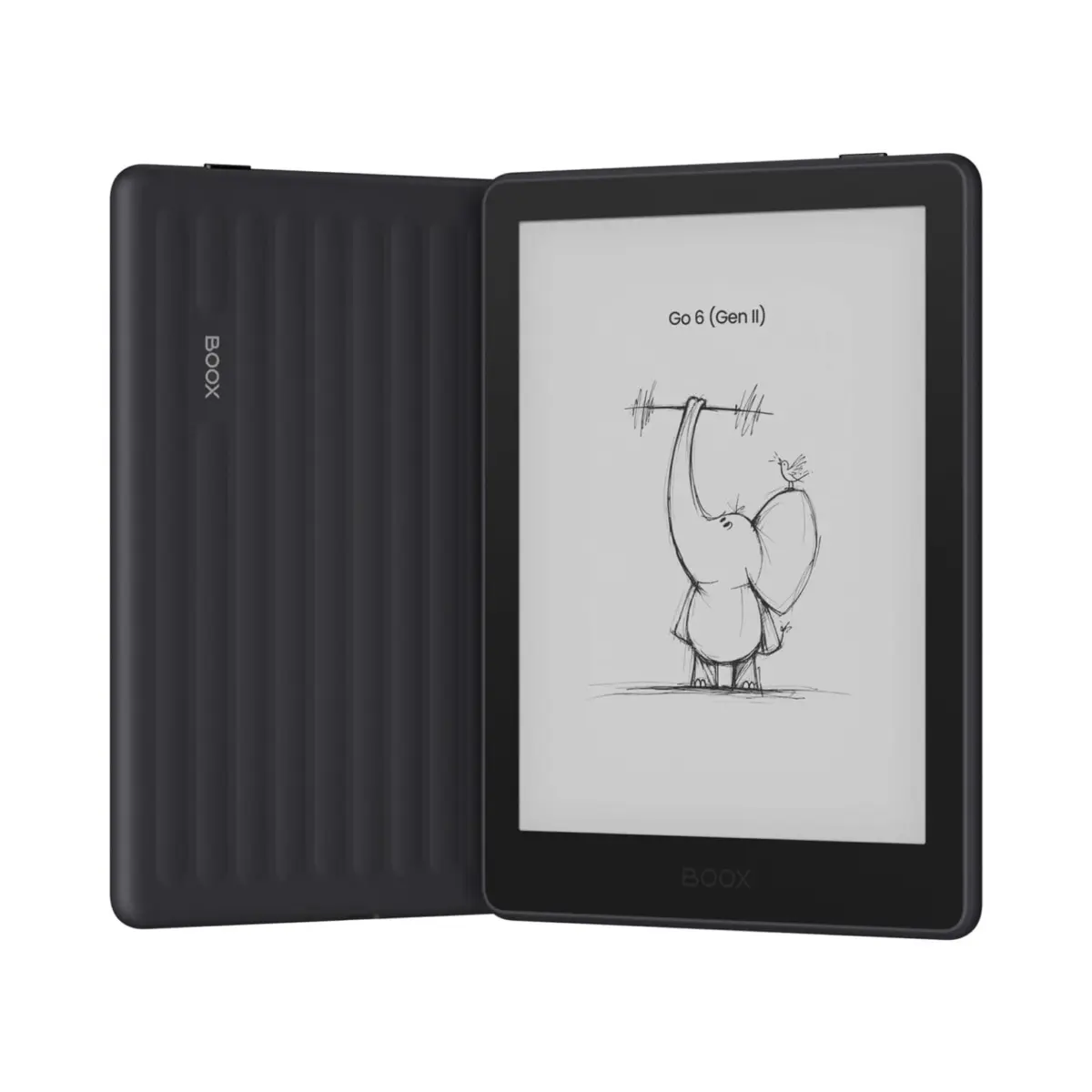
Spearheaded by the deployment to the BOOX Go 6 (Gen 2), this major software update introduces an official operating system upgrade to Android 13, bringing it in line with the broader, feature-rich v4.2 firmware series. For a device initially shipped with Android 11, this transition is more than a routine patch; it represents a generational leap in software security, application compatibility, and system optimization.
Read Also
Beyond the underlying OS upgrade, Firmware 4.2.2 introduces a suite of advanced productivity enhancements. These include native integrations with Google Calendar, Microsoft Outlook, and CalDAV, a revolutionary continuous-scrolling writing surface, an innovative categorized template store, and enhanced third-party app optimization tools. Concurrently, the update supercharges system-level performance with accelerated PDF rendering, smoother page-turn transitions, and a more capable, context-aware AI assistant.
This report provides an in-depth investigative analysis of the Firmware 4.2.2 rollout, examining how the software breathes new life into the BOOX Go 6 (Gen 2)—a hardware marvel that packs robust modern internals into a dedicated 6-inch Carta 1300 form factor.
Detailed Chronology: The Evolution to Firmware 4.2.2 and Android 13
The Legacy Challenge: Outgrowing Android 11
When compact e-readers launched with Android 11, the operating system was more than adequate for running basic e-reading applications and lightweight tools. However, the software ecosystem moves at a relentless pace. By 2025 and 2026, major application developers—spanning cloud storage providers, productivity suites, and reading ecosystems—began deprecating support for Android versions older than Android 13.
For users of the BOOX Go 6 (Gen 2), this created an impending bottleneck. Despite featuring snappy octa-core processors and ample RAM, devices anchored to Android 11 faced compatibility warnings, broken API integrations, and an inability to install the latest versions of indispensable third-party apps. Onyx Boox recognized that hardware-level excellence is meaningless if the software architecture cannot keep pace with modern digital workflows.
The Development and Rollout of the v4.2 Series
The architectural groundwork for this transition was laid during the development of the v4.2 firmware series. Onyx engineering teams focused heavily on bridging the gap between open-Android flexibility and e-ink display constraints. E-ink screens—reliant on electrophoretic displays that shift pigment particles rather than emitting light pixels—require fundamentally different rendering pipelines than traditional LCD or OLED panels.
The v4.2 series targeted three core pillars:
- App Clarity and Rendering: Introducing finer configuration codes and advanced image smoothing algorithms to make standard Android applications legible and crisp on monochrome E Ink screens.
- System Responsiveness: Overhauling core components to drastically reduce latency during PDF loading and page transitions.
- Ecosystem Integration: Expanding native syncing capabilities to bridge the hardware gap between local storage and cloud-based organizational tools.
The Milestone Release for the BOOX Go 6 (Gen 2)
The culmination of these engineering efforts is Firmware Update 4.2.2. By bringing Android 13 to the BOOX Go 6 (Gen 2), Onyx Boox has effectively future-proofed a device that occupies a unique niche in the market: a dedicated, pocket-sized, non-note-taking 6-inch e-reader that still demands the horsepower and app versatility of an open-Android tablet. As the update rolls out over-the-air (OTA), users are experiencing a seamless migration that preserves their personalized setups while unlocking modern security patches, improved memory management, and expanded app compatibility.
Comprehensive Feature Breakdown: What Firmware 4.2.2 Delivers
Firmware Update 4.2.2 is not merely a background version increment; it packs a dense array of user-facing features and under-the-hood performance optimizations.
1. Unified Productivity: Calendar and Cloud Integrations
One of the standout additions in this update is deep, native integration with major scheduling ecosystems, including Google Calendar, Microsoft Outlook, and standard CalDAV protocols.
Historically, managing schedules on a dedicated e-reader required clunky workarounds or web-browser access. Firmware 4.2.2 changes this by allowing users to:
- View daily, weekly, and monthly schedules directly within the device interface.
- Add real-time reminders and tasks on the fly.
- Create calendar events straight from handwritten notes, bridging the gap between unstructured brainstorming and formal time management.
2. Expanded Writing Surfaces and the New Template Store
Even though the BOOX Go 6 (Gen 2) is primarily marketed as a dedicated reading device rather than a primary digital notebook, the underlying Onyx software architecture shares DNA with its larger writing-focused siblings.
- Continuous Vertical Scrolling: Users engaging in marginalia, scrapbooking, or quick notes benefit from a continuous, vertically extending writing surface. Adjustable page boundaries eliminate the cramped feeling of fixed-page sizes, accommodating long-form entries, complex diagrams, or vertical charts without interruption.
- Categorized Template Store: Finding the right grid, Cornell note layout, or to-do list format is now easier than ever. The updated firmware introduces a dedicated template store complete with visual previews. Once selected, downloaded templates automatically sync across devices via the user’s Onyx Cloud account, ensuring a uniform note-taking environment regardless of which BOOX device is in hand.
3. Advanced Third-Party App Optimization
Running standard Android applications on an E Ink screen has always presented visual challenges due to ghosting, contrast mismatches, and poor scaling. Firmware 4.2.2 introduces sophisticated fine-tuning configuration codes and advanced image smoothing options.
Users can now customize how individual third-party apps render text and graphics. By applying specific configuration profiles, applications designed for vibrant color displays are automatically adjusted for high-contrast monochrome rendering, ensuring crisp typography, readable UI elements, and minimal visual artifacts.
4. Performance Enhancements and AI Integration
Under the hood, the v4.2.2 update streamlines system operations to deliver noticeable speed improvements:

- Faster PDF Loading: Heavy academic papers, graphic novels, and scanned documents open with significantly reduced lag, thanks to optimized memory caching and rendering pipelines.
- Smoother Page Transitions: Ghosting is mitigated through smarter refresh algorithms, resulting in fluid transitions whether turning pages in a novel or scrolling through a news feed.
- Next-Generation AI Assistant: The built-in AI assistant has been upgraded to handle more complex queries. Users can now highlight specific blocks of text or select vector images within documents and prompt the AI to summarize, translate, or extract key data points in real time.
Hardware Spotlight: Inside the Onyx Boox Go 6 (Gen 2)
To truly appreciate the impact of Firmware 4.2.2, one must examine the physical vessel that houses it. The Onyx Boox Go 6 Gen 2 is a masterclass in compact, distraction-free reading hardware.
| Hardware Specification | Detail / Metric |
|---|---|
| Display Technology | 6-inch HD Carta 1300 E Ink monochrome panel |
| Resolution & PPI | 1448 × 1072 resolution at 300 PPI |
| Screen Construction | Flush with the bezel, protected by a durable layer of glass |
| Illumination System | Dual-tone front light (Warm and Cool lighting adjustments) |
| Color Variants | Plum, Shell, Stone, and Custard |
| Processor | 2.0 GHz Octa-core processor |
| Memory (RAM) | 3GB LPDDR4X |
| Internal Storage | 32GB eMMC |
| Expandable Storage | MicroSD card slot (supports high-capacity cards) |
| Connectivity | Dual-band Wi-Fi (2.4GHz + 5GHz), Bluetooth 5.0 |
| Audio & Voice | Built-in microphone; Bluetooth support for audiobooks, music, and podcasts |
| Physical Ports | USB Type-C (Data transfer and charging) |
| Battery Capacity | 1500 mAh Li-ion Polymer |
Display Excellence: The Carta 1300 Advantage
The inclusion of a Carta 1300 panel sets the BOOX Go 6 (Gen 2) apart from older budget e-readers. Carta 1300 technology delivers a 20% improvement in response time and a noticeable boost in contrast ratio compared to older Carta 1200 or Pearl screens. Blacks are deeper, whites are cleaner, and text rendered at 300 PPI (1448 × 1072 resolution) appears virtually indistinguishable from high-quality laser print.
Protected by a flush glass layer, the screen offers a sleek, modern aesthetic while maintaining durability. Combined with adjustable front-lighting featuring both warm and cool LEDs, readers can fine-tune the color temperature to eliminate blue light exposure during late-night reading sessions. Furthermore, the device’s availability in four distinct colorways—Plum, Shell, Stone, and Custard—breaks away from the traditional monotony of black or white e-reader chassis, offering personalized style options for consumers.
Processing Power and Connectivity
While many 6-inch e-readers rely on underpowered, single-core or dual-core chips to conserve battery, the BOOX Go 6 (Gen 2) is driven by a robust 2.0 GHz Octa-core processor paired with 3GB of RAM. This processing headroom is precisely why the transition to Android 13 is so successful. Where lesser devices would choke on the background services of a modern operating system, the Go 6 handles multitasking, cloud syncing, and heavy app execution with ease.
Storage limitations are similarly mitigated. While 32GB of internal storage is more than sufficient for thousands of EPUBs, PDFs, and audiobooks, the inclusion of an SD card slot ensures that users with massive digital libraries can expand their storage limitlessly.
Wireless connectivity is equally comprehensive. Dual-band Wi-Fi guarantees fast downloads of large files and smooth web browsing, while Bluetooth 5.0 opens the door to wireless headphones and speakers for listening to audiobooks and podcasts. Uniquely for a compact e-reader, the inclusion of a built-in microphone allows users to engage in voice-based communication, participate in Discord channels, or send voice notes via WhatsApp directly from the device. Powering this entire ecosystem is a reliable 1500 mAh Li-ion Polymer battery, optimized by Android 13’s advanced Doze mode and background process restrictions to deliver exceptional standby times.
Supporting Context & Market Metrics
The launch of Firmware 4.2.2 for the BOOX Go 6 (Gen 2) arrives at a critical juncture in the broader consumer electronics and e-reader market. Industry metrics and consumer trends highlight why this software update is generating significant interest among digital reading enthusiasts.
The Shift Toward Open-Ecosystem Versatility
According to recent market analysis reports by digital publishing and consumer hardware research firms, the demand for open-Android e-readers has grown by over 35% year-over-year. While walled-garden ecosystems (such as Amazon Kindle or Kobo) dominate mass-market fiction consumption, power users, students, and professionals increasingly favor devices that allow side-loading, multi-store app access (e.g., Google Play Books, Libby, Hoopla, Kindle, and Kobo apps all on a single device), and customized document management.
However, the Achilles’ heel of open-Android e-readers has historically been software abandonment. Manufacturers frequently launch devices with an operating system that becomes obsolete within two to three years. Onyx Boox’s aggressive rollout of Android 13 to mid-tier and compact devices like the Go 6 establishes a new benchmark for software support longevity in the E Ink sector.
Ergonomics and the Revival of the 6-Inch Form Factor
In an era where larger 7.8-inch, 10.3-inch, and 13.3-inch e-readers and e-note devices dominate review headlines, the 6-inch category experienced a temporary eclipse. Consumers gravitated toward screen real estate for note-taking and PDF markup.
Yet, the market is witnessing a strong counter-trend: pocketability and true portability. Users want a distraction-free device that fits effortlessly into a jacket pocket, a small purse, or a travel bag. The BOOX Go 6 (Gen 2) addresses this demand head-on. By combining a featherlight 6-inch Carta 1300 display with high-end internal specifications and an upgraded Android 13 operating system, Onyx proves that consumers do not need to sacrifice processing power or modern app compatibility to enjoy a truly portable reading experience.
Future Outlook: What Firmware 4.2.2 Signals for the E-Reader Industry
As Firmware 4.2.2 continues its over-the-air deployment across compatible Onyx Boox devices, the industry is watching closely. This update serves as a case study in how hardware manufacturers can maximize product lifecycles through proactive software engineering.
1. Raising Consumer Expectations for Software Support
Historically, e-reader purchasers expected zero major OS upgrades during a device’s functional life. A device bought on Android 10 or 11 stayed on that version until hardware failure. By delivering an upgrade spanning multiple major OS generations (Android 11 to Android 13) on a compact, dedicated reader, Onyx Boox is shifting consumer expectations. Future buyers will increasingly demand clarity on software roadmap support before investing in open-Android hardware.
2. The Convergence of Reading and Productivity
The boundary between "pure reading" devices and "productivity tools" continues to blur. Even though the BOOX Go 6 (Gen 2) lacks an active stylus layer for digital note-taking, the integration of Google Calendar, Outlook, CalDAV sync, and AI-assisted document querying transforms it from a passive consumption tool into an active personal management node. Users can review complex documents, schedule their day, and sync notes across cloud ecosystems from a device small enough to hold in one hand.
3. Anticipating Firmware 4.3 and Beyond
Industry insiders speculate that the v4.2 firmware series serves as the foundational testing ground for even more ambitious software paradigms. As artificial intelligence models become lighter and more efficient, further integration of local and cloud-based AI agents into E Ink interfaces is all but guaranteed. Future updates are expected to refine real-time translation, context-aware document summarization, and adaptive refresh rate management, further narrowing the gap between traditional LCD tablets and energy-efficient E Ink displays.
Conclusion
Firmware Update 4.2.2 is far more than a routine maintenance patch for the BOOX Go 6 (Gen 2). By bridging the chasm from Android 11 to Android 13, Onyx Boox has rescued a stellar piece of pocket-sized hardware from the threat of software obsolescence.
Coupled with cutting-edge productivity integrations like Google Calendar and Outlook sync, continuous-scrolling writing surfaces, advanced third-party app rendering tools, and an upgraded AI assistant, the update redefines what users can expect from a 6-inch monochrome e-reader. Anchored by a brilliant Carta 1300 display, a speedy octa-core processor, expandable storage, and thoughtful aesthetic options, the BOOX Go 6 (Gen 2) running Firmware 4.2.2 stands as a formidable achievement in modern mobile engineering—proving that ultimate portability and cutting-edge software capability can, in fact, coexist in the palm of your hand.



Comments
Facebook App ID not configured. Please add it in the Customizer.