
Executive Overview
The global art and cultural ecosystem stands at a volatile crossroads. From high-stakes legal battles over Nazi-looted masterpieces in European courtrooms to sweeping federal budget cuts and ideological debates threatening the autonomy of local scenes, the cultural sector is facing unprecedented pressures.
In this comprehensive special report, we examine the intricate web of contemporary art world developments. At the forefront is a contentious restitution lawsuit unfolding in Paris regarding a 1902 Camille Pissarro painting, which highlights the deeply complex—and often contradictory—nature of modern provenance claims, third-party corporate representation, and jurisdictional disputes.
Simultaneously, milestones in representation are being forged; in the Philippines, Imelda Cajipe Endaya has shattered a historic glass ceiling, becoming the first woman to receive the prestigious Order of National Artists for Visual Arts. Yet, even as artistic milestones are achieved, systemic threats loom large. In Berlin, government officials are issuing strict warnings regarding arts funding and the systematic exclusion of minority artists. In the Philippines, creative coalitions are mobilizing against techno-industrial expansions, while in Colombia, hundreds of cultural workers have taken to the streets to protest crippling budgetary rollbacks.
Read Also
Finally, as architectural expansions redefine Swiss museum spaces—exemplified by Atelier Peter Zumthor’s sweeping new additions to the Fondation Beyeler—the Parisian real estate market is testing fate itself. On the historically troubled Île Seguin, a new contemporary art center, Le Large, prepares to open its doors, quite literally battling alleged curses and corporate ghosts to establish a foothold in a notoriously unforgiving landscape.
Detailed Chronology: Untangling the Provenance of a Pissarro
The Sale and the Suit
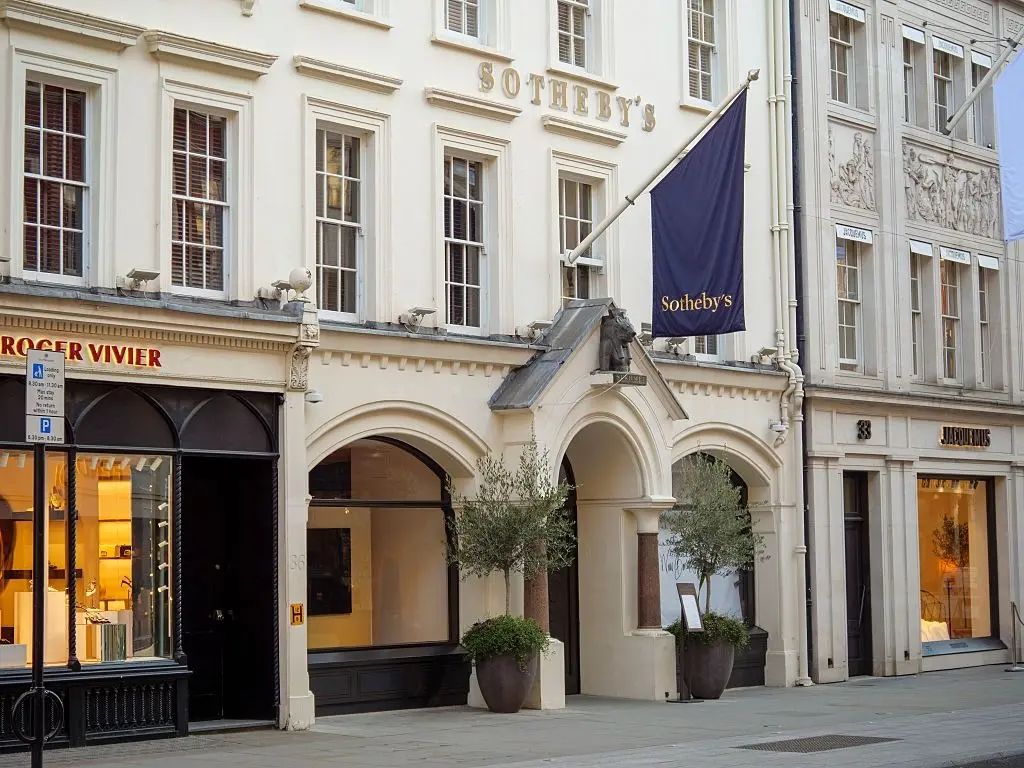
The legal architecture of art restitution is rarely straightforward, but the ongoing battle over Camille Pissarro’s 1902 canvas, Darse de pêche et bassin Duquesne (Fishing Dock and Duquesne Basin), has introduced unprecedented layers of procedural confusion. Descendants of the Jewish art collector Salomon Flavian have formally petitioned a Paris court to annul the London-based Sotheby’s auction of the painting, which took place on June 25, 2024. The plaintiffs argue unequivocally that the work was systematically looted by the Nazi regime, stripping their family of rightful heritage.
However, the litigation has fractured the family’s united front and drawn intense scrutiny toward third-party restitution brokers. According to filings revealed by The Art Newspaper, Sotheby’s defense team asserted that two other relatives of Salomon Flavian—individuals notably absent from the current roster of plaintiffs—had previously executed legally binding agreements waiving their ownership claims to the painting. These settlements were reportedly brokered and signed through the Toronto-based corporate entity Mondex Corporation, which acts on behalf of designated heirs.
Corporate Contradictions and Jurisdictional Paradoxes
The involvement of Mondex Corporation has introduced glaring contradictions into the legal record. While the company brokered financial settlements with a portion of Flavian’s heirs prior to the Sotheby’s auction—an action that inherently implies the family held a legitimate, actionable legal claim concerning Nazi-looted property—Mondex has simultaneously maintained in court documents that the painting was never actually looted by the Nazis. Legal experts note that this dual narrative creates a profound paradox: if the work was not looted, the premise for brokering financial compensation to heirs collapses; if settlements were justified, the denial of its provenance history undermines the credibility of the corporate brokers.
Adding fuel to the procedural fire, lawyers representing Sotheby’s have launched a parallel jurisdictional challenge. They argue before the Paris court that the French capital is entirely the wrong venue for the dispute. Because the auction transaction occurred in London, and given that the primary parties involved possess "no relationship with France," Sotheby’s defense contends that French courts lack both territorial competence and legal standing to adjudicate the matter.
As the legal teams trade briefs, the case serves as a cautionary tale regarding the perils of fragmented family representation, corporate restitution brokering, and the transnational complexities of reclaiming cultural property in the twenty-first century.
Supporting Context & Metrics: Milestones, Architecture, and Institutional Expansion
Breaking the Glass Ceiling in Manila
While European auction houses grapple with the ghosts of World War II, historic strides in artistic recognition are occurring across the globe. In the Philippines, 77-year-old multi-disciplinary artist Imelda Cajipe Endaya has etched her name into the history books. As reported by ArtAsiaPacific, Endaya has been named a recipient of the Order of National Artists of the Philippines for Visual Arts—an honor established in 1972—making her the very first woman to achieve this distinction in the category.
+--------------------------------------------------------------------------+
|                  IMELDA CAJIPE ENDAYA: KEY MILESTONE                     |
+--------------------------------------------------------------------------+
| Award: Order of National Artists of the Philippines (Visual Arts)        |
| Year Established: 1972                                                   |
| Significance: First female recipient in the Visual Arts category         |
| Primary Mediums: Paintings, Prints, Installations                        |
| Thematic Focus: Gender inequality, labor struggles, migration,           |
|                 globalization, and social justice in the Philippines     |
+--------------------------------------------------------------------------+
For decades, Endaya’s oeuvre—spanning powerful paintings, intricate prints, and immersive environmental installations—has served as a visual chronicle of the socio-political struggles shaping the Philippines. Her work fearlessly confronts structural inequalities, probing deeply into the intersections of gender disparity, labor exploitation, migrant worker experiences, and the cultural fractures of globalization.
"People say I have just broken a glass ceiling," Endaya reflected in a formal statement following the announcement. "There should be more successful women artists after me." Her historic win underscores a long-overdue institutional recalibration within Southeast Asian arts infrastructure, signaling to younger generations of women practitioners that systemic barriers, while formidable, are increasingly susceptible to sustained creative resistance.
Architectural Harmony: The Fondation Beyeler Expansion
In Switzerland, the intersection of nature, architecture, and institutional curation has reached a breathtaking new peak. The renowned Fondation Beyeler has officially unveiled a major architectural expansion designed by the celebrated Swiss architectural firm Atelier Peter Zumthor.
The ambitious project introduces three distinct new buildings to the museum’s campus:
- A dedicated contemporary gallery space designed to accommodate large-scale installations and rotating exhibitions.
- A multi-functional cultural space engineered for community programming, lectures, and interactive public workshops.
- An administrative office building that streamlines internal operations while maintaining architectural continuity.
Complementing these built structures is an expansive landscape design encompassing approximately 108,000 square feet of newly cultivated gardens, meandering pathways, and verdant green spaces. Zumthor’s minimalist yet deeply atmospheric design philosophy ensures that the new additions converse seamlessly with the surrounding natural topography, offering visitors an immersive, contemplative environment where high modernism and botanical serenity intersect.
Official Statements & Policy Shifts: Funding, Tech, and Cultural Resistance
Berlin’s Funding Ultimatum
The geopolitical stability of urban arts funding is showing severe strain in Europe. In Germany, federal culture minister Wolfram Weimer has issued a stern, unequivocal warning regarding the distribution of public subsidies. Addressing a sweeping federal initiative designed to pump €2.9 billion ($3.3 billion) into Berlin’s cultural sector over the coming decade, Weimer declared that the state funds must not morph into "the financier of a cultural policy that threatens to systematically exclude Jewish artists."
The minister’s remarks highlight mounting anxieties within European institutional circles regarding ideological litmus tests, political censorship, and the rising tide of antisemitism within progressive cultural spaces. Weimer explicitly warned that federal subsidies could be entirely revoked from institutions or municipal projects that fail to guarantee an inclusive, pluralistic environment for creators of all backgrounds, setting the stage for a tense showdown between federal oversight authorities and municipal cultural administrators.
Grassroots Mobilization in the Philippines
Across the Pacific, artists, writers, designers, and cultural workers are organizing against the encroachment of corporate-technological mega-projects. A newly formed coalition in the Philippines has launched formal protests against the planned construction of a U.S.-led "Pax Silica" artificial intelligence manufacturing hub.
The coalition argues that the rapid, top-down imposition of massive tech infrastructure threatens indigenous lands, strains local resources, and sidelines community-led cultural preservation in favor of foreign corporate interests. The mobilization reflects a growing global sentiment among creatives demanding a greater voice in urban and regional planning, ensuring that digital "innovation" does not trample local heritage and ecological sustainability.
Grassroots Educational Resurgence in San Francisco
Amid structural instability within traditional arts education—highlighted by the high-profile closure of several historic art schools in San Francisco—independent, artist-led initiatives are aggressively filling the void.
- Present Company: Operating at the Headlands Center for the Arts in West Marin, this summer initiative has established a free, experimental platform for arts education.
- Southern Exposure: Located in the city’s vibrant Mission District, this nonprofit organization has rolled out innovative new educational programs that are not only tuition-free but actively provide financial stipends to participating students.
These grassroots interventions demonstrate the remarkable resilience of the Bay Area art community, proving that alternative pedagogies can thrive even as legacy institutions falter.
Budget Battles in Colombia
Latin America is similarly embroiled in fiscal warfare over cultural preservation. Earlier this week, hundreds of arts and culture workers flooded public spaces in Colombia to stage mass demonstrations against the national government’s legislative proposal to slash the federal culture budget by a staggering 30 percent. Protesters argue that such deep financial amputations will devastate regional theaters, community heritage centers, indigenous art programs, and independent publishing houses, effectively silencing the country’s diverse cultural voice at a time when creative expression is most urgently needed.
Future Outlook: Curses, Shamanism, and the Bet on Île Seguin
As the global art world navigates these complex legal, political, and architectural landscapes, Paris is preparing for a theatrical real estate gamble that blends high-end contemporary curation with ancestral exorcisms.
Next month marks the grand opening of Le Large, a brand-new contemporary art center situated on the Île Seguin—an island in the Seine River located a considerable trek west of central Paris. While the location holds immense geographic potential, its modern history is practically dripping with commercial failure. For decades, the island served as the sprawling industrial headquarters for Renault automobile manufacturing. However, following the carmaker’s departure in 1992, the land has suffered an uninterrupted string of abandoned real estate ventures and bankrupt cultural schemes.
Most famously, billionaire art collector François Pinault heavily promoted plans to build a monumental museum on the island before abruptly abandoning the project in frustration—a retreat that cemented the strip’s local reputation as a "cursed island" where cultural ventures go to die.
Determined to break the psychological and financial hex, Le Large founder, collector, and real estate developer Laurent Dumas took an unconventional approach to pre-opening preparations. According to an investigative feature by Le Monde, Dumas brought in a succession of spiritual practitioners—beginning with a Native American leader, followed by a traditional shaman, and culminating in a voodoo priest healer—to systematically cleanse the island and chase away any lingering malevolent corporate spirits.
"I’m extremely sensitive to spirit forces," Dumas candidly admitted to Le Monde.
The ultimate test of whether these spiritual interventions—or Dumas’s real estate acumen—have succeeded will arrive on October 17. On that date, Le Large will officially open its doors with its inaugural exhibition, Moteur imaginaire, curated by the internationally acclaimed curator Cecilia Alemani.
Whether Alemani’s curatorial vision or the preceding spiritual cleansings can finally breathe permanent life into the notoriously star-crossed Île Seguin remains to be seen. What is certain, however, is that as the international art sector grapples with restitution lawsuits, funding ultimatums, and systemic political shifts, the pursuit of culture remains an arena where history, finance, and human belief endlessly collide.


Comments
Facebook App ID not configured. Please add it in the Customizer.