
Executive Overview
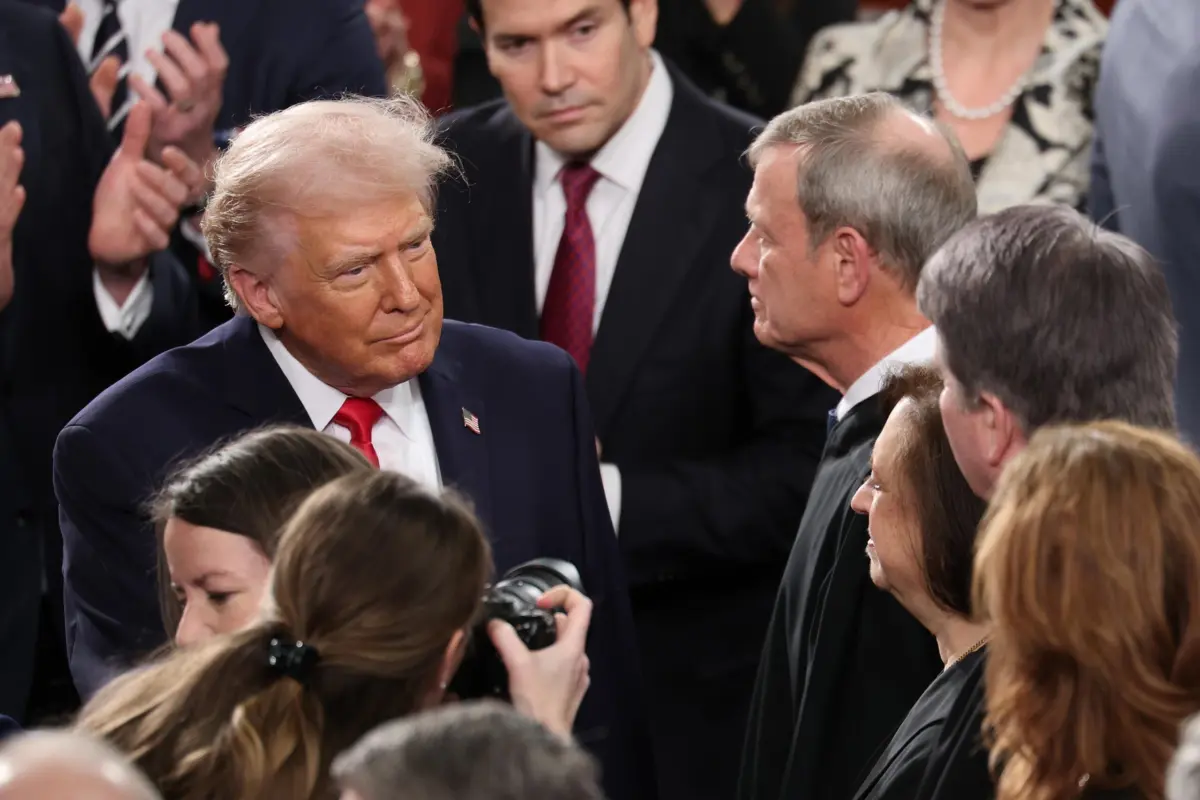
In a decision with sweeping implications for American democracy, the Supreme Court’s conservative majority has cleared the way for President Donald Trump’s controversial March executive order attempting to unilaterally rewrite federal election law. The high court’s ruling on Monday in Trump v. California temporarily stays lower court injunctions that had blocked the executive order, allowing the administration’s directives to go into effect while litigation grinds forward. All three of the court’s liberal justices dissented, warning of the immediate chaos the decision inflicts on state election officials and the integrity of the upcoming 2026 midterm elections.
The executive order touches on two critical pillars of election administration: the eligibility criteria for casting a ballot and the physical mechanics of mail-in voting. By reinstating the order, the Supreme Court has injected profound uncertainty into a nationwide voting apparatus already racing against the clock to prepare for November.
While the court’s majority stressed that the ruling reflects procedural technicalities—specifically that lower courts moved prematurely before administrative rules were fully finalized—the real-world impact is immediate. State and local election officials now face the daunting prospect of navigating vague federal threats of criminal prosecution alongside sudden, logistically impossible logistical mandates regarding mail-in ballot envelopes.
Read Also
Legal scholars, voting rights advocates, and state administrators are left grappling with an unprecedented assertion of executive power that skirts the constitutional lines explicitly reserving election administration to the individual states. With challenges mounting rapidly in lower federal courts, the legal battle over Trump v. California is far from over, but the initial victory for the administration threatens to destabilize the 2026 midterms.
Detailed Chronology: From Executive Decree to Supreme Court Action
The genesis of this constitutional showdown traces back to March, when President Trump issued an executive order titled "Ensuring Citizenship Verification and Integrity in Federal Elections." The directive claimed sweeping executive authority to regulate aspects of federal voting procedures—an authority traditionally held by state legislatures and overseen by Congress under the Elections Clause of the U.S. Constitution.
Immediately following the order’s release, a coalition of states led by California, alongside various voting rights organizations, filed federal lawsuits. They argued that the directive represented an illegal executive overreach, violating the separation of powers and infringing upon core state sovereignty.
In the ensuing months, federal district courts moved decisively. Judges granted preliminary injunctions blocking the administration from enforcing the order, noting that the plaintiffs were highly likely to succeed on the merits of their constitutional claims. Judge Indira Talwani, among others, highlighted that the administration was attempting to wield administrative powers without any statutory delegation from Congress.
However, the legal timeline accelerated dramatically in late August:
- Friday: The United States Postal Service (USPS) formally published a new administrative rule implementing Section 3 of the president’s executive order. This rule established mandatory, federally controlled design elements and unique identifiers for all mail-in ballot envelopes, threatening to refuse delivery for any non-compliant mail.
- Over the weekend: The Trump administration’s Justice Department submitted a truncated, three-page supplemental brief to the Supreme Court, arguing that the newly minted USPS rule rendered prior lower court injunctions obsolete and justified emergency intervention.
- Monday: The Supreme Court’s Republican-appointed majority issued its decision in Trump v. California, granting the administration’s request to stay the lower court blocks. The ruling allows the executive order to take effect while litigation proceeds in the lower courts, though it leaves the door open for subsequent challenges once administrative records are more fully developed.
The Legal Fault Lines: Prosecutions, Lists, and Overreach
The legal dispute centers primarily on two distinct sections of the president’s March order, each raising profound constitutional questions.
Section 2: The Threat of Criminal Prosecution
Section 2 of the executive order is bifurcated, containing a pair of directives that critics argue must be read in tandem. The first provision commands the Department of Homeland Security (DHS) to compile and transmit to state chief election officials a list of individuals confirmed to be U.S. citizens over the age of 18 who maintain a residence within that state.
Standing alone, compiling an informational list of citizens might be viewed as a routine intergovernmental data-sharing exercise. However, the second provision of Section 2 orders the U.S. Attorney General to prioritize criminal prosecutions against:
"State and local officials or any others involved in the administration of Federal elections who issue Federal ballots to individuals not eligible to vote in a Federal election."
When read together, these provisions create a chilling coercive mechanism. State officials are implicitly threatened with federal indictment if they issue ballots to individuals whose names do not appear on the administration’s federally compiled list—even if those individuals are legally registered voters under state law.
In her stinging dissent, Justice Sonia Sotomayor wrote that the two clauses are inextricably linked. Citing established Supreme Court precedent, she warned that "people do not lightly disregard public officers’ thinly veiled threats to institute criminal proceedings against them if they do not come around."
Conversely, the court’s majority adopted a hyperliteral reading, noting that the text of the order does not explicitly mandate that states use the DHS list, nor does the directive for DOJ prosecutions explicitly reference that list. Nevertheless, the majority did not affirm that the Constitution permits the executive branch to create an exclusive federal voter list and prosecute state officials who deviate from it. Instead, the conservative justices held that a pre-enforcement challenge was premature: DHS must first compile its list, or DOJ must actually initiate a prosecution, before courts can step in.
This middle-ground holding leaves the chilling effect entirely intact. State officials, facing the prospect of felony indictments for simply doing their jobs, are left in legal limbo.
Operational Chaos: The USPS Envelope Mandate
While Section 2 threatens election workers with criminal liability, Section 3 targets the mechanics of voting by mail—a method utilized disproportionately by Democratic and independent voters.
Section 3 commands the USPS to design a standardized envelope that all states must use when mailing ballots to voters, while simultaneously forbidding the postal service from delivering any ballots that fail to comply with these federal specifications. The Trump administration’s new rule requires specific, federally mandated design elements, including a standardized logo and a unique identifier for every single voter.
An Impossible Logistical Hurdle
The timing and logistics of this mandate threaten to break the machinery of election administration entirely:
- Purchasing Deadlines: Many states had already procured millions of specialized envelopes months in advance, conforming to their own state-specific election codes, long before the USPS published its formal rule on a Friday in late August.
- Manufacturing Backlogs: Printing, manufacturing, and distributing truckloads of customized envelopes nationwide cannot be accomplished overnight.
- Statutory Deadlines: Several states, such as North Carolina, face statutory deadlines requiring them to begin mailing out absentee and mail-in ballots as early as the end of next week.
For states that conduct elections almost entirely by mail—where in-person voting centers serve merely as a backup—the enforcement of the USPS rule could render a timely election physically impossible. These states lack the physical infrastructure, poll worker networks, and electronic voting machine capacity to pivot to an entirely in-person election on such short notice.
Despite these catastrophic logistical realities, the Supreme Court’s majority ruled that the lower courts acted prematurely because the USPS had not yet finalized its formal rule at the exact moment those injunctions were initially issued. Now that the rule is officially live, lower courts are expected to review it anew, but the interim disruption has already occurred.
Supporting Context & Metrics: The Stakes of Mail-In Voting
To understand the political and systemic gravity of the Trump v. California ruling, one must examine the demographic and operational footprint of mail-in voting in the United States.
- Partisan Disparities: Statistical data from recent election cycles demonstrates that Democratic voters are significantly more likely to cast their ballots by mail than Republican voters, who historically favor in-person voting on Election Day. Consequently, systemic bottlenecks or disruptions targeting mail-in ballots inherently skew the electoral playing field.
- Scale of Vote-by-Mail: According to data compiled by the National Conference of State Legislatures (NCSL), states with all-mail election systems or extensive absentee voting protocols process tens of millions of ballots annually. Disrupting the envelope supply chain affects upwards of one-third of the total electorate in several key battleground states.
- The Legal Vacuum: As federal judges have pointed out, there is no existing federal statute that explicitly delegates authority to the USPS to regulate the substantive content or design requirements of state-administered mail-in ballots. The administration’s legal defense relies instead on broad, vague statutory language granting the Postal Service general authority to deliver the mail—a flimsy foundation upon which to build a sweeping structural overhaul of state election laws.
Future Outlook: What Lies Ahead for the 2026 Midterms
The Supreme Court’s intervention on Monday is not a final validation of President Trump’s executive order; rather, it is a procedural reset that clears the administrative board for the next round of legal sparring.
Federal district judges who previously blocked the order have already signaled willingness to review the newly finalized USPS regulations and the updated administrative record. If—as legal experts anticipate—lower courts issue fresh injunctions blocking both Section 2’s prosecutorial threats and Section 3’s envelope mandates, the dispute will inevitably find its way back to the Supreme Court’s docket.
For now, however, election administrators across the country are caught in an untenable whipsaw. Facing tight deadlines, conflicting federal directives, and the looming shadow of criminal liability, state officials must make immediate operational decisions without knowing whether the rules governing their elections will hold up in court tomorrow.
As the nation approaches the 2026 midterms, Trump v. California stands as a stark reminder of the fragile boundary separating federal administrative authority from state sovereignty—and the profound risks when those boundaries are tested in the heat of an election cycle.


Comments
Facebook App ID not configured. Please add it in the Customizer.