
Executive Overview
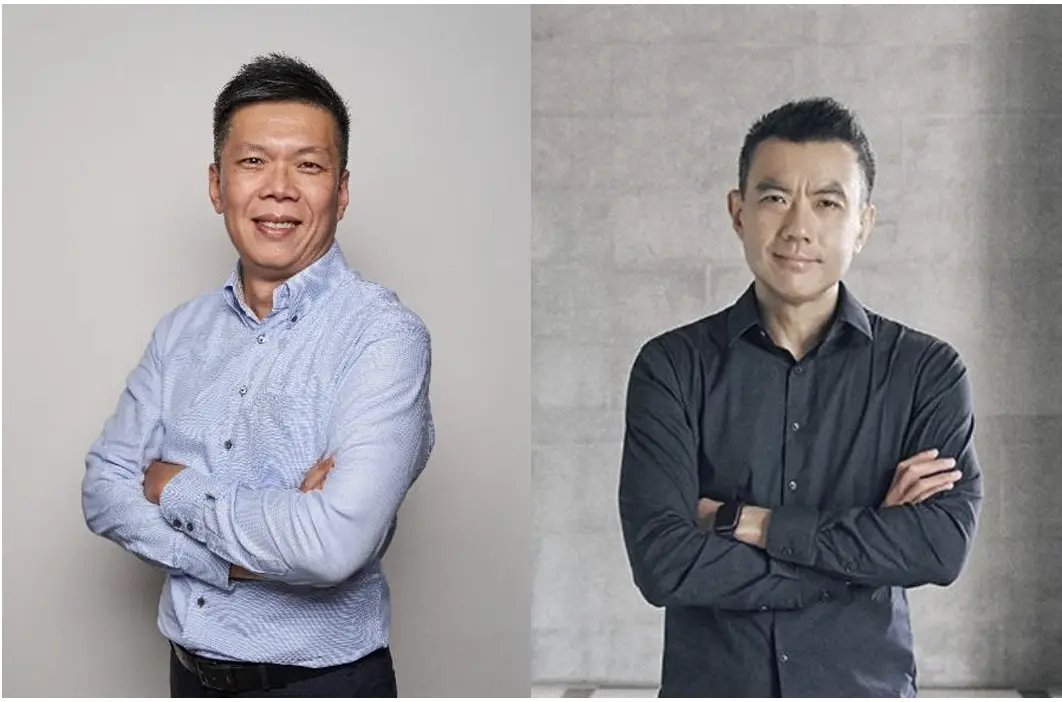
In a monumental development for the cultural landscape of Southeast Asia, the dual-leadership tenure of Dr. Eugene Tan at the apex of Singapore’s visual arts ecosystem is drawing to a close. Effective January 1, 2027, Dr. Tan will relinquish his shared responsibilities as Chief Executive Officer and Director of both the National Gallery Singapore (NGS) and the Singapore Art Museum (SAM). Moving forward, he will concentrate his visionary leadership exclusively on SAM, an institution he has steered since 2018.
Succeeding him at the National Gallery Singapore as Chief Executive Officer will be Chng Hak-Peng, a distinguished arts administrator, former corporate strategist, and veteran executive of the Singapore Symphony Orchestra (SSO). The leadership transition is structured to ensure continuity and strategic stability across both institutions. Beginning October 1, Chng will assume the mantle of CEO-Designate, working alongside Dr. Tan in a deliberate three-month overlap designed to facilitate a seamless handover of operations, institutional knowledge, and long-term planning frameworks.
This strategic pivot marks the end of an era defined by administrative unification. For years, Dr. Tan’s dual leadership has acted as a powerful synergistic force, closely aligning the programmatic visions of two of the region’s most influential cultural powerhouses. However, as both the National Gallery Singapore and the Singapore Art Museum mature into distinct global heavyweights, museum boards and stakeholders have agreed that the scale and ambition of each institution now demand dedicated, singular executive focus.
Read Also
Despite the administrative separation, leadership from both museums has issued joint reassurances confirming that their deep-rooted collaboration and resource-sharing initiatives will persist. The transition underscores Singapore’s ongoing evolution as a premier global hub for arts, culture, and heritage, balancing institutional expansion with seasoned leadership capable of navigating an increasingly complex international cultural economy.
Detailed Chronology of the Transition and Leadership Evolution
The impending January 2027 handover is the culmination of months of strategic foresight by the boards of directors governing Singapore’s premier visual arts institutions. To understand the gravity of this transition, one must examine the timeline that shaped modern Singaporean museology and positioned both NGS and SAM for their next chapters of growth.
The Era of Dual Leadership (2018–2026)
Dr. Eugene Tan’s stewardship of Singapore’s visual arts infrastructure reached a historic milestone in 2018 when he assumed directorship of the Singapore Art Museum, building upon his already substantial responsibilities as the Director of the National Gallery Singapore. Tasked with managing two monumental cultural institutions simultaneously, Dr. Tan orchestrated an era of unprecedented cooperation. Under his watch, NGS cemented its reputation as a global custodian of Southeast Asian modern art, while SAM underwent a physical and conceptual reimagining, expanding its footprint into neighborhood spaces and championing contemporary artistic practices across the region.
As the operational demands of both institutions grew exponentially—spurred by post-pandemic international tourism recoveries, major global exhibitions, and expanding permanent collections—the viability of a shared CEO model faced increasing scrutiny. By early 2025, discussions surrounding long-term succession planning crystallized into a concrete restructuring strategy. The governing bodies recognized that as NGS and SAM entered their respective strategic cycles for the late 2020s and 2030s, each required a dedicated executive captain to steer its unique mandate.
The Handover Roadmap: Q4 2026 and Beyond
To safeguard institutional stability, the leadership transition has been mapped out with meticulous precision:
- October 1, 2026: Chng Hak-Peng officially enters the organizational fold as CEO-Designate. This initiates a critical three-month transition window. During this period, Chng will work side-by-side with Dr. Tan, immersing himself in the governance structures, international partnerships, ongoing curatorial projects, and operational frameworks of the National Gallery Singapore.
- January 1, 2027: The formal transition takes effect. Dr. Tan steps down from his NGS duties to focus entirely on his role as Director of the Singapore Art Museum, steering SAM through its next phase of contemporary relevance. Simultaneously, Chng assumes full executive authority as the CEO of NGS.
- Post-2027 Strategic Horizon: Both entities have committed to maintaining collaborative frameworks, ensuring that joint acquisitions, traveling exhibitions, and shared educational initiatives continue without interruption.
Supporting Context & Metrics: Analyzing the Transitioned Leadership
To fully grasp the significance of this leadership shift, one must analyze the professional trajectories, institutional weights, and strategic metrics associated with both incoming and outgoing executives.
Dr. Eugene Tan and the Legacy of SAM and NGS
Dr. Eugene Tan is widely recognized as one of the most influential figures in contemporary Asian museology. Over his tenure, he has overseen the National Gallery Singapore’s transformation into an architectural and cultural marvel housed within the historic City Hall and Supreme Court buildings. Spanning 64,000 square meters, NGS holds the world’s largest public collection of modern art from Singapore and Southeast Asia, routinely partnering with international titan institutions such as the Centre Pompidou, Tate Britain, and the Musée d’Orsay.
By shifting his complete focus to the Singapore Art Museum in 2027, Dr. Tan will be able to dedicate his energies entirely to SAM’s distinct identity. SAM, historically Singapore’s first art museum dedicated to contemporary art, has spent recent years decentralizing its operations through its "SAM on the Street" and Tanjong Pagar Distripark spaces. Dr. Tan’s ongoing leadership at SAM ensures that its avant-garde programming, community-centric engagement, and exploration of pressing contemporary issues will continue under a steady, experienced hand.
Chng Hak-Peng: A Polymathic Leader for NGS
The selection of Chng Hak-Peng as the incoming CEO of the National Gallery Singapore introduces a fascinating profile to the visual arts sector. Chng’s career defies traditional bureaucratic molds, bridging the worlds of high-level management consulting, classical music administration, rigorous historical scholarship, and grassroots volunteerism.
Educational and Corporate Foundations
Chng’s academic foundation rests in the hard sciences; he studied electrical engineering at Stanford University, honing analytical and systems-level problem-solving skills. Following his formal education, Chng spent a decade at Bain & Company, one of the world’s leading management consulting firms. During his tenure at Bain, he developed expertise in organizational strategy, operational restructuring, and large-scale project management—skills that proved vital when he transitioned to the non-profit and cultural sectors.
The Singapore Symphony Orchestra (SSO) Tenure
Chng’s entry into cultural administration began in 2008 when he volunteered his time to advise the Singapore Symphony Orchestra on strategy and organizational design. His impact was immediate and profound. In 2011, he transitioned into formal leadership roles, serving as deputy chairman before stepping up as Chief Executive Officer from 2015 through 2022.
Under Chng’s executive leadership, the SSO achieved remarkable international acclaim. Notable milestones highlighted in his professional record include:
- Securing a prestigious third-place ranking in Gramophone magazine’s global "Orchestra of the Year" awards.
- Securing inclusion by BBC Music magazine in 2022 as one of the 21 best orchestras in the world.
- Expanding the orchestra’s digital footprint, audience outreach, and financial sustainability during a period of global economic volatility.
Deep Roots in the Visual Arts Community
Beyond his corporate and musical credentials, Chng possesses a deeply ingrained passion for the visual arts. For years, he has served as a longtime volunteer docent at local Singaporean museums, engaging directly with the public and bridging the gap between scholarship and accessibility. Furthermore, Chng’s commitment to historical research is evidenced by his ongoing doctoral studies in history at the National Museum of Singapore, positioning him as a rare hybrid executive who possesses both high-level business acumen and profound historical-cultural literacy.
Official Statements and Institutional Vision
The leadership changes were formally announced through a joint institutional statement, accompanied by personal reflections from the incoming and outgoing figures central to the transition.
Reflecting on the milestone, the governing boards of both the National Gallery Singapore and the Singapore Art Museum emphasized that the structural realignment is designed to maximize institutional potential. "As our museums enter their next decade of cultural impact, appointing dedicated executive leadership allows each institution to push the boundaries of its specific mission," the joint statement noted. "Dr. Eugene Tan’s extraordinary dedication has laid an unbreakable foundation of regional and international prestige. In Chng Hak-Peng, we have found an executive of exceptional caliber whose strategic vision, corporate discipline, and lifelong passion for the arts make him uniquely qualified to lead NGS into the future."
In his own remarks, Chng Hak-Peng expressed deep reverence for the path forged by his predecessors while outlining his expansive vision for the National Gallery Singapore:
"NGS has established itself as a leading visual arts institution in the region, uniquely positioned to tell the stories of Singapore and Southeast Asia through art. I hope to build on these strong foundations and continue the path forged by Eugene [Tan] and his predecessor, Chong Siak Ching. I look forward to working with everyone at NGS and across the visual arts community to build a Gallery that Singapore continues to love and be proud of."
Chng further articulated his core philosophy regarding the cultural sector, stating his desire to "strengthen the role that the arts play in our society." His emphasis on societal integration reflects a broader global shift in museology—moving away from elite, insular sanctuaries toward dynamic community hubs that actively participate in civic discourse, historical reconciliation, and contemporary identity-building.
Dr. Tan, while stepping back from his NGS duties, expressed enthusiasm for his upcoming chapter at SAM: "Leading both institutions has been an immense privilege and an extraordinary journey of growth. As SAM continues to redefine contemporary art engagement in unconventional spaces, having undivided focus on its mission will allow us to innovate further. I look forward to welcoming Chng Hak-Peng to the sector’s leadership circle and continuing our collaborative journey in service of Singapore’s vibrant arts ecosystem."
Future Outlook: The Next Chapter for Singaporean Museology
As the January 1, 2027 effective date approaches, the broader Southeast Asian art market and international cultural community are closely watching Singapore’s unfolding leadership narrative. The transition is not merely an administrative reshuffle; it represents a mature maturation of institutional governance within a city-state that has invested heavily in becoming the cultural capital of Southeast Asia.
Strategic Imperatives for National Gallery Singapore Under Chng
When Chng takes the helm of NGS as CEO, he will inherit an institution with formidable global reach, but also modern challenges. Among the key imperatives facing his administration will be:
- Deepening Regional Scholarship: Expanding international partnerships with galleries across ASEAN and beyond to ensure Southeast Asian art receives the global critical acclaim it deserves.
- Digital Innovation and Audience Diversification: Leveraging modern technological tools—ranging from immersive digital exhibitions to data-driven audience analytics—to engage younger, digitally native generations.
- Financial Resilience: Navigating fluctuating global economic climates through strategic philanthropic partnerships, corporate sponsorships, and sustainable revenue models.
The Symbiosis of NGS and SAM
Crucially, the explicit confirmation that NGS and SAM will continue to collaborate and share resources ensures that Singapore’s visual arts sector will not fracture into siloed competition. By maintaining fluid channels between modern historical collections (NGS) and contemporary, experimental practices (SAM), the two institutions will continue to offer visitors a comprehensive, 360-degree view of artistic production in the region.
Ultimately, the leadership transition set for 2027 symbolizes confidence, continuity, and ambition. By placing seasoned organizational architects like Chng Hak-Peng at the head of the National Gallery Singapore, and allowing Dr. Eugene Tan to concentrate his veteran curatorial vision on the Singapore Art Museum, Singapore is signaling to the global art world that its cultural institutions are poised for their next era of excellence.


Comments
Facebook App ID not configured. Please add it in the Customizer.