
Executive Overview
For centuries, historians have pored over the written legacy of Elizabeth I, hunting for the untamed, authentic "voice" of England’s legendary Virgin Queen. Among the most riveting artifacts of her reign are her fiery reprimands—missives written in blistering prose that tongue-lash rebellious favorites, condemn foreign rivals, and demand absolute compliance from the crown’s most powerful subjects. Yet, groundbreaking new research into more than 500 surviving scribal letters suggests that history has fundamentally misunderstood how these passionate documents were forged.
According to a detailed academic analysis spearheaded by early modernist researcher Clodagh Murphy as part of Leiden University’s prestigious "Feathers" project, Elizabeth’s secretaries played a far more active, creative, and manipulative role in drafting her correspondence than previously acknowledged. Rather than acting as passive transcribers of the monarch’s raw emotional states, senior officials—most notably Sir Francis Walsingham, Elizabeth’s principal secretary and spymaster—actively crafted, escalated, and occasionally fabricated the emotional tones of her letters.
This revelation fundamentally reshapes our understanding of Elizabethan politics. It challenges the long-standing, gendered trope of Elizabeth as a victim of her own "short temper" or female irrationality. Instead, the findings depict a calculated, highly strategic monarch working in tandem with a brilliant bureaucratic apparatus to weaponize emotion. By orchestrating specific rhetorical performances—ranging from white-hot fury to calculated nostalgia—Elizabeth and her advisers manipulated European politics, pressured political prisoners like Mary, Queen of Scots, and solidified the absolute authority of the Tudor state.
Read Also
/https://tf-cmsv2-smithsonianmag-media.s3.amazonaws.com/filer_public/41/c0/41c011a5-551b-4c52-a8c6-675129038507/elizabeth1illo.png)
Detailed Chronology: The Anatomy of a Collaborative State
To understand how the machinery of the Tudor secretariat operated, historians must look past the 3,000 surviving letters of Elizabeth I—the vast majority of which were penned not by the royal hand, but by trained scribes—and trace the complex paper trail of drafts, emendations, and final dispatches.
February 10, 1586: The Wrath of the Crown
On this winter day, Elizabeth I dispatched one of her most famous rebukes to her favorite and close confidant, Robert Dudley, First Earl of Leicester. Leicester had flagrantly disobeyed the queen’s military and political directives in the Netherlands, provoking a blistering royal response.
- The Text: "How contemptuously we conceive ourself to have been used by you," Elizabeth raged in the surviving copy. "We could never have imagined had we not seen it fall out in experience that a man raised up by ourself and extraordinarily favored by us above any other subject of this land would have in so contemptible a sort broken our commandment."
- The Hidden Hand: The sole surviving copy of this vitriolic message is not written in Elizabeth’s characteristic, hurried scrawl, but rather in the neat script of Francis Mylles, a servant to spymaster Francis Walsingham. While the original holograph is lost to history, the presence of Mylles’s hand confirms that the administrative apparatus of the state was deeply embedded in communicating what appeared to be deeply personal royal fury.
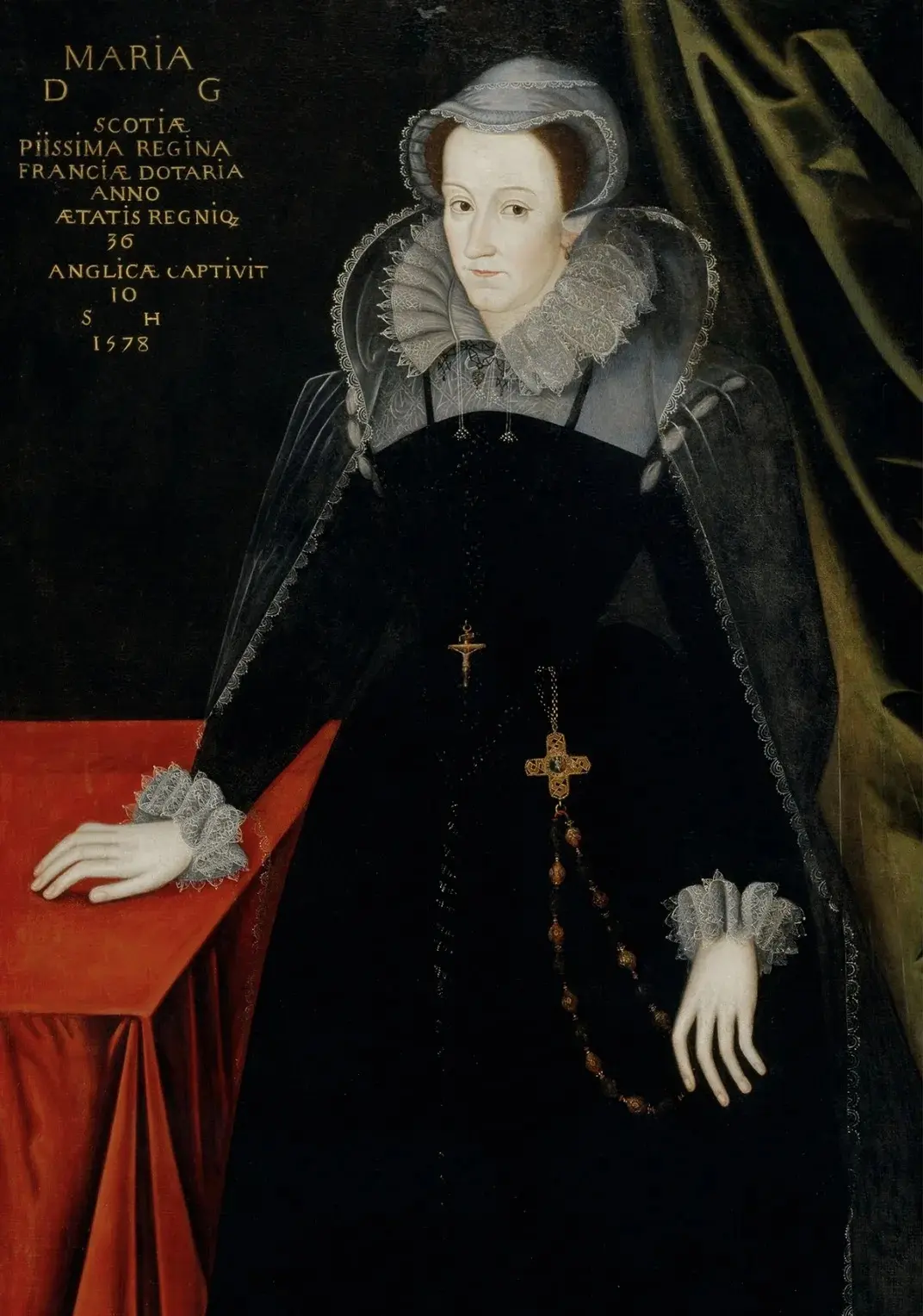
May 1584: Escalating Conflict with Mary, Queen of Scots
The collaborative manipulation of emotion becomes undeniably clear when tracking surviving manuscript drafts marked by Walsingham’s own quill. In May 1584, Elizabeth addressed George Talbot, Sixth Earl of Shrewsbury, the keeper of her perpetual security threat, Mary, Queen of Scots. The letter was deliberately designed to be read by Mary herself.
/https://tf-cmsv2-smithsonianmag-media.s3.amazonaws.com/filer_public/41/c0/41c011a5-551b-4c52-a8c6-675129038507/elizabeth1illo.png)
- The Content: Elizabeth lambasted Mary, declaring that she "shall never live to see those days that the crown of England shall depend upon the crown of Scotland." She also attacked Mary’s son, James VI of Scotland, claiming his governance was "seasoned with blood" following the execution of his regent.
- The Walsingham Edits: Archival recovery of the initial draft reveals extensive, heavy-handed edits written directly onto the manuscript by Walsingham. Rather than tempering the queen’s words—as standard early modern diplomatic protocol dictated secretaries should—Walsingham’s revisions intensified the hostility. Vocabulary matches strongly with Walsingham’s private papers, proving that the searing anger leaping off the page was, in structural composition, the spymaster’s creation.
October 1584: The Crafting of Conciliation
Several months later, Walsingham deployed the exact opposite emotional tactic using the royal pen. Writing to Sir Ralph Sadler, another custodian of Mary, Queen of Scots, Elizabeth’s correspondence took on a surprisingly warm, nostalgic tone.
- The Content: The letter referenced the "liking we had for a time" of Mary’s friendship and floated the possibility of "a thorough reconciliation."
- The Secretarial Addition: Long assumed by historians to be an authentic expression of Elizabeth’s shifting personal sentiments, the discovery of an overlooked, emendation-littered draft proves otherwise. The expressions of goodwill and nostalgia were entirely Walsingham’s additions, meticulously engineered to lull Mary into a false sense of security and dissuade her from active treason.
Supporting Context & Metrics: The "Feathers" Project and Early Modern Epistolary Culture
The revelations brought to light by Clodagh Murphy emerged from the Feathers project, an interdisciplinary research initiative led by early modern literature scholar Nadine Akkerman at Leiden University. The project ran with a specific mandate: to distinguish between authorial and scribal voices in collaboratively produced manuscripts dating from roughly 1500 to 1800.
Key Metrics and Contextual Data:
- Corpus Scale: Murphy’s study encompassed a rigorous textual and handwriting analysis of more than 500 distinct missives from Elizabeth I’s reign.
- Surviving Archive: Out of thousands of documents, approximately 3,000 letters attributed to Elizabeth I survive to this day. The vast majority are "scribal letters"—documents dictated or outlined by the monarch and written out by secretaries.
- The Role of the Secretary: In the early modern political ecosystem, secretaries were conventionally expected to employ formal, impassive language. They acted as a tempering influence, moderating the raw passions of their superiors to maintain diplomatic decorum. Walsingham’s active escalation of hostility and manufacture of warmth subverted these traditional bureaucratic norms entirely.
- Strategic Intent: By constructing an "angry" Elizabeth in correspondence with Shrewsbury, Walsingham signaled to Mary, Queen of Scots, that defiance carried zero reward. Conversely, by constructing a "nostalgic" Elizabeth in letters to Sadler, he dangled the prospect of royal favor to neutralize security threats.
Official Insights & Academic Perspectives
The traditional historiography surrounding Elizabeth I has long relied on anecdotes of her explosive temper. Contemporaries and later biographers frequently framed these outbursts as symptomatic of female irrationality or emotional volatility—a narrative weaponized within the patriarchal framework of sixteenth-century politics.
/https://tf-cmsv2-smithsonianmag-media.s3.amazonaws.com/filer_public/f5/62/f5622388-0439-4b79-beca-d41c0a82f9d2/sir_francis_walsingham_by_john_de_critz_the_elder.jpg)
However, modern scholarship is upending this monolithic view.
"As I unpicked these collaborations with her secretaries, I began to see that the voice we encounter in her letters is a carefully—and collaboratively—constructed rhetorical performance," explains Clodagh Murphy, author of the new research.
Rather than searching fruitlessly for an elusive "authentic" voice, historians are being forced to re-evaluate Elizabeth not as an emotionally unhinged ruler prone to fits of rage, but as a master strategist. She consciously utilized her secretariat as a creative sounding board and rhetorical amplifier.
/https://tf-cmsv2-smithsonianmag-media.s3.amazonaws.com/filer_public/dd/9a/dd9a419a-1e01-4a1d-89de-725b98a39a56/mary_queen_of_scots.jpg)
"Rather than search for Elizabeth’s authentic voice, we might instead appreciate her political savvy and willingness to incorporate the suggestions of her advisers—qualities of a strong monarch indeed," Murphy notes.
Sir Francis Walsingham—frequently remembered purely as a cold, calculating spymaster running an intelligence network of cut-outs and codebreakers—now emerges as a literary co-author of the Elizabethan age, shaping the emotional landscape of the English state’s foreign policy.
Future Outlook: Re-writing Tudor History
The findings published by Murphy via The Conversation and Leiden University open an exciting new frontier for early modern studies, manuscript analysis, and digital humanities.
/https://tf-cmsv2-smithsonianmag-media.s3.amazonaws.com/filer_public/53/ed/53ed0f00-36a0-4fee-8d24-9a1d07546fe7/elizabeth_i_armada_portrait_1.jpeg)
- Re-evaluating the "Author": As handwriting attribution technology and archival cross-referencing improve, historians will likely uncover similar hidden scribal hands across other European royal courts of the sixteenth and seventeenth centuries. The myth of the solitary monarch writing every word by candlelight is permanently shattered.
- Shifting Paradigms in Gender History: By proving that "female emotional outbursts" in state papers were frequently engineered by male bureaucrats, the research provides a vital corrective to historical misogyny. It demonstrates how political performance was decoupled from actual psychological state, revealing female sovereignty operating at its absolute peak of tactical brilliance.
- Deepening Archival Digs: Scholars are expected to return to neglected drafts, margin notes, and interlinear emendations across European archives. The focus will no longer be solely on what a final royal letter said, but on how it evolved through the collaborative crucible of the Tudor privy council.
Ultimately, the letters of Elizabeth I remain some of the most compelling documents in British history. But thanks to this deep dive into the hidden hand of her secretaries, we now see them for what they truly were: not merely windows into a queen’s passing moods, but masterclasses in state-crafted psychological warfare.



Comments
Facebook App ID not configured. Please add it in the Customizer.