
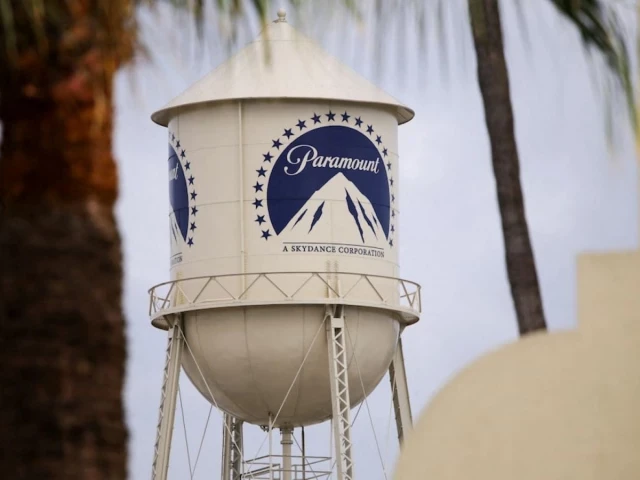
LOS ANGELES — In what will undoubtedly be recorded as a watershed moment in the annals of modern media history, Paramount Skydance officially finalized its monumental $110 billion acquisition of Warner Bros. Discovery on Tuesday. The historic transaction consummates one of the largest corporate consolidations ever witnessed, welding together an unmatched portfolio of century-old film studios, television networks, and streaming giants.
The newly minted conglomerate—operating simply under the banner of Skydance—places unprecedented control over the global entertainment apparatus into the hands of CEO David Ellison. By uniting the legendary creative vaults of Paramount Pictures and Warner Bros., the deal consolidates cinematic franchises that have defined pop culture for generations, ranging from Mission: Impossible and Top Gun to the Wizarding World of Harry Potter and the expansive stable of DC Studios characters.
Furthermore, the integration absorbs a vast constellation of news and entertainment networks, including CBS, CNN, Paramount+, and HBO Max, effectively establishing a vertically integrated colossus that spans theatrical distribution, linear television, prestige streaming, and global journalism.
Read Also
As the newly formed entity rings the bell at the New York Stock Exchange under the ticker symbol "SKYD," Hollywood is left bracing for a seismic shift. The transaction not only reshapes the competitive landscape against Silicon Valley tech giants and streaming incumbents like Netflix and Amazon, but it also forces a radical re-evaluation of how traditional media companies intend to survive the ongoing structural decline of cable television and the soaring costs of content production.
Executive Overview: A New Era of Studio Consolidation
The closing of the Paramount Skydance and Warner Bros. Discovery merger represents the culmination of months of tense corporate maneuvering, fierce bidding wars, and intense regulatory scrutiny. Valued at $110 billion, the transaction dwarfs many of the preceding media combinations of the streaming era, creating a multi-faceted entertainment enterprise designed to dominate every tier of the consumer wallet.
At the apex of this new empire is David Ellison, whose meteoric rise from independent film financier to the undisputed monarch of Hollywood has been executed in just over a decade and a half. Founded in 2010 with the backing of his billionaire father, Oracle co-founder Larry Ellison, Skydance initially built its reputation as a co-financier of reliable blockbuster entertainment for major studios, most notably backing the Tom Cruise vehicle Top Gun: Maverick.
However, the events of the past two years have signaled an aggressive escalation of ambition. Following its foundational merger with Paramount Global last year, Skydance immediately cast its sights on Warner Bros. Discovery, successfully navigating a protracted, multi-way bidding contest that reportedly saw fierce competition from streaming pioneer Netflix, alongside expressions of interest from industrial heavyweights like Comcast.
The union brings together disparate corporate cultures, massive balance sheets, and some of the most sensitive operational assets in global media. By retaining the "Skydance" corporate moniker—a decision Ellison defended as a way to preserve the historic integrity and individual brand identities of both the Paramount and Warner Bros. studio lots—the leadership team has signaled a desire to maintain legacy prestige while aggressively modernizing backend architecture.
Yet, the monumental scale of the merger brings an equally monumental set of challenges. The newly combined organization inherits a staggering debt load of approximately $80 billion. To service this debt, achieve profitability, and reassure Wall Street analysts, Ellison and his executive team have committed to a rigorous restructuring plan. This blueprint relies heavily on aggressive cost-saving measures, technological consolidation, and a dramatic ramp-up in theatrical output, all while navigating the fraught political and labor landscape of contemporary Hollywood.
Detailed Chronology: From Rumor to Reality
The path toward Tuesday’s closing bell was fraught with high-stakes corporate drama, complex legal battles, and regulatory obstacles that threatened to derail the mega-deal at multiple turns.
The Ascent of Skydance
Skydance’s journey to the center of the Hollywood power structure accelerated dramatically in August 2025, when it closed its $8 billion merger with Paramount Global. That transaction effectively swept away the remnants of the old Redstone media empire and placed David Ellison in the driver’s seat of a major legacy studio. Rather than resting, Ellison immediately identified Warner Bros. Discovery—which had been struggling under its own massive debt burden following the 2022 Discovery-WarnerMedia merger—as the ultimate target for scale.
The Bidding War and Regulatory Gauntlet
As whispers of a potential takeover leaked in early 2026, the media landscape erupted into a bidding contest reminiscent of the studio consolidations of the 1990s. Netflix, eager to secure a permanent supply of theatrical-grade intellectual property and production infrastructure, mounted a formidable counter-pursuit. Concurrently, rumors swirled regarding Comcast’s interest in picking apart pieces of the conglomerate.
Ultimately, Skydance’s financial structuring and strategic pitch won over the Warner Bros. Discovery board. As part of the final regulatory filings, Warner Bros. shareholders were awarded an additional $41.9 million in "ticking fees"—compensatory payments calculated based on the delayed timeline between the end of September and the official closing date.
The final hurdles, however, were not merely financial; they were legal and political. The merger required navigating a labyrinth of antitrust inquiries and labor negotiations. A critical turning point occurred in late September 2026, when Paramount successfully reached settlement agreements with a coalition of U.S. state attorneys general and Hollywood writers’ and crew unions. These settlements removed the primary legal roadblocks that could have otherwise trapped the deal in years of litigation.
With the regulatory path cleared—bolstered by a pledge to protect certain creative autonomies and address union concerns regarding automation and artificial intelligence—the final paperwork was signed, paving the way for Tuesday’s transition to the New York Stock Exchange.
Supporting Context & Metrics: Financial Projections and Restructuring Realities
While the creative possibilities of combining the worlds of DC Comics, Star Trek, Mission: Impossible, and HBO are vast, the cold calculus of Wall Street will ultimately determine the success or failure of the Skydance-Warner Bros. Discovery union.
Debt and Financial Performance
The newly combined company assumes a massive financial footprint, carrying approximately $80 billion in debt. This heavy liability places immense pressure on executive leadership to rapidly optimize cash flow from legacy cable networks while scaling up the streaming division and revitalizing box office performance.
Despite these liabilities, independent financial analysts have expressed cautious optimism regarding the company’s medium-term outlook. Equity research firm MoffettNathanson released robust projections following the merger’s completion:
- 2028 Projections: Forecasted revenues of approximately $67 billion, with an anticipated Earnings Before Interest, Taxes, Depreciation, and Amortization (EBITDA) of $16 billion.
- 2030 Projections: Anticipated revenue growth to roughly $70 billion, accompanied by an expanding EBITDA of $19 billion.
Cost Synergies and the Labor Landscape
To achieve these financial targets, Skydance has pledged to deliver $6 billion in planned cost savings. Crucially, corporate leadership has indicated that a substantial portion of these reductions will stem from "non-labour sources"—specifically, the technical integration of cloud providers and streaming architectures across platforms.
However, industry insiders and labor representatives remain deeply skeptical that workforce reductions can be entirely avoided. The consolidation of two massive corporate bureaucracies is widely expected to trigger widespread layoffs across Hollywood, affecting mid-level executives, marketing departments, and administrative personnel.
On the compensation front, regulatory disclosures revealed that CEO David Ellison will command an annual base salary of $5 million, paired with a target annual bonus of $5 million, reflecting the immense stakes tied to his performance.
Streaming and Theatrical Commitments
In an effort to reassure both creative talent and consumers, Skydance has outlined an aggressive content strategy:
- Streaming Convergence: The company plans to merge its primary direct-to-consumer platforms—namely HBO Max and Paramount+—into a single, unified streaming service, aiming to reduce subscriber churn and compete more effectively with the bundle offerings of Disney and the standalone scale of Netflix.
- Theatrical Output: In a direct rebuke to Silicon Valley’s prioritization of direct-to-streaming models, Skydance has pledged a robust theatrical release schedule. The studio has committed to releasing at least 30 films per year for the first two years following the merger, scaling up to 32 films per year for the subsequent three years. This guarantees that the combined enterprise will remain the single largest theatrical supplier to global cinema chains.
Official Statements and Leadership Structure
The monumental nature of the merger requires a steady, experienced hand to manage the day-to-day operations while Ellison focuses on high-level creative direction and long-term corporate strategy.
To achieve this balance, Ellison appointed former Mattel CEO Ynon Kreiz as Skydance co-CEO. Kreiz is widely credited in corporate circles for successfully transforming Mattel from a traditional toy manufacturer into a powerhouse intellectual property and cinematic licensing machine—most notably spearheading the cultural phenomenon that was Greta Gerwig’s Barbie movie. His expertise in franchise management is expected to be instrumental in maximizing the value of the combined studio’s immense catalog of intellectual properties.
In the realm of journalism and hard news, leadership stability has been prioritized to calm newsrooms that have experienced years of corporate turbulence. It was officially confirmed that Mark Thompson, the seasoned media executive leading CNN, and Bari Weiss, Editor-in-Chief of CBS News, will remain in their respective leadership roles. Their retention signals a commitment to maintaining editorial continuity across two of the most influential journalistic institutions in the Western world, even as the broader corporate parent undergoes a radical structural overhaul.
Future Outlook: The New Paradigm of Entertainment
The completion of the Paramount Skydance and Warner Bros. Discovery merger marks the unofficial end of an era defined by decentralized streaming expansion and the reckless pursuit of subscriber growth at all costs. We have officially entered the age of consolidation—a Darwinian phase of media evolution where scale, debt management, and diversified revenue streams are the absolute prerequisites for survival.
For consumers, the immediate future will bring both excitement and confusion. The impending merger of HBO Max and Paramount+ will create a digital super-app housing everything from prestige HBO dramas and CNN live streams to CBS sports broadcasts and blockbuster cinematic franchises. Whether consumers will embrace yet another re-bundled subscription tier—and how pricing models will evolve—remains one of the most critical questions facing the market.
For Hollywood at large, Ellison’s ascension represents a generational changing of the guard. The old studio moguls of the 20th century built their empires on celluloid and physical distribution; today’s media barons must navigate algorithms, cloud infrastructure, shifting geopolitical landscapes, and restless labor unions demanding equitable compensation in the age of artificial intelligence.
As the "SKYD" ticker begins its journey on the New York Stock Exchange, all eyes are locked on Hollywood. David Ellison has assembled the ultimate cinematic and journalistic arsenal, but the true test begins now: proving that a $110 billion colossus can successfully innovate without losing the creative soul that made its constituent brands cultural touchstones in the first place.





Comments
Facebook App ID not configured. Please add it in the Customizer.