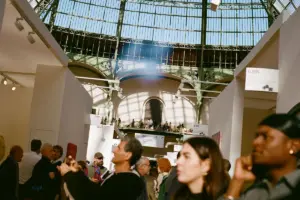
Barely had the final echoes of Louis Vuitton’s grand presentation faded from Paris Fashion Week when the international creative elite decamped en masse to London for one of the most anticipated social and cultural fixtures of the calendar year. On a brisk Tuesday evening, the glittering forecourt of Tate Britain played host to an illustrious constellation of tastemakers. Icons such as Donatella Versace, Givenchy’s Sarah Burton, Burberry’s Daniel Lee, pioneering photographer Ellen von Unwerth, and British Museum Director Nicholas Cullinan turned out in force. They were there to celebrate the grand opening of “The 90s: Art and Fashion,” a landmark exhibition that seeks to interrogate the symbiotic, hyper-creative collision of high fashion and contemporary art during a transformative decade.
Yet, despite the palpable glamour of the star-studded opening night—fueled heavily by the presence of co-curator Edward Enninful, the visionary former editor-in-chief of British Vogue whose tenure from 2017 to 2024 redefined modern luxury and representation—the exhibition has since stepped into a fierce crossfire of British art criticism. While some broadsheets hailed the show as an exhilarating, sensory-rich triumph, others dismissed it as an expensive editorial spread masquerading as museology.
Behind the flashbulbs and the polarizing reviews lies a deeply ambitious curatorial project. Alongside Enninful, a curatorial team from Tate Britain comprising Jessica Vaughan, Helen Little, Dominique Heyse-Moore, Alex Farquharson, and Celeste McEvoy has attempted something audacious: to unpick and re-weave the traditional narrative of 1990s British culture. Moving far beyond the well-trodden, predominantly white paradigm of the Young British Artists (YBAs), the exhibition maps a broader, more intersectional landscape. It re-examines queer identity, the lived realities of the female body, post-Thatcher urban anxiety, and the fragile ecology of nightlife. As the cultural sector grapples with the intersection of commercialism and institutional curation, “The 90s: Art and Fashion” stands as a provocative mirror to both the recent past and the politically volatile present.
Detailed Chronology: From Paris Runways to London Galleries
The trajectory of the exhibition’s rollout reflects the blurring boundaries between the fashion industry and public art institutions.
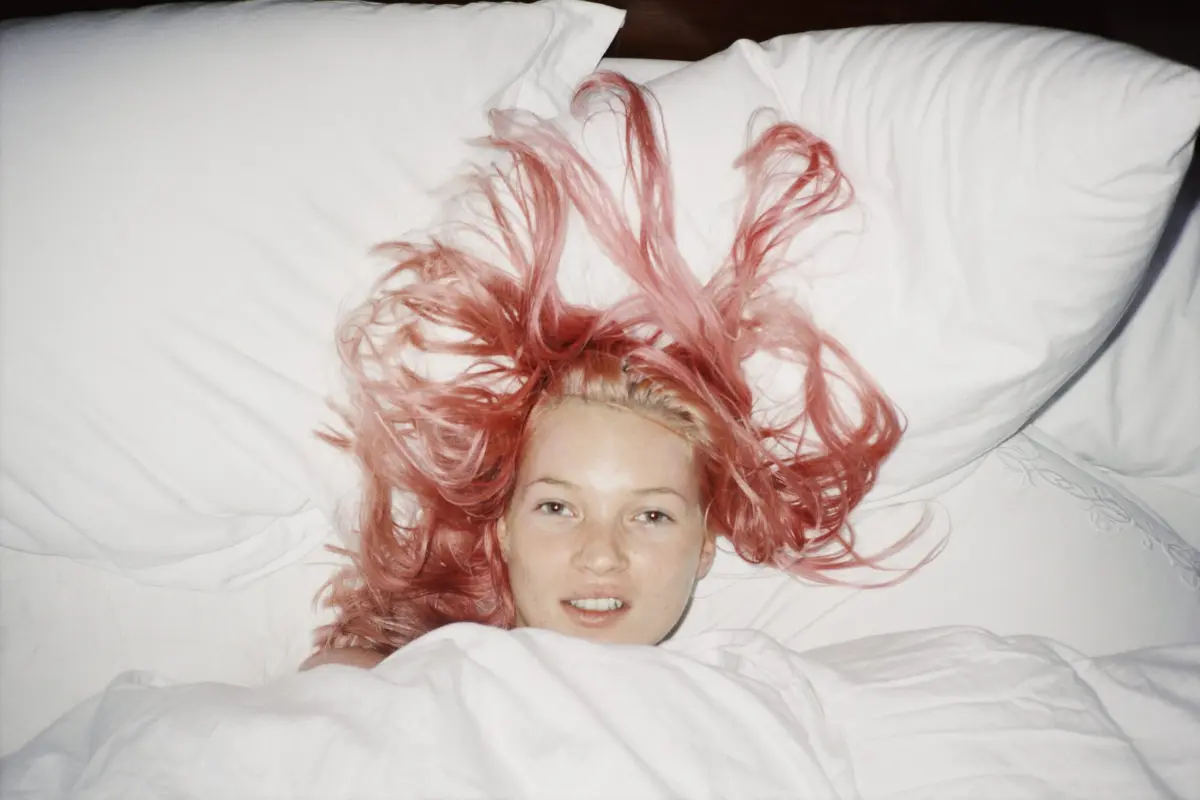
Late September (The Build-Up): The London cityscape is aggressively papered with massive marketing collateral. Posters featuring Kate Moss, captured through the uncompromising lens of Juergen Teller, dominate billboards and transit hubs. The public narrative is systematically framed around Edward Enninful’s star power, elevating the exhibition to a fashion-world happening long before a single ticket is scanned.
The Paris-to-London Pipeline: The cultural pipeline moves at breakneck speed. As fashion editors, designers, and models wrap up their obligations across the Channel in Paris, private aviation and Eurostar trains pivot toward the British capital, setting the stage for an opening night that fuses the front rows of fashion weeks with the hallowed halls of a national gallery.
Tuesday Night Opening: A high-octane gala event brings together the titans of design and media. Donatella Versace, Sarah Burton, and Daniel Lee rub shoulders with curators and academics, cementing the premise that the creative output of the 1990s cannot be understood through siloed disciplines.
Wednesday Morning (Opening to the Public & The Critical Backlash): As the exhibition opens its doors to everyday visitors, the British press unleashes a barrage of contrasting reviews. The fault lines between high fashion marketing and traditional art criticism rupture instantly.
Present Day: As foot traffic surges, the exhibition forces a broader public conversation about canon-formation, the democratization of museum spaces, and how society chooses to remember decades defined by rapid commercialization and socio-political transition.
Supporting Context & Metrics: The Critical Schism and Cultural Landscape
The critical reception of “The 90s: Art and Fashion” reads less like a consensus and more like a culture war. The antagonism from traditional quarters of the British art press was swift and unforgiving.
Writing in The Times of London, chief art critic Waldemar Januszczak delivered a scathing verdict: “I expected a celebration of the Nineties — instead it was a fashion disaster.” This sentiment was echoed with equal venom by The Guardian’s chief art critic, Jonathan Jones. Handing the exhibition a dismal one-star rating, Jones launched a blistering critique that targeted the very core of the museum experience:
"This isn’t an exhibition, it’s a magazine spread. I hoped what I’d seen was a prologue to more art, bigger art, with enough space to appreciate it. But no. That’s it. You leave as dissatisfied as you might after flicking through a 30-year-old copy of The Face in a dentist’s waiting room."
Conversely, other major critics found profound emotional resonance within the galleries. Alastair Sooke, chief art critic for The Daily Telegraph, awarded the show five stars, noting that it left him “buzzing.” Similarly, The Independent’s Stephen Armstrong praised the exhibition’s underlying emotional weight, remarking that “the hope on the walls of this five-star exhibition is heartbreaking.”
The Socio-Political Backdrop of Modern Britain
To dismiss the exhibition merely as a nostalgic lifestyle exercise is to ignore the complex socio-political mirrors it holds up to contemporary Britain. The timing of the exhibition coincides with a volatile political and economic climate. In late September, the UK witnessed the largest single political donation in its history: British cryptocurrency billionaire Ben Delo injected a staggering £36 million into the far-right political party Reform UK.
Against this backdrop of resurgent right-wing populism, the galleries dedicated to life in post-Margaret Thatcher Britain take on an eerie, prescient urgency. The gritty, disused urban landscapes captured in the photography of Corinne Day and Juergen Teller speak directly to an era of economic restructuring, austerity, and housing crises—themes that resonate painfully with today’s younger generations.
Furthermore, the exhibition’s poignant focus on 1990s nightlife—spanning queer club spaces, drum and bass underground scenes, and acid house—arrives at a time of acute crisis for British cultural infrastructure. Statistical metrics reveal that more than a quarter of London’s late-night venues went dark between 2020 and 2025. In this light, the galleries function as both a memorial and a rebuke, highlighting the vital cultural ecosystems that neoliberal economic policies continue to endanger.
Official Statements and Curatorial Intent
To understand the methodological framework of “The 90s: Art and Fashion,” one must look beyond the tabloid headlines and examine the intentional choices made by its creators. In an interview discussing the core thesis of the exhibition, Tate curator Jessica Vaughan articulated the energy of the decade that shaped the show:
"There was this huge moment of growth and creativity, a time which really defined the parameters of what we now consider contemporary art. There was also this real boom in fashion and [the show] is about how they were feeding off one another and how the thematics were parallels in the things that these young creatives were interested in."
Crucially, Vaughan addressed the elephant in the room: the conspicuous absence of the standard, canonical YBA narrative that usually dominates institutional retrospectives of the era. The Young British Artists—dominated by figures like Damien Hirst and Tracey Emin—captured global headlines in the 1990s through calculated shock value, media sensationalism, and a predominantly white, male-centric demographic.
“The story of the YBAs is really well-known and some of the criticism we’ve got so far is that we haven’t included those big names enough,” Vaughan explained. “There are works by Tracey Emin and Damien Hirst there. We just wanted to spotlight other artists who we didn’t think got their dues and Edward always did that in fashion.”
By deliberately pairing household names with marginalized or overlooked visionaries—such as Hamad Butt, Eileen Perrier, Yinka Shonibare, and Barbara Walker—the curators have constructed a far more heterogeneous portrait of the decade.
Deep Dive: Counter-Narratives, Queer History, and the Female Body
The true intellectual weight of “The 90s: Art and Fashion” reveals itself in the spaces dedicated to stories that were systematically marginalized during the height of the YBA phenomenon.
Confronting the AIDS Crisis and Homophobia
While the mainstream art market of the 1990s chased commercial thrills, queer artists were navigating a landscape scarred by the AIDS crisis and rampant institutional homophobia. One of the exhibition’s most poignant and hazardous inclusions is Familiars (1992), a three-part sculptural installation by the late queer South Asian artist Hamad Butt.
Part of the Tate’s permanent collection, Familiars comprises vacuum-sealed glass bulbs containing toxic chemicals. The installation actively invites viewer engagement—operating with the implicit, terrifying risk that a careless movement could crack a bulb and release lethal agents. It stands as a chilling metaphor for contagion, vulnerability, and the atmospheric dread of the AIDS epidemic. When the work was last exhibited at the Tate in the 1990s, a vial famously cracked, forcing an emergency evacuation of the entire gallery.
“It’s the idea that the thing that we’re most attracted to might be the thing that’s the most threatening to us and the work has a mythology around it,” Vaughan noted.
Similarly, Steve McQueen’s landmark 1993 film Bear confronts masculinity and desire head-on. The film depicts two Black men wrestling in a delicate choreography that is simultaneously affectionate, combative, and dripping with raw homoerotic tension. While McQueen has achieved global renown as a filmmaker and Turner Prize-winning artist, his early photographic and moving-image works are rarely contextualized alongside the laddish bravado of his white YBA contemporaries.
Reclaiming Female Embodiment
The exhibition also mounts a fascinating visual counter-discourse against the ubiquitous "heroin chic" aesthetic of the 1990s—typified by Corinne Day’s iconic photographs of Kate Moss. Instead, the curators position works by female artists that explore the visceral, messy reality of inhabiting a female body.
Sam Taylor-Johnson’s 1993 photograph Fuck, Suck, Spank, Wank features the artist wearing a simple T-shirt emblazoned with those four explicit words, her white denim jeans slumped deliberately around her ankles. (In a nod to the commercial crossover of the exhibition, the museum has recreated the t-shirt for sale in its gift shop). Nearby hangs Sarah Lucas’s iconic 1997 photograph Chicken Knickers, which captures a raw, whole chicken affixed crudely to the front of a woman’s underwear.
“We wanted to capture what it was to be a young woman at that time and to counter the images of Kate Moss by Corrine Day and others,” Vaughan explained regarding this deliberate curatorial juxtaposition.
Future Outlook: Legacy and Institutional Evolution
As “The 90s: Art and Fashion” opens its doors to the public, its long-term institutional legacy hangs in the balance. Will it be remembered as a superficial capitulation to corporate branding and celebrity culture, or as a courageous recalibration of art history that successfully dismantled institutional blind spots?
The friction generated by the exhibition points to a deeper, necessary evolution within major public galleries. As state funding for the arts faces continuous pressure, museums are increasingly forced to forge alliances with the fashion and luxury sectors to secure their financial futures. Yet, as Tate Britain has demonstrated with this exhibition, this collision does not inherently require a sacrifice of critical rigor.
By utilizing the populist pull of Edward Enninful and high fashion to draw crowds through the turnstiles, the curators have smuggled complex, intersectional, and politically charged histories into a national gallery. They have forced audiences to confront the radical art that existed in the shadows of the mainstream—art that dealt with queer survival, racial identity, post-industrial decay, and bodily autonomy.
Ultimately, those critics who rushed to dismiss the show as a mere "magazine spread" may have missed the forest for the trees. By re-evaluating the past through a lens that honors those who were left out of the original canon, “The 90s: Art and Fashion” offers vital lessons for a contemporary cultural landscape currently struggling with its own identities, exclusions, and fractures.





Comments
Facebook App ID not configured. Please add it in the Customizer.