In the architecture of storytelling, character development is rarely a monolithic journey. While positive transformation arcs have long dominated writing manuals—guiding a protagonist from a comforting lie to an empowering thematic truth—the anatomy of a tragic descent offers an equally compelling narrative landscape. Entering this complex territory, acclaimed author and writing instructor K.M. Weiland is set to premiere the final installment of her 2026 Story School series: Negative Character Arcs: The Hidden Pattern of Self-Deception.
Scheduled to launch on October 6 at 1:00 PM EDT, this comprehensive masterclass dives deep into what happens when a character encounters a story’s thematic truth but fails—or refuses—to fully integrate it. Rather than viewing negative arcs as mere summaries of bad decision-making or unhappy endings, Weiland’s curriculum establishes a structured framework connecting the three primary variations of tragic transformation: Disillusionment, Fall, and Corruption. By examining how plot, character, and theme intersect, this masterclass provides writers with the analytical tools needed to craft believable, inevitable, and emotionally resonant downfalls. For creators looking to master both sides of the character-arc spectrum, the masterclass is also available in a discounted bundle alongside its predecessor, Flat Character Arcs: From Transformation to Integration.
Detailed Chronology & Evolution of Character Arc Theory
To fully appreciate the scope of the upcoming masterclass, it is helpful to trace the evolution of how character development has been taught and understood within modern narrative theory.
Historically, writing pedagogy treated plot structure and internal character journeys as two distinct, occasionally overlapping entities. Plot was viewed as a sequence of external events—the mechanical beats of action, rising tension, and climax—while character development was sequestered as an internal emotional diary. Writers were often left to bridge these two elements intuitively.
The Convergence of Plot, Character, and Theme
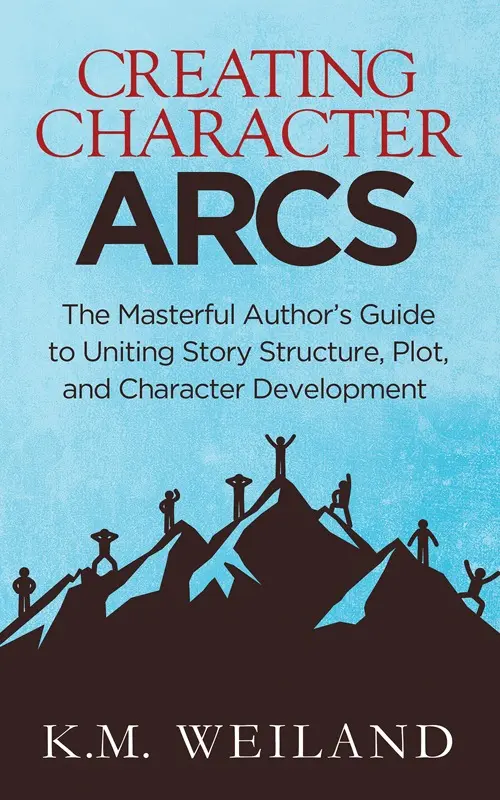
Over years of research and the publication of foundational texts such as Creating Character Arcs and Writing Your Story’s Theme, Weiland championed a unified theory of storytelling. In this framework, plot and character are not separate; rather, character actions generate plot events, and external plot pressures force internal character growth. Underpinning both is the thematic core—the interplay between the comforting "Lie" a character believes and the demanding "Truth" they must confront.
Moving Beyond the Positive Arc
As structural understanding matured, the focus naturally expanded beyond the standard positive transformation. While positive arcs chart a protagonist overcoming a lie to embrace a broader reality, the logical counterpart—what occurs when that process fractures—remained ripe for structural breakdown. The introduction of the Negative Character Arcs masterclass marks the culmination of this theoretical evolution, categorizing the downward trajectory into a predictable, mathematically precise psychological progression.
Supporting Context & The Anatomy of Negative Transformation
What makes a character arc "negative"? According to Weiland’s curriculum, a tragic ending—such as a ruined relationship, a death, or a fall from grace—is merely a symptom of a deeper structural misalignment. The true defining element is the character’s friction with the story’s thematic truth.
The masterclass breaks down this friction into three distinct structural movements, revealing a hidden pattern of self-deception:
The Disillusionment Arc: Mirroring the early stages of a positive arc, the character successfully sheds the original lie and perceives reality clearly. However, instead of finding empowerment in the thematic truth, they are overwhelmed by grief and a sense of loss. Delusion is gone, but transformation stalls.
The Fall Arc: Here, the character faces repeated opportunities to embrace the truth but systematically chooses the lie. Their tragedy stems from an escalating, stubborn unwillingness to surrender the flawed worldview that is actively destroying their life.
The Corruption Arc: Representing the final stage of the pattern, the character may initially understand the truth but consciously rejects it. They embrace a constricted perspective or a new, weaponized lie, typically driven by the pursuit of power or self-preservation.
By linking these three arcs, writers can chart a complete degradation of the human psyche: from an inability to integrate a difficult truth, to active resistance, to the full-scale adoption of self-deception as reality.
Official Insights & Masterclass Curriculum Breakdown
Designed for authors seeking structural precision in tragedy, Negative Character Arcs: The Hidden Pattern of Self-Deception moves fluidly between high-level psychological concepts and mechanical writing techniques.
Core Curriculum Highlights
The Transformational Cycle: Situating negative arcs within the broader ecosystem of positive, flat, and steadfast character arcs.
Structural Integration: Analyzing how structural milestones—specifically the First Plot Point, Midpoint, Third Plot Point, and Climax—act as escalating confrontations with reality.
Thematic Elements: Tracking the precise evolution of the Lie, Truth, Want, Need, and Ghost across Disillusionment, Fall, and Corruption arcs.
Case Studies: Examining familiar literary and cinematic examples to demonstrate how internal psychological decay manifests in external plot mechanics.
Bridging the Gap: The Dual-Class Offering
For writers eager to explore both sides of the transformational coin, Weiland has introduced a specialized bundle. Pairing Negative Character Arcs with Flat Character Arcs: From Transformation to Integration, the bundle addresses two divergent paths following a character’s encounter with truth:
"Sometimes that encounter leads to greater integration and the ability to positively influence the world, [while] other times it marks the beginning of disillusionment, resistance, and a deeper identification with the Lie."
Participants who purchase the masterclasses as a bundle receive a 15% discount, uniting two distinct masterclasses into a holistic guide on thematic storytelling.
Future Outlook & Implications for Modern Storytellers
As narrative media continues to mature, audiences increasingly demand complex, morally grey protagonists whose downfalls feel earned rather than forced. The traditional tropes of mustache-twirling villains or sudden, unmotivated tragedies are giving way to character studies rooted in psychological realism.
By decoding the hidden patterns of self-deception, Weiland’s masterclass equips creators to design narrative engines where tragedy is mathematically and emotionally inevitable. Writers who master these structural beats will find themselves better equipped to write antagonists and tragic protagonists whose choices resonate with chilling authenticity.
Registration for Negative Character Arcs: The Hidden Pattern of Self-Deception is currently open ahead of its October 6 premiere at 1 PM EDT. Whether accessed individually or through the comprehensive Steadfast and Tragic Character Arcs bundle, this masterclass establishes a new benchmark for writers striving to explore the darker corridors of human transformation.






Comments
Facebook App ID not configured. Please add it in the Customizer.