
Executive Overview
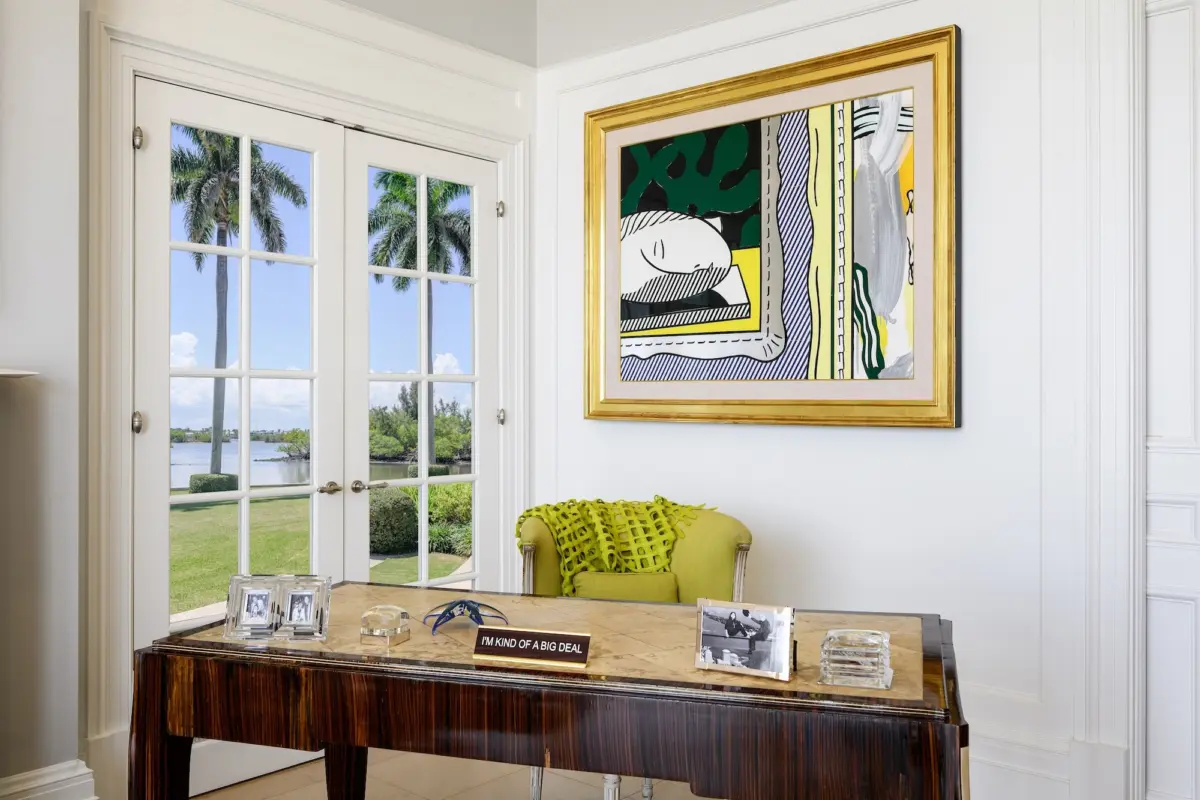
In the high-stakes theater of the global art market, few announcements generate as much anticipation as the emergence of a pristine, single-owner collection assembled with institutional vision and deeply personal passion. This autumn, Sotheby’s is poised to command the international spotlight with the upcoming sale of the extraordinary collection amassed by the late cable television magnate Ted Baum and his wife, visionary interior designer Ruth Baum.
Estimated to fetch in excess of $100 million in total, the collection spans more than 130 works of art, capturing the seismic shifts in twentieth-century abstraction, pop art, and conceptual expression. Anchored by heavyweights of American and European modernism—ranging from Mark Rothko and Ed Ruscha to Lucio Fontana and Alberto Burri—the offering represents a masterclass in taste, intellectual curiosity, and aesthetic evolution.
The rollout of the Baum collection will unfold across multiple stages, beginning with a high-profile, dedicated evening auction on November 16, followed by a comprehensive day sale on November 17, with additional works slated for various sales throughout the coming year. Ahead of the auction block, museum-quality highlights are embarking on an international exhibition tour, stopping at Sotheby’s major showrooms in London, Hong Kong, Paris, Los Angeles, and New York.
Read Also
This high-value consignment arrives at a crucial juncture for the autumn auction cycle. As major auction houses vie for dominance and consumer confidence, the Baum collection joins a flurry of blockbuster announcements—including Christie’s $100 million offering tied to artist Jeff Koons and Sotheby’s own jaw-dropping $450 million presentation of holdings from Argentine collectors Carlos Pedro Blaquier and Nelly Arrieta de Blaquier. Yet, what sets the Baum collection apart is not merely its staggering financial valuation, but the intimate, deeply personal narrative of how two children of the 1960s transformed a casual charity purchase into one of the most intellectually cohesive private collections of their generation.
Detailed Chronology: From a Charity Sketch to a Museum-Calibre Cache
The Genesis: Discovering Modernism in the 1970s
Every great collection has an origin story, often humble in its beginnings. For Ted and Ruth Baum, their journey into the labyrinth of fine art collecting commenced in the 1970s, triggered by a modest charity auction. It was there that Ruth acquired a charming sketch by American artist John Sloan. While the Sloan sketch bore little resemblance to the monumental abstract canvases that would eventually fill their homes, it planted a seed of creative engagement.
Throughout the late 1970s and 1980s, the couple’s tastes gravitated toward modern drawings and delicate watercolors on paper. They acquired works by luminaries such as Fernand Léger and Pablo Picasso, slowly sharpening their eyes and learning the vocabulary of line, form, and composition. At this nascent stage, the Baums operated under a common collector’s fantasy: they hoped their journey would ultimately culminate in the acquisition of "one great painting." Little did they know that their search for a single masterwork would instead open the floodgates to an insatiable, decades-long pursuit of contemporary masterworks.
The Defining Epiphany: The Rothko Revelation
The turning point arrived in 1983, permanently altering the trajectory of the Baum household. Seeking that elusive "one great painting," the couple encountered Mark Rothko’s untitled 1967 red-and-orange painting on paper. The impact was visceral and immediate.
"The Rothko hit us," Ruth Baum recounted years later in press materials provided by Sotheby’s. "That was it. We were children of the ’60s, and the art of that period spoke to us."
This red-and-orange masterpiece became their first major contemporary acquisition, serving as the ideological anchor for everything that followed. It transitioned them from cautious buyers of historical works on paper into fierce, forward-looking patrons of post-war American abstraction. The Rothko taught them how color fields could convey raw human emotion, setting a standard of emotional resonance that they would demand from every subsequent addition to their walls.
Expanding Horizons: The 1990s and American Abstraction
Emboldened by their encounter with Rothko, the Baums spent the 1990s aggressively expanding their footprint in the contemporary market. They developed a deep affinity for the expressive freedom of Abstract Expressionism and its descendants. They acquired stellar works by Joan Mitchell, whose lyrical, gestural strokes mirrored their own dynamic approach to life.

Alongside Mitchell, they welcomed canvases by Sam Francis, Hans Hofmann, Roy Lichtenstein, and Tom Wesselmann. These acquisitions demonstrated a growing sophistication; they were not simply buying names, but tracking the lineage of post-war energy, balancing the controlled chaos of gestural abstraction with the crisp, ironic precision of Pop Art.
Intellectual Rigor: The 2000s and Conceptual Wordplay
By the turn of the millennium, the Baums’ collecting philosophy had reached maturity, characterized by intellectual curiosity and an appreciation for conceptual wit. This era is perhaps best encapsulated by their acquisition of Ed Ruscha’s 1964 painting Dimple. In this iconic work, a trompe-l’œil C-clamp appears to physically wrinkle the letter "e" at the end of the word, a clever visual pun that dovetailed perfectly with Ted Baum’s notorious love for wordplay and subverted typography.
Their appetite for conceptual depth also led them to acquire Andy Warhol’s 1984 painting The Scream (After Edvard Munch). Demonstrating their long-term vision and financial savvy, the Baums acquired the Warhol at a Sotheby’s London auction in 2006 for £1.5 million—roughly $2.7 million at the time (approximately $4.5 million when adjusted for inflation). Today, such institutional-grade Warhols serve as crown jewels in any contemporary portfolio.
Supporting Context & Metrics: The Anatomy of a $100 Million Portfolio
While the emotional narrative of the Baum collection is compelling, its market metrics are equally formidable. The collection is projected to clear the $100 million threshold comfortably, buoyed by several premier lots that command eight-figure estimates.
Leading Highlights and Market Valuations
At the vanguard of the November 16 evening sale are two anchor lots, each carrying a pre-sale estimate of $10 million to $15 million:
- The Rothko Masterpiece: The aforementioned untitled 1967 red-and-orange Rothko painting on paper serves as the psychological anchor of the entire collection, expected to easily command between $10 million and $15 million.
- The Ruscha Masterpiece: Matching the Rothko at the top of the price hierarchy is a major painting by Ed Ruscha, also pegged at $10 million to $15 million, reflecting the surging market demand for Ruscha’s text-based and conceptual works.
Just beneath these heavy hitters sits a tier of museum-grade masterworks valued between $4 million and $6 million each:
- Alberto Burri: A textural, material-driven work by the Italian master, showcasing the international scope of the collection.
- Lucio Fontana: An exquisite spatial concept painting by the pioneer of Spatialism.
- Andy Warhol: Their prized 1984 iteration of Edvard Munch’s The Scream, proving that historical appropriation in Pop Art remains a perennial favorite among ultra-high-net-worth collectors.
The remaining 100-plus works—spanning sculptures, works on paper, and paintings—have yet to be assigned individual public estimates, leaving plenty of room for pleasant surprises when the catalog rolls out in full.
A Transatlantic Dialogue: Merging American and European Sensibilities
One of the most remarkable aspects of the Baum collection is its seamless synthesis of American post-war abstraction and European avant-garde movements. While many American collectors of their generation confined their acquisitions to domestic talent, the Baums possessed an innate, global curiosity.
Their collection features major European figures such as Alberto Burri, Lucio Fontana, Yves Klein, and Piero Manzoni. This cross-pollination was intentional. The Baums instinctively recognized that the radical gestures of European artists—such as Fontana’s slashed canvases (Concetto Spaziale, Attese, 1960, which they acquired at Sotheby’s London in 2000 for a modest £333,500) and Klein’s monochromatic blue fields—were engaged in a vital, transatlantic dialogue with their American contemporaries. In the sophisticated interiors of the Baums’ homes, a Fontana slash hung in effortless harmony with a Rothko color block or a Mitchell abstraction.
Official Statements and Institutional Impact
The Collector’s Perspective and Advisor Insights
The legacy of Ted and Ruth Baum extends far beyond the walls of their residences in New York, New Jersey, Southampton, and Palm Beach. Their approach to collecting was defined by an insatiable appetite for discovery, guided in later years by prominent art advisors such as Wendy Cromwell.

"From Joan Mitchell to David Hammons, the Baums knew what they liked, were insatiably curious, and kept pushing their eye," Wendy Cromwell noted in press materials provided by Sotheby’s. "The result of their shared passion is a collection that gallops through time, countries and genres. The Baums’ collection tells the story of what it means to collect contemporary art."
Oliver Barker, Sotheby’s Chairman for Europe, echoed these sentiments, highlighting the intellectual rigor that underpinned the couple’s acquisitions. "Ted and Ruth were among the most committed collectors of their generation," Barker remarked. "I was immediately struck by their inquisitiveness and the deep level of their research. No doubt they came to European abstraction via the touch points of post-war American abstraction. They instinctively understood that artists like Lucio Fontana and Yves Klein were vital to the history of 20th-century abstraction and could sit perfectly well situated in their beautiful interiors alongside Rothko, Mitchell and others."
Philanthropy and Civic Engagement
Beyond their private connoisseurship, Ted and Ruth Baum were pillars of civic and cultural philanthropy in the communities they called home. Ted Baum passed away in 2021, followed by Ruth Baum earlier this year, but their institutional footprint remains permanent.
In West Palm Beach, a dedicated gallery at the Norton Museum of Art proudly bears their name. Their philanthropic support went far beyond naming rights; the couple actively funded the institution’s very first contemporary art curator position, ensuring that the museum could engage meaningfully with living artists. Furthermore, they enriched the Norton’s permanent collection with generous donations of works by prominent contemporary figures such as Dale Chihuly and Leo Villareal. In recognition of her lifelong dedication, Ruth Baum was elected a life trustee of the museum in 2020.
Their civic commitment extended to the upper echelons of the cultural world. Both served with distinction on boards and committees at New York’s Solomon R. Guggenheim Museum and the Parrish Art Museum in Long Island. Over the past two decades, Ruth Baum was a tireless supporter of regional and national organizations, lending her time, expertise, and financial backing to the Palm Beach Zoo and Conservation Society, the Armory Art Center in West Palm Beach, Palm Beach Dramaworks, and Planned Parenthood affiliates in both Florida and New Jersey.
Future Outlook: The Autumn 2026 Auction Landscape
The impending dispersal of the Baum collection arrives at a fascinating psychological moment for the high-end art market. Auction houses are currently engaged in a high-stakes chess match, curating blockbuster sales to galvanize collector confidence ahead of the critical November marquee auctions.
Sotheby’s announcement follows a flurry of competitive salvos across the industry. Just days prior, rival house Christie’s made headlines by announcing that a "distinguished collector"—widely reported by art market insiders to be celebrated artist Jeff Koons—will offer a $100 million trove of Old Masters and contemporary art, anchored by a $40 million Picasso. Meanwhile, Sotheby’s itself recently unveiled an even more gargantuan consignment: 12 museum-caliber masterworks from the collection of Argentine couple Carlos Pedro Blaquier and Nelly Arrieta de Blaquier, projected to shatter expectations with an estimated total of $450 million, led by an extraordinary $180 million Vincent van Gogh.
Within this landscape of billion-dollar figures and astronomical valuations, the Baum collection occupies a uniquely cherished space. It is not an impersonal accumulation of blue-chip trophies acquired solely for investment, but a cohesive, lovingly curated family portrait composed of paint, canvas, and conceptual wit.
When the hammer falls this November at Sotheby’s, it will mark the end of an era for the Baum holdings, but it will also secure Ted and Ruth Baum’s rightful place in the pantheon of great American collectors. Their shared vision—forged in the idealism of the 1960s and refined over half a century of passionate inquiry—will pass into new hands, reminding the global art world that the truest measure of a collection is not its price tag, but the boundless curiosity of the eyes that assembled it.




Comments
Facebook App ID not configured. Please add it in the Customizer.