
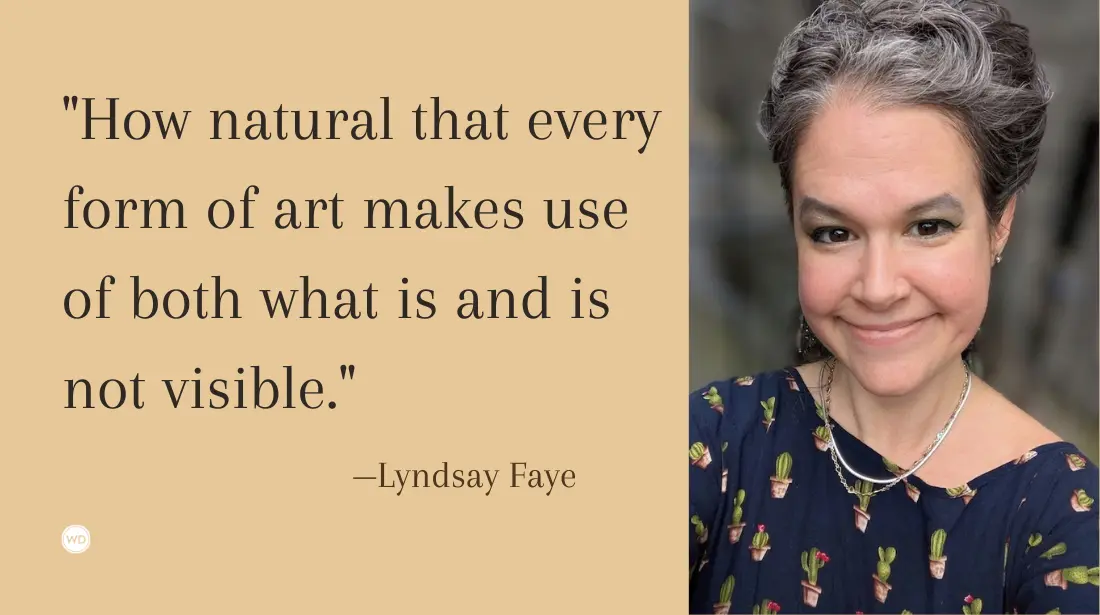
In the architecture of literature, as in the cosmos, the most profound structures are often built upon what is conspicuously absent. As Charles Seife observes in Zero: The Biography of a Dangerous Idea, the ultimate inquiries of both science and religion converge on the concepts of nothingness, the void, and infinity. This dichotomy between the manifest and the unstated forms the bedrock of artistic expression—from the deliberate pauses in a musical score and the untouched expanses of a canvas to the pregnant stillness of a choreographic movement.
For the writer, translating inert language into three-dimensional motion, sound, and psychological resonance demands a mastery of negative space. This is not merely the mechanical exercise of editorial excision—the proverbial deletion of superfluous verbiage during drafting. Rather, it is the deliberate cultivation of ma, the Japanese concept of the charged void, where the absence of detail compels the reader’s imagination to construct its own terrors.
Few American masters have harnessed this void with such clinical precision as Edgar Allan Poe. Throughout his seminal fiction, poetry, and turbulent biography, absence is not a passive vacuum, but an active, predatory force. By examining Poe’s deployment of negative space—and tracing its lineage through his personal tragedies into contemporary literature, such as Lyndsay Faye’s novel Raven—we uncover the mechanics of how literature transforms nothingness into enduring art.
Read Also
Detailed Chronology: The Evolution of the Void in Poe’s Life and Work
To understand how Poe mastered the art of the unwritten, one must trace the chronology of loss that defined his existence, mapping the biographical vacuums directly onto his literary output.
The Formative Absences (1809–1811)
Born in Boston in 1809 to traveling actors David and Eliza Poe, the young Edgar was almost immediately plunged into a landscape of abandonment. His father deserted the family in Poe’s infancy, an early vanishing act that established a lifelong pattern of relational instability. Just two years later, in 1811, Eliza Poe succumbed to tuberculosis—the "White Plague" that would shadow the nineteenth century. The sudden transition from maternal presence to absolute void left the toddler orphaned, planting the first seeds of an artistic obsession with premature loss and unfillable cavities.
The Accumulation of Rejections (1815–1830s)
Taken in by the affluent merchant John Allan and his wife Frances of Richmond, Virginia, Poe experienced a counterfeit permanence. Though raised in relative comfort, he was never formally adopted, remaining perpetually aware of his precarious legal and emotional status. When John Allan later disinherited him amid mounting gambling debts and university disputes, Poe faced another profound absence: structural security. His early adulthood was characterized by acute financial destitution, transient employment, and a pervasive lack of literary acclaim—all of which fueled his desperate, frenzied attempts to carve out a permanent space in the emerging American literary canon from a baseline of professional nothingness.
The Masterpieces of Vacancy (1830–1847)
It was against this backdrop of compounded grief—culminating in the agonizing, protracted tuberculosis death of his young wife and cousin, Virginia Clemm, in 1847—that Poe produced his most enduring masterpieces.
- 1829: The publication of early lyrical explorations of loss, such as the poem To M—, established his thematic preoccupation with the ephemeral nature of human connection.
- 1838: In the short story Ligeia, Poe articulated the exquisite torture of cognitive gaps, famously documenting the psychological threshold where human memory brushes against the "very verge of remembrance" without crossing over.
- 1839: "The Fall of the House of Usher" appeared in print, utilizing an utterly desolate landscape and a nameless, chronicling protagonist to stage an ultimate confrontation with the void.
- 1845: "The Raven" cemented his cultural legacy, weaponizing the haunting, tautological refrain of "nevermore" to taunt a protagonist trapped in the endless echo of grief.
- 1847: "Ulalume—A Ballad" further explored psychological paralysis, where characters wander through a landscape stripped of chronological and spatial orientation, unable to recall even the month or the year of their sorrow.
Supporting Context & Metrics: The Mechanics of Negative Space
Poe’s literary technique relies on strategic depopulation. In "The Fall of the House of Usher," the narrative engine roars to life not through action, but through an almost clinical accumulation of negatives:
During the whole of a dull, dark, and soundless day in the autumn of the year, when the clouds hung oppressively low in the heavens, I had been passing alone, on horseback, through a singularly dreary tract of country…
This opening gambit deliberately strips away sensory signposts. There is no lightning, no thunder, no human companionship, and no sound. By neutralizing the environment, Poe disorients the reader, creating a psychological vacuum that is subsequently populated by "vacant eye-like windows"—an image far more unsettling than active observation because it suggests a gaze devoid of consciousness or intent.
Comparative Literary Analysis of Absence
| Literary Work | Primary Form of Absence | Psychological Impact on Reader |
|---|---|---|
| "The Fall of the House of Usher" | Sensory deprivation (soundless day, bleak landscape, nameless narrator) | Induces disorientation and heightened vulnerability to architectural dread. |
| "Ligeia" | Epistemological gaps (the inability to fully recall or define a lost presence) | Cultivates an agonizing sense of proximity to the unreachable past. |
| "The Raven" | Temporal finality ("Nevermore") | Locks the protagonist and reader into an infinite, inescapable loop of grief. |
| "Ulalume—A Ballad" | Amnesia of setting (unremembered month, forgotten night) | Strips away external orientation, forcing internal psychological exposure. |
This structural reliance on the missing extends to Poe’s characters. The narrator of "Usher" is entirely nameless; Roderick Usher is crippled by an excessive, habitual reserve; the Usher bloodline features no branching relatives, only a doomed pair of siblings; and the estate’s domestic staff operates in mute, stealthy shadows.
As Saint Augustine observed in his Confessions while attempting to conceptualize the pre-Creation abyss, true formlessness resists absolute definition because any attempt to subtract all remnants of form inevitably leaves a conceptual trace. Poe understood this paradox implicitly. Rather than attempting to depict absolute nothingness, he mapped its perimeter, allowing the reader to project their deepest anxieties into the canvas of the unsaid.
Future Outlook: The Ongoing Legacy of the Void in Modern Literature
The artistic utility of negative space did not die with Poe in 1849. Its principles continue to inform contemporary explorations of historical trauma and psychological suspense, demonstrating that what is omitted remains as vital as what is articulated.
A striking modern application of this methodology is found in Lyndsay Faye’s novel Raven, an antebellum narrative that structures its horror around the thematic framework of Poe’s entire canon and biography. Following an unwanted orphan and self-destructive addict named Raven Helen Allan—whose fictional existence mirrors Poe’s own struggles with abandonment—the novel opens with a stark acknowledgment of mortality and erasure:
"I died a fortnight ago this coming Thursday. It was a terrifically unpleasant experience—being murdered, I mean to say."
By thrusting the protagonist into a posthumous or liminal investigation of systemic corruption within a disintegrating Baltimore mansion, modern writers continue to utilize Poe’s toolkit. The investigation of historical and personal vacuums allows contemporary literature to address systemic injustices, addiction, and grief by examining the spaces where institutional records fail and personal memory fractures.
As writers continue to grapple with the complexities of the modern void—navigating digital disconnection, historical amnesia, and existential uncertainty—the lessons of Poe and the aesthetic of ma remain profoundly relevant. The most enduring literature will always reside not merely in the words inscribed upon the page, but in the gravitational pull of the silences that surround them.




Comments
Facebook App ID not configured. Please add it in the Customizer.