
Executive Overview
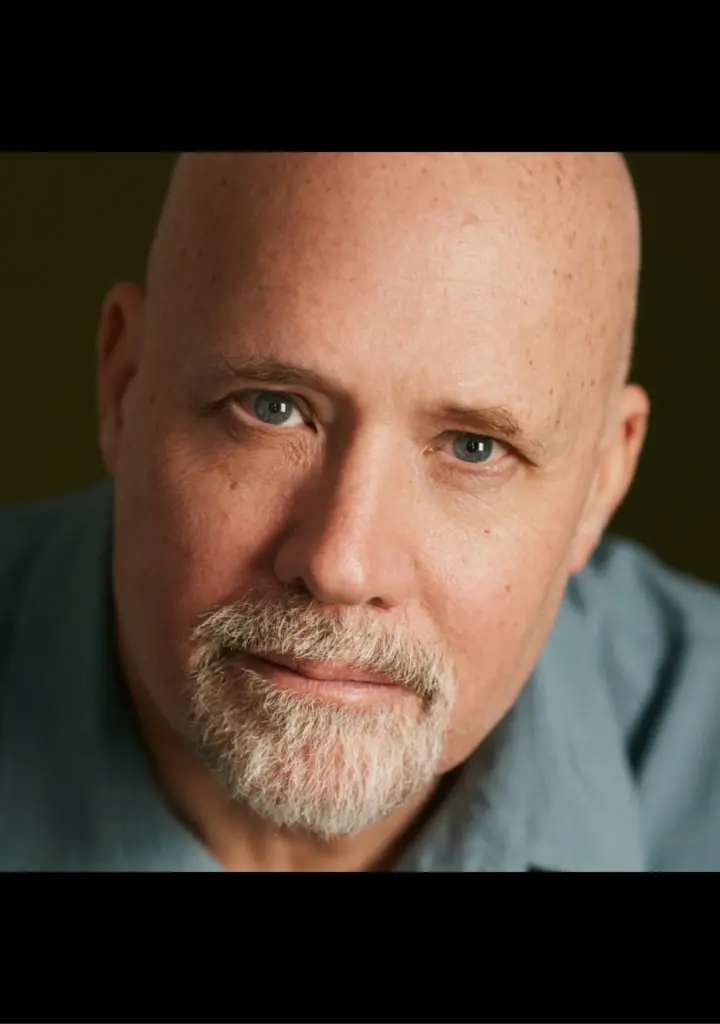
It took nearly a decade, the discarding of a massive 500-page manuscript, and an intricate navigation of personal and historical grief, but acclaimed author Mitch Wieland has finally transformed his celebrated 2015 Missouri Review short story, “Snow Angels,” into a sprawling, deeply resonant novel. Titled The Ghosts of Okuma, Wieland’s third novel has already earned a coveted starred review from Kirkus Reviews and been named a Best Indie Book for March. Published on November 3—a milestone marking the thirtieth anniversary of his debut novel, Willy Slater’s Lane—the book stands as a testament to the endurance required to capture the existential weight of a global tragedy.
In a wide-ranging interview with Scout Hudson, Wieland details the arduous, nonlinear path of the book’s creation. Set against the backdrop of post-Fukushima Japan, The Ghosts of Okuma traces the journey of an American outsider, Wyatt, who travels to Tokyo to find his missing sister while carrying his late mother’s ashes. Along the way, he crosses paths with Yoshimi, a young Japanese woman whose raw anger mirrors the real-life outrage directed at the Tokyo Electric Power Company (TEPCO) in the wake of the 2011 triple disaster.
Beyond his literary achievements, Wieland reflects on his three-decade tenure at Boise State University, where he co-founded the MFA program in Creative Writing and spent twenty years editing the award-winning Idaho Review. By passing down the sensory-driven pedagogical techniques he learned from legendary writers like George Garrett, Wieland has cultivated a formidable literary legacy in the American West, mentoring a new generation of nationally recognized authors.
Read Also
Detailed Chronology: The Ten-Year Evolution of a Novel
The genesis of The Ghosts of Okuma stretches back nearly thirty years to Wieland’s formative five-year residency in Japan from 1986 to 1991. Immersing himself in the literary short fiction of Raymond Carver and Joy Williams, Wieland developed a deep affinity for the medium and a lasting reverence for literary journals, eventually becoming a lifelong subscriber to The Missouri Review.
From Mailbox Mud to “Snow Angels”
Following his return to the United States in 1991, Wieland settled on a farm near the Oregon border with his wife, Cindy. While working on a collection of Idaho-set stories titled God’s Dogs, a fortuitous windstorm blew open his rural mailbox, scattering his mail across the fields. Amidst the scorching, hundred-degree heat of flood-irrigating his land in gumboots, Wieland waded through the mud to retrieve a letter from The Missouri Review editor Speer Morgan.
Though Morgan noted that a previous story had narrowly missed publication after an hour-long editorial debate, he encouraged Wieland to submit again. That subsequent submission was “Snow Angels,” which debuted in the summer 2015 edition of the journal and planted the seed for what would eventually become his next major novel.
The Turning Point: March 11, 2011
Before “Snow Angels” took center stage, Wieland had spent years working on a massive, 500-page novel about Japan under the guidance of iconic literary agent Wendy Weil, who famously represented Alice Walker. However, everything changed on March 11, 2011.
While watching NHK news—Japan’s public broadcaster—Wieland watched footage of the devastating tsunami crashing ashore. Recognizing the profound historical gravity of the moment, he instinctively realized he could no longer write about Japan while ignoring the catastrophe. He permanently shelved the entire 500-page draft, keeping only a minor background character named Yoshimi.
Research, Grants, and Structural Training
Bolstered by a National Endowment for the Arts (NEA) grant and a one-year fellowship from Boise State’s Arts and Humanities Institute, Wieland secured the funding and time needed to travel to Japan for eight intensive weeks of research in 2012. Wanting to sharpen his command of plot and structure, he also attended seminars hosted by narrative theorists Robert McKee and Christopher Vogler in Los Angeles.
By 2013 and 2014, Wieland completed “Snow Angels” and sent it back to The Missouri Review. Yet, the road to publication remained long. The onset of the COVID-19 pandemic in 2020 froze the querying process, but in 2021, literary agent Julie Stevenson of Massie and McQuilken took him on.
Working closely with Stevenson, Wieland executed another massive structural overhaul, cutting an additional seventy pages from the beginning of the manuscript, which originally opened in San Diego. In total, Wieland estimates he wrote roughly 2,000 pages of raw material to arrive at the final 275-page novel—a decade-long metamorphosis from a short story into a fully realized narrative.
Supporting Context & Metrics: Cultural Trauma and Sensory Neuroscience
Japan Through Two Eras: 1986 vs. 2012
Wieland’s firsthand experiences of Japan bridge two radically different economic and cultural epochs. During his initial residence in the late 1980s, Japan’s economy was superheating, characterized by "Big Trash Day" where citizens casually discarded fully functioning household appliances like refrigerators and stoves onto the streets.
Upon returning in 2012—just a year after the Great East Japan Earthquake, tsunami, and Fukushima Daiichi nuclear disaster—Wieland observed a stark economic and psychological shift. Thrift stores had multiplied as public habits adapted to a decades-long recession, and a heavy pall of existential despair hung over the younger generation. As Wieland’s university professor friend Jack Perkins observed, many students in Tokyo began questioning the point of traditional milestones like marriage, homeownership, and children in a world suddenly revealed to be profoundly precarious.
Translating National Grief: Comparing 9/11 and Fukushima
Reflecting on the psychological impact of national tragedies, Wieland draws a parallel between America’s post-9/11 landscape and Japan’s post-Fukushima reality. While 9/11 triggered a highly public American grief process accompanied by geopolitical blame and a unifying national fervor, the Fukushima disaster exposed an ontological vulnerability intrinsic to an island nation sitting squarely upon seismic fault lines.
Public anger in Japan turned sharply inward against TEPCO after investigative trials revealed corporate negligence and hubris—specifically, the company’s assumption that an earthquake exceeding magnitude 9.0 was impossible, leading them to construct seawalls too low to withstand the resulting tsunami. Furthermore, bureaucratic delays and conflicting messaging between corporate and government entities severely hindered the evacuation of towns like Okuma, leaving lasting fractures of trust within the populace.
The Neuroscience of Literary Immersion
Wieland’s approach to environmental world-building is deeply rooted in the teachings of his mentor, George Garrett, who emphasized creating a "sensuously effective texture" to make the reader feel physically present in a scene. This intuitive approach has since been validated by modern neuroscience.
Pointing to functional MRI (fMRI) brain-scan studies, Wieland notes that when a reader processes sensory language—such as a character smelling of clove cigarettes and lavender—the brain’s olfactory processing centers light up identically to how they would if the reader were experiencing the sensation in reality. By grounding his settings in the sensory overload of Tokyo—from the rustling wooden prayer slats in the quiet depths of Yanaka Cemetery to the smoke-stained skyline of a recovering capital—Wieland leverages this neurological mechanism to transport readers directly into the heart of his fictional world.
Official Statements & Key Insights
-
On the Organic Nature of Character Development:
"That’s the goal of the writer, right? To try to connect so strongly with their characters that once they’ve got the character created, you can often just put them in the room and see what happens. I tried to inhibit Wyatt’s heart and mind so fully that when he’s with his dad or with Renee, or Yoshimi or Hirojuki, I could figure it out." — Mitch Wieland
-
On Finding Inspiration in Real-World Protest Art:
"The inspiration for Yoshimi’s anger comes from what [the Tokyo artist troupe ChimœPom] did one month after the disaster. Tepco had built a lookout for the town. On the first sunrise of the year, the population of Okuma would go. That’s what ChimœPom did. They marched right to the lookout… They unfurled a white sheet, and they painted the Japanese flag on it. Then they morphed it into the international sign for radiation. When I watched that video for the first time, I thought it was utterly brilliant." — Mitch Wieland
-
On Teaching, Mentorship, and Legacy:
"On the first day of workshops, I taught that lesson that George Garrett taught me about seeing in sensory detail. It just opened up in her mind… To see his teaching passed on to me, and then to watch the students take it and run: it’s kind of cool." — Mitch Wieland (discussing recent MFA graduate Ayotola Tehingbola)
Future Outlook: A Thriving Legacy at Boise State and Beyond
As The Ghosts of Okuma hits bookstore shelves on November 3, Wieland is simultaneously approaching the twilight of a remarkable academic career. Having co-founded the MFA Program in Creative Writing at Boise State University nearly thirty years ago, he has spent his tenure building a nationally recognized incubator for literary talent.
Under Wieland’s guidance, what began as a small cohort of four students has expanded into a fully funded program of fifteen teaching assistantships. The results speak for themselves: recent alumni have achieved extraordinary commercial and critical success, including Mary Pauline Lowry (The Roxy Letters), Ariel Delgado Dixon (Sourland), Jackie Polzin (Brood, winner of the Los Angeles Times Book Prize), and Ayotola Tehingbola (author of the forthcoming story collection Lagos Will Be Hard For You).
Though Wieland has stepped back from editing The Idaho Review—handing the reins to his faculty colleague Anna Caritj after twenty acclaimed issues—his influence on the literary landscape of the American West remains indelible. Serving currently as the writer-in-residence for the state of Idaho, Wieland continues to write, teach, and demonstrate that enduring literature requires patience, sensory precision, and the courage to rewrite an entire world from the ashes of reality.

Comments
Facebook App ID not configured. Please add it in the Customizer.