
Executive Overview
The art of adapting literary masterworks to the silver screen is a notoriously perilous endeavor. Filmmakers must tread a fine line between honoring the source material and reimagining it for a visual medium. Few contemporary writer-directors have navigated this tightrope as successfully as Taika Waititi.
Known for crafting crowd-pleasing comedies infused with profound emotional resonance—such as What We Do in the Shadows and Thor: Ragnarok—Waititi has previously proven his aptitude for translating complex literature. His acclaimed feature Hunt for the Wilderpeople successfully reimagined Barry Crump’s novel Wild Pork and Watercress, while Jojo Rabbit took massive creative liberties with Christine Leunens’ novel Caging Skies to deliver a thoughtful, deeply moving satire that examined totalitarianism through a tragicomic lens. In both instances, Waititi exhibited a rare talent for balancing tonal dissonance, approaching harrowing subject matter with a distinctive blend of humor and grace.
It is precisely this proven track record that makes his latest cinematic venture so confounding. Klara and the Sun, adapted from Kazuo Ishiguro’s critically acclaimed dystopian novel of the same name, struggles profoundly to find its footing. While the film retains the skeletal structure of Ishiguro’s narrative—following an Artificial Friend named Klara, purchased to keep a sickly teenager company in a genetically stratified future—it ultimately trades existential dread for a mechanized, overly simplified moral fable.
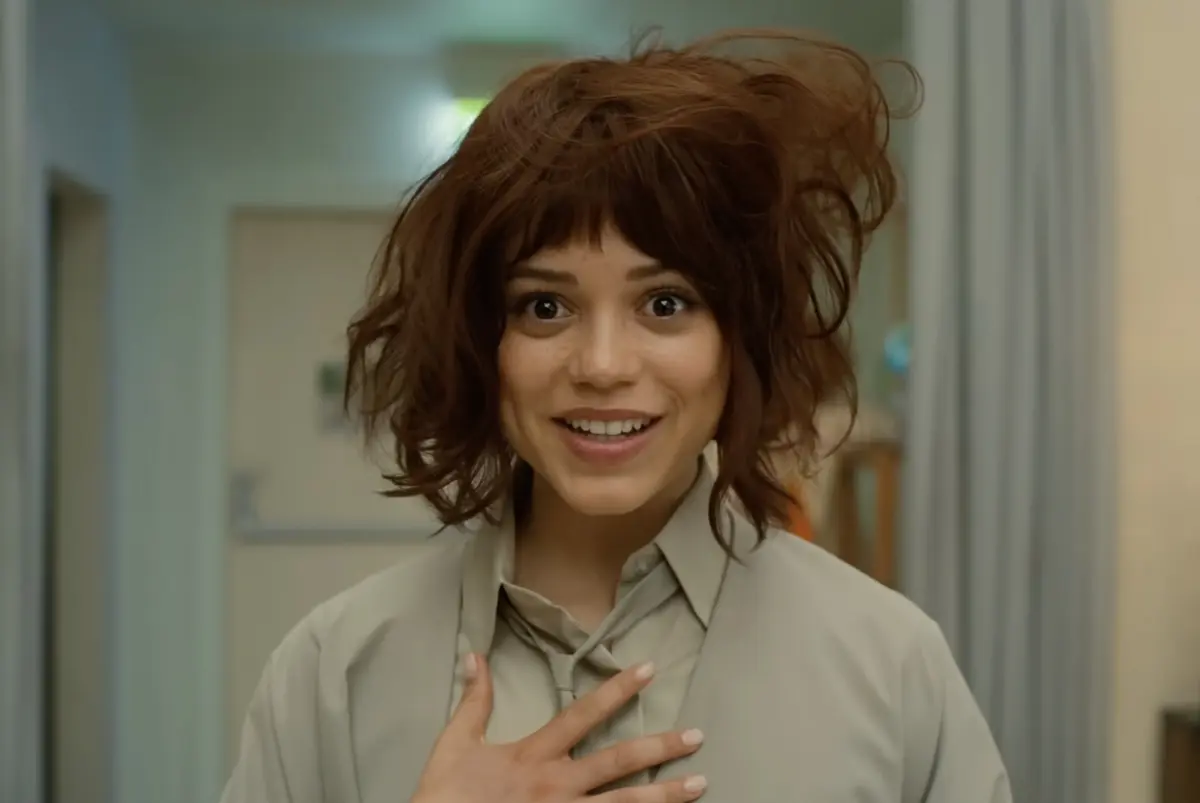
Despite boasting a powerhouse cast that includes Jenna Ortega, Amy Adams, and Mia Tharia, alongside striking production design and moments of brilliant physical comedy, the film collapses under the weight of its own tonal contradictions. This in-depth analysis explores the creative miscalculations, narrative shortcuts, and missed opportunities that ultimately prevent Klara and the Sun from realizing its cinematic potential.
Detailed Chronology: From Page to Screen
The Source Material: Ishiguro’s Dystopian Introspection
Kazuo Ishiguro’s 2021 novel Klara and the Sun is a quiet, meditative exploration of humanity, obsolescence, and unconditional love seen through the synthetic eyes of an Artificial Friend (AF) named Klara. Set in a near-future society where children are routinely genetically altered—or "lifted"—to enhance their cognitive and physical capabilities, the novel deals heavily with themes of class disparity, parental grief, and what it truly means to possess a soul. Ishiguro’s prose is characterized by its restraint, allowing readers to slowly piece together the quiet horrors of a world that discards both its underclass and its artificial creations without a second thought.
The Adaptation: Structuring the Cinematic Narrative
When transition plans for the screen were first announced, expectations were high. The film adaptation introduces Jenna Ortega as Klara, purchased by an anxious mother, Chrissie (Amy Adams), to look after her ailing teenage daughter, Josie (Mia Tharia). Josie belongs to the new elite class of "lifted" youths—a privilege available only to families with substantial financial resources. Chrissie’s life has been upended by tragedy; she previously lost her older daughter, Sal, to natural causes, a catastrophe that also fractured her marriage. As Josie begins to exhibit signs of a similar physical decline, Chrissie’s desperation intensifies.
While adaptations inherently require structural alterations to function on film, the narrative choices made during the development of Klara and the Sun systematically strip the story of its atmospheric nuance. What remains is a narrative framework that reduces Ishiguro’s intricate critique of transhumanism into a predictable, watery parable reminiscent of The Velveteen Rabbit. The narrative engine sputters because it trades psychological depth for broad, sweeping archetypes, sacrificing the internal lives of its characters for superficial plot momentum.
Supporting Context & Production Metrics
Design Choices: A Triumph of Aesthetics Over Logic
Where Klara and the Sun undeniably succeeds is in its meticulous world-building and aesthetic design. The film’s visual language is rich and deliberate:
- Color Palette: The cinematography employs a warm, highly saturated palette that contrasts sharply with the cold emotional landscape of the characters.
- Costume Design: Wardrobe choices are wonderfully erratic, blending updated retro silhouettes with structured, avant-garde couture that signals both wealth and societal decay.
- Architecture: Chrissie and Josie reside in an expansive, prairie-style architectural masterpiece that emphasizes their isolation from the rest of society.
- The AF Marketplace: In the film’s opening sequence, competing AI models are paraded past prospective buyers with the vapid energy of 2000s Abercrombie & Fitch window models—a darkly comedic touch that highlights the commercialization of artificial sentience.
However, these aesthetic triumphs occasionally stumble due to a lack of geographical and environmental logic. For instance, the family’s estate is established as being several hours outside of Chicago. Yet, their expansive property is surrounded by lush, rolling wheat farms. In reality, the agricultural landscape of Illinois is defined almost exclusively by corn and soybeans. While an unspecified global war is hinted to have shifted environmental conditions, unless a radical subterranean reorganization of the soil occurred, wheat farming in northern Illinois remains an aesthetic choice rather than a realistic one.
Character Arcs and Missed Opportunities
The film’s greatest weakness lies in its inability to let its thematic threads breathe. Several compelling narrative avenues are introduced only to be prematurely abandoned:
- Chrissie’s Grief: The script attempts to elevate Chrissie and Josie’s mother-daughter dynamic, using grief as the primary catalyst for Chrissie’s erratic behavior. However, the film never allows the audience to inhabit Chrissie’s perspective. Her past and her difficult choices are merely observed from a distance, rendering her actions confusing rather than tragic.
- Intersectional Tension: Early in the film, the household housekeeper, Melania (played brilliantly by Rachel House), confronts Chrissie after she purchases a "Mexican robot" for Josie. Melania accuses her employer of wanting to remain the sole white woman in the domestic space. Though delivered with fiery, seemingly ad-libbed authenticity by House and Adams, this fascinating tension regarding domestic labor, race, and artificial intelligence is immediately buried beneath plot exposition and never revisited once Melania accepts Klara.
- The Enslavement of AI: Josie’s childhood friend Rick (Aran Murphy)—an unlifted, exceptionally bright boy—is the sole character who explicitly identifies Klara’s status as a form of modern slavery. This vital philosophical inquiry goes entirely unexplored. Similarly, a subplot involving Josie’s jealousy over Rick potentially developing feelings for Klara effectively halts the development of the bond between human and AI, reducing Klara’s ultimate sacrifice to mere programmed compliance.
Official Statements & Critical Reception
The film’s polarizing premiere has sparked intense debate among literary critics, film scholars, and audiences alike. Industry insiders have noted the immense pressure resting on Taika Waititi to deliver a prestige science-fiction drama that could rival traditional awards-season contenders.
In early promotional interviews, producers emphasized the filmmakers’ commitment to honoring Ishiguro’s exploration of bioethics. However, the tonal shift toward broad comedy has drawn sharp criticism. The most prominent structural fracture occurs when Josie attends a social gathering hosted by fellow lifted students from an elite academy. Eschewing the more grounded, at-home tutoring dynamics of the novel, the film presents this gathering as a garish, Hunger Games-esque spectacle where wealthy teenagers treat their respective Artificial Friends with casual, sadistic cruelty.
This heavy-handed bifurcation into capital-“G” Good and capital-“B” Bad thinking fundamentally undermines the narrative. Rather than probing the subtle, systemic prejudices that naturally accompany class-based genetic enhancement, the film relies on cartoonish villainy. Most glaringly, the primary antagonist of the student group—a bully whose cruelty crosses into outright malice—is heavily and unsubtly queer-coded, complete with stereotypical vocal tics. Critics have pointed out the frustrating irony of this characterization, particularly given Waititi’s previous work on projects like Our Flag Means Death, which actively dismantled such reductive tropes.
Future Outlook: Salvaging the Art of Literary Adaptation
Despite its narrative missteps, Klara and the Sun shines during moments of physical comedy and character interaction. Jenna Ortega demonstrates breathtaking body awareness and motor control as Klara, utilizing subtle twitching, posture shifts, and micro-expressions to convey non-human sentience. Paired with the comedic timing of Amy Adams and Mia Tharia, these scenes offer a masterclass in physical performance. For Ortega, the project functions as a striking display of versatility, proving her range far beyond her iconic work on Wednesday.
Ultimately, the film’s failure is not rooted in its willingness to be overly sentimental—a syrupy-sweet tone can be profoundly effective if executed with genuine conviction. Rather, the project suffers from an identity crisis. There is a viable cinematic version of Klara and. the Sun that embraces unadulterated emotional schmaltz, just as there is a version that dives headfirst into pitch-black dystopian satire.
By attempting to straddle these conflicting tones, Taika Waititi’s adaptation achieves neither. As the industry looks toward future literary adaptations, Klara and the Sun will likely serve as a cautionary tale: a reminder that visual splendor and a stellar cast cannot substitute for thematic coherence and narrative integrity. In the end, the world did not need another derivative rendition of The Velveteen Rabbit; Ishiguro’s original, far more harrowing vision deserved a cinematic translation brave enough to stare the future directly in the eye.


Comments
Facebook App ID not configured. Please add it in the Customizer.