
Executive Overview
To the casual observer, stepping out for a night of live entertainment in America has become an exercise in financial vertigo. Whether you are attempting to secure a baseline seat for a New York Knicks game at Madison Square Garden, sipping a Honey Deuce while navigating the manic crowds of the US Open, or sing-screaming "Stupid Song" at an Olivia Rodrigo concert, the underlying reality is universally uniform: it has never been more expensive simply to be in the room.
Live events, once considered an accessible, community-driven pastime for middle-class families and young adults alike, have firmly transitioned into the luxury goods market. Just a few short years ago, in 2019, the average price of a concert ticket hovered around a relatively modest $92. While those seats might not have offered a pristine view of the artist’s face, they guaranteed entry. Today, baseline face-value prices routinely start at $133, and consumers seeking to catch the biggest names in sports and music are expected to shell out exponentially more.
This hyper-inflation of ticket prices is not an accident of the free market; it is the calculated result of a deeply consolidated industry. Driven by Live Nation’s towering dominance over ticketing and venue management, the relentless creep of administrative service fees, dynamic pricing algorithms that penalize demand, and a predatory secondary resale market, consumers are caught in a financial chokehold. With no structural regulatory relief in sight, the cultural fallout is stark. When nosebleed seats for a Knicks tip-off match hit $1,845, and high-demand pop concert resale tickets clear the $2,000 threshold, entire demographics are priced out. For millions, live entertainment has been relegated to a home-viewing experience—or missed entirely.
Read Also
This economic reality forces a lingering question upon those staring at seating maps: Who are these people? What manner of person drops thousands of dollars to sit in the very last row of an arena? Are ordinary concertgoers secretly wealthy, or are we witnessing a mass cultural descent into fiscal irresponsibility? To unpack the psychology and mechanics behind this phenomenon, we spoke directly with a superfan willing to pull back the curtain on his staggering live-event expenditures.
Detailed Chronology: Anatomy of a $15,000 Concert Binge
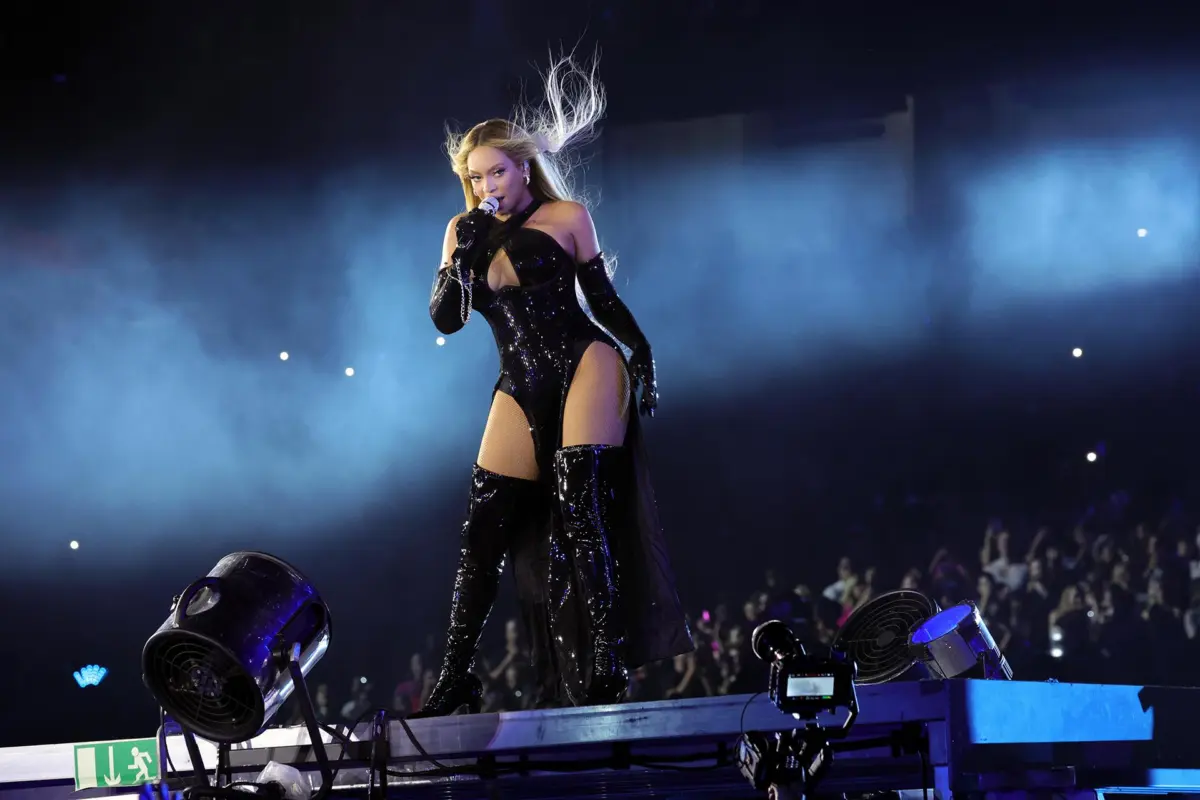
Meet Craig, a 44-year-old education sector worker living in the Bay Area, who earns roughly $180,000 per year. Over the course of Beyoncé’s Cowboy Carter tour, Craig spent upwards of $15,000 to see the pop icon perform live six times. His journey from a casual fan with a modest budget to a devotee racking up five-figure credit card debt offers a masterclass in the psychological pull of modern live music.
The Initial Plan vs. The Snowball Effect
Craig’s journey did not start as a reckless financial venture. It began with a manageable, albeit ambitious, plan designed alongside a partner.
- The Blueprint: "I had planned with a boyfriend who’s now an ex that was part of this whole process," Craig explains. "I was going to go to the first show, the second show, and the third show, and then I was going to be done."
- The Escalation: Predictability, however, is the enemy of fandom. While Craig knew in the back of his mind that three shows wouldn’t satisfy him, the experience quickly spiraled. His outfits scaled alongside his ticket count. "My first outfit was pretty homegrown, a just-barely-put-together cowboy hat that I bought at the show," he recalls. "By the time I was at the fifth and the sixth show, I had a custom-made gold outfit."
- The Climax: By the final stop of the tour, Craig found himself alone in the exclusive Club Ho-Down section, having dropped $2,200 on a single ticket. Surrounded by celebrities and fellow die-hards, the psychological barrier protecting his bank account completely dissolved. "Once you’ve got $8,000 on your credit card, what is $12,000?" he notes.
Navigating Addiction, Recovery, and Euphoria
Craig speaks candidly about the mechanics of his spending, drawing a straight line from his personal history to his concert-going habits. As an alcoholic in recovery for decades, he recognizes the addictive tendencies that govern his passions.
"I don’t mind putting this into print, but I’m an addict, an alcoholic who’s been in recovery for decades, and so it’s easy for me to get hooked on things," Craig reflects. "But this is such a pure, very expensive way to have joy."
The timing of the tour also coincided with personal upheaval. Following a painful breakup after a New York tour stop, Craig’s post-breakup mania kicked into high gear. Buying an $800 custom-made outfit and booking the final two shows became a coping mechanism—an expensive emotional salve that successfully carried him through a difficult summer.
Supporting Context & Metrics: Why Live Events Cost So Much
Craig’s story is an extreme manifestation of a systemic issue plaguing the entertainment landscape. The staggering cost of attending concerts and sporting events in the United States is underpinned by several powerful macroeconomic and structural drivers:
- The Live Nation-Ticketmaster Monopoly: Critics and antitrust regulators have long pointed to Live Nation’s tight grip on venue ownership and ticketing as a primary driver of uncompetitive pricing. By controlling both the spaces where artists perform and the software used to sell tickets, the conglomerate effectively eliminates pricing friction.
- Dynamic Pricing Algorithms: Modelized after the airline and hotel industries, dynamic pricing allows primary ticket sellers to raise prices in real-time based on surging consumer demand. What was once a flat-rate ticket can instantly multiply in cost the second a queue opens.
- The Professionalized Resale Market: Bots and professional scalpers strip inventory from primary sales within seconds, instantly pushing tickets onto secondary platforms like StubHub or SeatGeek at astronomical markups.
- The Post-Pandemic Cultural Shift: Following years of COVID-19 lockdowns, consumer psychology experienced a profound shift toward experiential spending. Aligned with Craig’s late mother’s motto—"We’re making memories"—millions of consumers are prioritizing travel, concerts, and live spectacles over traditional wealth-building milestones like real estate or long-term savings.
Official Statements & Industry Perspectives
The tension between accessibility and exclusivity has not gone unnoticed by artists, promoters, and economists alike. Industry analysts point out that as streaming revenues have plummeted for all but the top tier of recording artists, touring has become the primary financial engine of the modern music industry.
Promoters argue that high face-value ticket prices are simply capturing market value that previously lined the pockets of opportunistic scalpers on the secondary market. However, consumer advocacy groups counter that this dynamic effectively prices out working-class fans, transforming legendary artists’ concerts into elite, country-club-style gatherings for the upper-middle class and wealthy elite.
When asked if he feels guilty about taking up space and driving up demand, Craig is unapologetic, despite recognizing his immense privilege.
"I know how privileged I am to have the ability to put something on a credit card, pay it off eventually—I live in the Bay Area and have a job that’s a pretty good job," he acknowledges. Yet, he notes that within the ecosystem of modern fandom, his six-show run is relatively modest compared to the subculture’s elite. "There was some video that popped up from Renaissance… ‘This is my 26th show.’ When I was in the pit at the very last show, it wasn’t abnormal to be where I was, and be like, ‘I’ve seen her six times.’"
Future Outlook: The Horizon of Inflation and Act III
Looking ahead, there is little indication that the live-event bubble is prepared to burst. Artists continue to push the boundaries of production scale, turning arena tours into multi-hour, highly choreographed theatrical spectaculars that justify—in the minds of their most ardent supporters—eye-watering price points.
For Craig, the financial hangover of his Cowboy Carter spree has finally cleared, with his credit card balance paid off a year later. But rather than curing his concert-going ambitions, the experience has merely calibrated his baseline for acceptable spending.
"The real problem is Beyoncé has set this financial bar that now I almost feel like I could spend that kind of money on anyone," Craig admits. "The fact that I’m seeing Robyn in LA for $300, I’m like, ‘Oh my God, of course I’m going to go to three shows that week.’"
With rumors swirling regarding Beyoncé’s prospective Act III, Craig is already looking toward the future, mapping out a financial strategy that incorporates lessons learned from his past excesses.
"I’m going to possibly go to between five and eight shows depending on what happens. 2026 is rumored to be Jay-Z’s year, which means the tour would be 2028, which means I have enough time to save, enough time to put some money away and be a little bit more strategic."
As the live entertainment industry marches forward into an increasingly expensive future, consumers will continue to grapple with the tension between financial pragmatism and the intoxicating pull of shared, live experience. For the modern superfan, the math may not always make financial sense, but the memories—and the music—remain priceless.





Comments
Facebook App ID not configured. Please add it in the Customizer.