
Executive Overview
For over a century, the representation of food in visual media has served as a mirror to human culture, economic ambition, and psychological desire. From Victorian still-life photography capturing raw mortality to mid-century magazine spreads promising suburban domestic bliss, visual media has systematically sculpted how humanity perceives sustenance. At the turn of the twenty-first century, high-definition television and digital media catalyzed the "food porn" phenomenon—a sensory hyper-fixation on extreme close-ups, sizzling fats, and dripping glazes explicitly engineered to trigger primal, evolutionary hunger instincts.
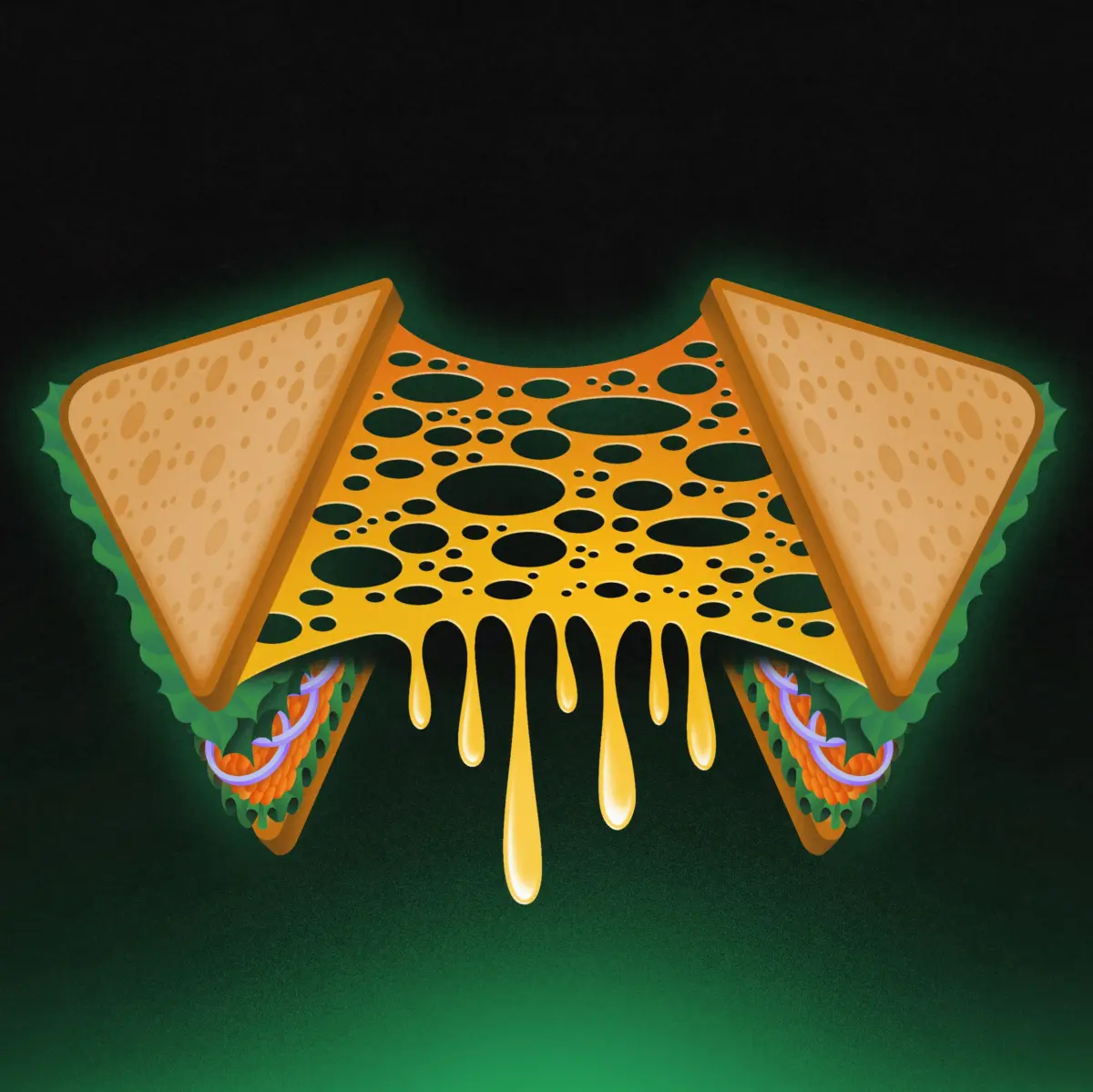
However, the rapid proliferation of generative artificial intelligence has introduced a stark paradigm shift in visual culinary representation. Across global dining hubs—from local bodegas in Minneapolis to tourist taverns in Hexentanzplatz—restaurants, food trucks, and delivery apps are increasingly replacing traditional photography with AI-generated visual renderings. Far from inducing appetite, these synthetic images—often featuring bizarre, hyper-textured renditions of shrimp scampi, quiche, chicken nuggets, burritos, and Italian subs—frequently evoke visceral revulsion, trypophobic discomfort, and aesthetic alienation.
Simultaneously, the deployment of artificial intelligence in gastronomy has expanded far beyond graphic design. Elite culinary establishments and commercial kitchens alike are adopting Large Language Models (LLMs) to optimize menu design, predict sales metrics, and even synthesize novel recipe pairings. This investigative analysis explores the evolution of food media, evaluating the tension between technological efficiency and the human essence of culinary art, while assessing the profound cultural and psychological implications of an algorithmically rendered dining landscape.
Read Also
Detailed Chronology: The Evolution of Food Representation
To understand the unsettling impact of AI-generated food imagery, one must examine the historical continuum of visual food media, which has shifted across four distinct epochs over the past two centuries.
+-------------------------------------------------------------------------------------------------+
|                                    HISTORICAL TIMELINE OF FOOD MEDIA                            |
+-------------------------------------------------------------------------------------------------+
|  1850s–1920s: Naturalism & Decay   |  Victorian still-life; focus on raw mortality and game.    |
|  1930s–1950s: Ornamental Cookery   |  Color printing boom; sanitized, bourgeois aesthetic.      |
|  2000s–2010s: The "Food Porn" Era  |  Macro-lenses, TV dinners, biological hunger triggers.     |
|  2020s–Present: Generative AI Slop |  Synthetic rendering, stochastic iteration, uncanny imagery|
+-------------------------------------------------------------------------------------------------+
1. The Mid-Nineteenth Century: Victorian Realism and Mortality (1850s–1920s)
Following the emergence of early daguerreotypes and light-sensitive glass plates, mid-nineteenth-century photographic pioneers approached food through the lens of traditional still-life portraiture.
- Themes: Victorian photography frequently highlighted raw, unvarnished mortality. Images displayed game birds suspended from nails, freshly caught fish glistening on wooden benches, and lizards crawling across ripening fruit.
- Cultural Function: Rather than serving as commercial temptation, these images operated as ethnographic and existential art, emphasizing the fragility of life, the inevitable march of decay, and humanity’s direct dependence on nature.
2. The Mid-Twentieth Century: "Ornamental Cookery" and Mass Commercialization (1930s–1980s)
The introduction of high-volume color print technology in the 1930s fundamentally transformed food photography into a potent tool of commercial advertising and middle-class aspiration.
- Roland Barthes’ Critique (1957): In his seminal collection Mythologies, French cultural theorist Roland Barthes criticized the glossy culinary spreads featured in popular magazines like Elle. Barthes coined the term "ornamental cookery" to describe photos of meticulously glazed meats, molded jellies, and intricate garnishes.
- The Social Illusion: Barthes argued that these hyper-stylized images were designed purely for the "genteel sense" of sight. By reducing cooking to an abstract visual exercise, ornamental cookery effectively whitewashed the raw realities of food production—concealing the "brutality of meat," the "abruptness of sea-food," and the labor required to prepare sustenance.
3. The Turn of the Millennium: The "Food Porn" Era (1990s–2010s)
By the late 1990s and early 2000s, specialized cable channels such as the Food Network ushered in a hyper-visceral era of food broadcasting.
- Macro-Photography & Primal Triggers: In a 2006 analysis for The New Yorker, journalist Bill Buford documented how cooking shows began using extreme close-up lenses to reveal an ingredient’s microscopic "pores."
- The Executive Perspective: Bob Tuschman, then head of programming for the Food Network, famously explained the biological mechanics behind this visual strategy:
"If you’re flicking from channel to channel and come upon food that has been shot in this way, you will be hardwired as a human being to stop, look, and bring it back to your cave."
- Academic Formalization: In 2007, academic critic Richard Magee formalized the term "food porn," defining it as hyper-glorified food visuals "divorced from [their] nutritive or taste qualities." This visual style allowed viewers to experience hedonistic culinary appreciation in the abstract—bypassing physical labor, capital expenditure, and actual consumption.
4. The 2020s: Generative AI and the Era of "Algorithmic Slop"
The launch of advanced text-to-image diffusion models marked a radical departure from both Victorian realism and commercial enticingness.
- The Emergence of AI Slop: Establishments ranging from urban bodegas to international eateries began utilizing synthetic image generators to construct digital menus.
- The Aesthetic Disconnect: Unlike professional food stylists who used prop tricks (such as motor oil on pancakes or cardboard spacers inside hamburger patties) to simulate ideal freshness, generative AI models synthesize food based on mathematical probability. The result is an uncanny, insectoid visual language characterized by unnaturally uniform textures, melting structural geometry, and unsettling surface patterns.
Supporting Context & Technical Metrics
The shift toward AI-generated food visualizer tools represents both an economic strategy for low-margin food providers and a profound break from human visual psychology.
Visual Pathology of Synthetic Food Imagery
Generative image models process visual data stochastically. When instructed to generate complex culinary items—such as a loaded bacon, egg, and cheese sandwich, an Italian sub, or a charred pizza—the software struggles with the structural rules of organic materials.
+---------------------------------------------------------------------------------------------------+
|                            COMPARATIVE MATRIX: FOOD VISUALIZATION MEDIA                           |
+---------------------------------------------------------------------------------------------------+
| Metric / Feature      | Commercial Photography      | Food Network Era         | Generative AI        |
+-----------------------+-----------------------------+--------------------------+----------------------+
| Core Sensory Target   | Visual Elegance / Status    | Primal Biological Hunger | Visual Shorthand     |
| Production Technique  | Stylized props, physical oil| Macro-lenses, extreme zoom| Text-to-Image Prompt |
| Human Emotional Shift | Aspirational Admiration     | Salivation / Craving     | Alienation / Horror  |
| Material Reality      | Heavily modified physical   | Real, cooking physical   | Zero physical reality|
| Cost of Production    | High (Professional studio)  | High (Broadcast crew)    | Near Zero ($0 / free)|
+-----------------------+-----------------------------+--------------------------+----------------------+
Key Visual Distortions in AI Food:
- Trypophobic Clustering: Diffusion models routinely misinterpret bubbly cheeses, baked crusts, and seared meats, outputting unnaturally repetitive, densely packed holes and blisters that trigger mild trypophobia (revulsion toward patterns of small holes).
- Incoherent Geometry: AI-generated sandwiches often feature ingredients that merge seamlessly into one another—bacon strips dissolving into bread crusts, or egg yolks floating without physical support.
- Uncanny Gloss and Texture: Synthetic dishes possess a non-biological, hyper-shiny sheen, rendering sauces as synthetic resin and fresh produce as molded plastic.
The Economics of Menu "Sloppification"
Why are restaurants embracing images that actively alienate potential diners? The answer lies in the harsh economics of the post-pandemic hospitality industry.
- Cost Elimination: Professional food photography sessions—requiring a camera crew, lighting technicians, food stylists, and post-production editing—can easily cost several thousand dollars. Generative AI tools offer instant menu art at zero marginal cost.
- Low-Margin Fast-Casual Sector: The primary adopters of AI food images are delis, fast-casual food carts, and delivery-only "ghost kitchens." In these high-volume, low-margin operations, speed and transaction volume take precedence over brand prestige.
- The "Slop" Signal: Ironically, the presence of grotesque AI images functions as a transparent visual signal. It communicates to consumers that the food is mass-produced, low-cost, and utilitarian—shifting expectations down to match the low cost of production.
Official Statements & Industry Perspectives
The integration of artificial intelligence into food media and kitchen management has drawn sharp reactions from renowned chefs, literary critics, and industry executives.
  "Sales metrics and menu design inserted into a large language model allow
   our restaurants to optimize both topline sales and overall profitability."
   — Jean-Georges Vongerichten, World-Renowned Chef & Restaurateur

  "I use AI for inspiration to produce images and ideas foreign to classically
   trained chefs by pulling ingredient pairings and plating ideas from across the world."
   — Ben Triola, Executive Chef at The Chloe

  "The food we make for ourselves, and for our people, reflects where we come
   from and what we turn to for comfort. It shows love and respect. It is a language."
   — Marcus Samuelsson, Celebrity Chef & Author
1. Operational Efficiency and Algorithmic Recipe Design
- Jean-Georges Vongerichten, world-renowned chef and operator of fine-dining venues globally, confirmed that his restaurant group leverages Large Language Models to streamline business operations. By feeding operational data, sales metrics, and dish performance into algorithms, his management team can evaluate which menu items drive maximum margin and prioritize high-profit concepts.
- Ben Triola, Executive Chef at The Chloe in New Orleans, defended using generative AI as a creative partner. Triola told Food & Wine that AI allows him to synthesize global ingredient pairings and unconventional plating concepts that might not occur to traditionally trained culinary professionals.
2. The Cultural and Humanist Pushback
- Marcus Samuelsson, celebrated chef and restaurateur, offered a starkly different view on the role of human narrative in culinary creation. Writing for The New York Times, Samuelsson emphasized that authentic cooking cannot be reduced to algorithmic sorting:
"The food we make for ourselves, and for our people, reflects where we come from and what we turn to for comfort. It shows love and respect. It is a language that is learned."
- William Deresiewicz, essayist and cultural critic, has historically argued against romanticizing culinary art, noting in The New York Times that food cannot strictly be classified alongside fine art because it lacks philosophical ambiguity and cannot "speak."
- The Philosophical Critique of AI Cooking: Building on Deresiewicz’s framework, analysts argue that while food may not be high literature, a dish conveys profound subterranean meanings—geographical history, ancestral memory, and emotional intimacy. When an LLM generates a recipe by cross-referencing statistical databases, it strips away lived experience. The output is neither culture nor art; it is merely culinary mathematics.
Future Outlook & Industry Implications
As artificial intelligence becomes embedded in both front-of-house marketing and back-of-house operations, the restaurant industry faces a critical divide between algorithmic efficiency and human authenticity.
+--------------------------------------------------------------------------------------------------+
|                                FUTURE LANDSCAPE: AI VS. HUMAN GASTRONOMY                         |
+--------------------------------------------------------------------------------------------------+
| Operational Sector | Primary AI Application         | Cultural & Economic Risk                   |
+--------------------+--------------------------------+--------------------------------------------+
| Fast-Casual / Ghost| AI-generated visual menus,     | Consumer alienation, brand degradation,    |
| Kitchens           | automated order taking.        | race-to-the-bottom pricing.                |
+--------------------+--------------------------------+--------------------------------------------+
| Fine Dining &      | LLM sales optimization,        | Loss of culinary soul, generic flavor      |
| Boutique Eateries  | algorithmic flavor matrixing.  | profiles, homogenization of heritage.      |
+--------------------+--------------------------------+--------------------------------------------+
| Artisanal &        | Explicit rejection of AI;      | Higher operational costs, premium pricing  |
| Heritage Venues    | focus on human origin stories. | marketed on human authenticity.            |
+--------------------+--------------------------------+--------------------------------------------+
1. The Threat of Visual Homogenization and Consumer Fatigue
As consumers become adept at spotting synthetic imagery, the initial novelty of AI menu design is wearing off, giving way to visual fatigue. Menus plastered with unnatural, trypophobic renditions of food risk repelling diners rather than attracting them. Industry observers predict a impending consumer backlash, where establishments advertising "100% Real Human Photography" or "Authentic Kitchen Visuals" may gain a competitive marketing edge.
2. The Bifurcation of the Hospitality Industry
The widespread adoption of AI tools is likely to split the dining market into two distinct tiers:
- The Automated Commodity Tier: Fast-food chains, ghost kitchens, and budget delis will rely entirely on end-to-end AI integration—from generative menu design and dynamic pricing algorithms to automated prep stations. In this segment, food is treated purely as fuel, and visual marketing is understood to be synthetic shorthand.
- The Artisanal Heritage Tier: High-end and culturally rooted dining establishments will actively reject visible automation. These venues will emphasize raw ingredients, human labor, personal heritage, and physical craft as their primary value propositions, charging premium prices for authentic human connection.
3. Philosophical Conclusion: The Matter of Materiality
Ultimately, the public backlash against AI-generated food images reveals something fundamental about the human condition. While society has grown somewhat accustomed to AI-generated text, synthetic background music, and digital art, food remains tied to our physical survival and sensory experience.
Cooking requires living ingredients, physical labor, and tactile engagement. When generative software reduces a meal to a surreal, stochastic composite of pixels, it offends our innate understanding of life, nourishment, and appetite. Roland Barthes once warned that glossy "ornamental cookery" distracted us from the real world of food. Today’s AI menu imagery represents the logical extreme of that detachment: a digital facade that strips food of its physical reality, leaving behind an eerie visual shell.





Comments
Facebook App ID not configured. Please add it in the Customizer.