
Executive Overview
In the landscape of modern storytelling, the pursuit of the "likable protagonist" has often led writers down a perilous path toward sanitized perfection. Authors frequently labor under the assumption that audiences demand faultless heroes—paragons of virtue who make optimal decisions, possess unwavering moral compasses, and never indulge in petty selfishness. Yet, a closer examination of enduring literature and cinematic history reveals a starkly different truth: audiences do not require perfection; they demand authenticity.
When a character is weighed down by an unyielding halo of righteousness, they frequently alienate the reader, earning little more than the figurative "Goody Two-Shoes Award" and reducing narrative tension to a flatline. Conversely, deeply flawed characters—ranging from the calculating and manipulative to the outright brutal—often capture our imaginations and retain our loyalty for decades.
Why do audiences readily forgive moral failure, cowardice, pettiness, and even violence in fictional characters, while instantly rejecting others for far lesser infractions? The answer lies not in the absence of flaws, but in the presence of trust.
Read Also
An imperfect character becomes instantly magnetic when audiences trust their honesty more than they judge their mistakes. While audiences are remarkably forgiving of personal failings, they maintain a zero-tolerance policy for hypocrisy, particularly when that hypocrisy is unintentionally manufactured by the author. By embedding moments of stark self-awareness, radical transparency, and unapologetic ownership of personal flaws into a narrative, writers can bridge the gap between unlikable behavior and deep audience empathy.
Detailed Chronology: The Evolution of Character Likability in Media
The understanding of how audiences connect with morally compromised protagonists has shifted dramatically over the decades. Tracing this evolution through landmark cinematic and literary milestones reveals how creators have weaponized honesty to redeem characters from the brink of unmitigated disdain.
1. The Golden Era of Cinema and the Breakthrough of Vulnerable Deception (1935)
In the mid-1930s, Hollywood storytelling was largely bound by the strict moral codes of the Hays Office, which demanded clear boundaries between heroes and villains. Yet, revolutionary character studies managed to subvert these limitations. A prime historical example is found in the 1935 RKO Radio Pictures film Sylvia Scarlett, starring Katharine Hepburn and Cary Grant.

In the film, Hepburn plays a young, virtuous girl who disguises herself as a boy to help her criminal father evade the law. Early in the narrative, Sylvia allows herself to be coerced into theft—a classic act of hypocrisy for someone of her initial moral standing. By traditional metrics, this made her a candidate for immediate viewer rejection.
However, the turning point arrives in an unguarded, tipsily honest moment. Still disguised as a boy, Sylvia stumbles upon a naive housemaid about to take the fall for a crime Sylvia and her cohorts committed. In a moment of raw contrition, Sylvia points directly at her father, their accomplice, and finally at herself, declaring, "He’s a crook, he’s a crook… he’s a crook."
This single act of unvarnished truth transformed a potentially unlikable criminal hypocrite into a deeply human, relatable figure. It established a timeless screenwriting precedent: admission of guilt acts as a psychological reset button for audience sympathy.
2. The Modern Blockbuster and Unapologetic Transparency (2008–2012)
Fast forward to the dawn of the modern cinematic universe in 2008 with Marvel Studios’ Iron Man. Tony Stark shattered the traditional mold of the self-sacrificing, humble comic book hero. Stark was brash, arrogant, aggressively capitalistic, self-absorbed, and relentlessly provocative.
Yet, audiences did not resent him. Why? Because Tony Stark never pretended to be anything other than what he was.
When pitted against the ultimate embodiment of 1940s aw-shucks idealism, Captain America (Steve Rogers), in The Avengers (2012), Stark’s transparency reached iconic status. Challenged by Rogers to identify his true worth outside of his armored suit, Stark fires back without hesitation: "Genius, billionaire, playboy, philanthropist." By owning his flaws rather than concealing them behind a veneer of false modesty, Stark weaponized his arrogance into pure authenticity. His subsequent journey along a positive change arc was believable precisely because his starting point was aggressively honest.

3. The Prestige Television Era and Moral Grayness (2010–2015)
As television transitioned into its golden prestige era, antiheroes dominated the small screen. Series like FX’s Justified (2010–2015) pushed protagonists deep into moral ambiguity. Deputy U.S. Marshal Raylan Givens regularly discarded police protocol, adopting a shoot-first-and-ask-questions-later methodology that belonged more to a frontier gunslinger than a modern law enforcement officer.
In the pilot episode, after shooting a suspect in a legally questionable confrontation, Raylan’s ex-wife confronts him about the incident. Raylan’s defense is disarmingly simple: "I was justified."
Throughout the series, Raylan operates under this internal, unyielding code of "justification." He never attempts to spin public relations narratives or convince himself—or others—that he is a saint. His behavioral honesty anchors his character, proving that even when a protagonist leads an audience deep into the dark, murky waters of the moral gray, adherence to an honest internal code maintains reader trust.
Supporting Context & Metrics: The Psychology of Audience Forgiveness
To understand why honesty triumphs over perfection in character design, we must examine the cognitive mechanics of narrative engagement and suspension of disbelief.
The Hypocrisy Trap vs. The Authenticity Anchor
Literary psychology suggests that human beings are hardwired to detect deceit and social misalignment. When an author attempts to present a character as noble while simultaneously having them commit petty, selfish, or cruel acts without narrative acknowledgment, an unbridgeable cognitive dissonance occurs. This is unintentional hypocrisy.
- Perfection vs. Flaws: Audiences do not expect perfection; in fact, narrative engines stall without conflict, and conflict requires flaws. A character arc demands that a character harbor internal lies or weaknesses to overcome.
- The Tolerance Threshold: Empirical feedback from developmental editors and audience response studies indicates readers will forgive a staggering array of negative traits—including pettiness, cowardice, brutality, and arrogance—provided those traits are mirrored by a corresponding level of self-awareness or situational honesty.
| Character Trait | Unacknowledged (Hypocrisy) | Acknowledged & Owned (Authenticity) |
|---|---|---|
| Arrogance | Alienating, irritating, unearned. | Compelling, transparent, self-aware. |
| Cowardice | Despised, viewed as weak plotting. | Relatable, human, ripe for growth. |
| Brutality | Repulsive, alienates the audience. | Understandable if bound to a clear, honest code. |
When a character owns their dark impulses, the power dynamic shifts. The reader stops viewing the character as a puppet manipulated by an out-of-touch author and starts viewing them as an autonomous, self-reflecting human being navigating a hostile world.

Official Statements & Industry Insights
Industry experts, master storytellers, and writing theorists have long emphasized the necessity of structural honesty in character creation.
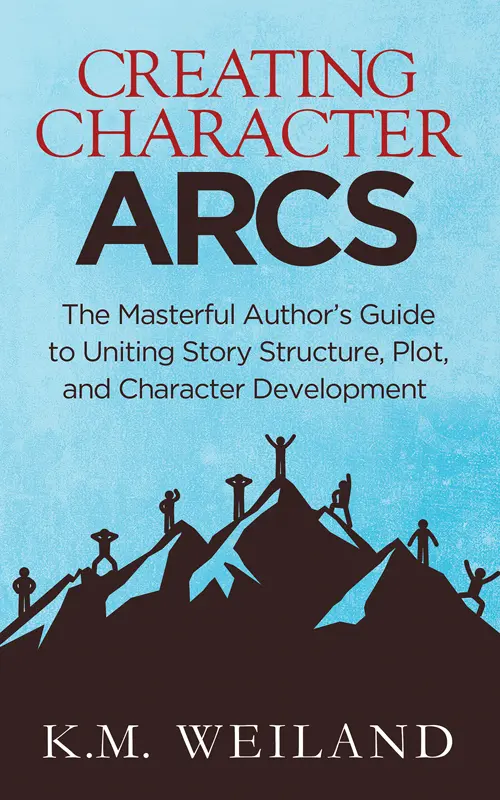
Renowned writing coach and author KM Weiland notes that the foundational bedrock of a compelling character arc is the interplay between internal flaws and external truths:
"A flawed character becomes likable when audiences trust the character’s honesty more than they judge the character’s mistakes. Audiences can forgive moral failure. What they can’t forgive is hypocrisy—particularly if the hypocrisy is unintentionally created by the author."
Furthermore, psychological profiling frameworks utilized in advanced character development, such as the Enneagram system, underscore that psychological consistency is vital for reader buy-in. When a character’s flaws stem from deep-seated core fears, desires, and coping mechanisms rather than arbitrary quirkiness, their reactive honesty becomes all the more potent.
As narrative theorists point out, whether a character is traversing a Positive Change Arc (moving toward self-awareness and overcoming the internal lie) or a Negative Change Arc (descending into self-deception and tragic ruin), starting with a modicum of honest self-reflection—or fiercely committing to an authentic internal code—provides the necessary anchor for reader empathy.
Future Outlook: The Next Generation of Character Development
As storytelling platforms diversify across novels, interactive gaming, serial streaming, and immersive media, the demand for complex, nuanced protagonists will only accelerate. The era of the cleanly sketched, morally unassailable hero has effectively drawn to a close.

Writers moving forward must master the delicate architecture of vulnerability. To ensure characters do not cross the unforgivable threshold into unlikability, creators are increasingly turning to structured analytical tools—such as comprehensive character questionnaires and psychological frameworks—to audit their protagonists’ self-awareness.
Essential Questions for Crafting Trusted, Flawed Characters:
- What is the core internal lie your character believes, and how does it manifest in their daily hypocrisy?
- At what point in the narrative does your character experience a moment of unvarnished, unguarded self-recognition?
- Are your character’s worst actions explicitly acknowledged within the text, or are they glossed over by narrative convenience?
- Does your protagonist possess an internal code of ethics (however flawed or unconventional) that they stubbornly refuse to lie about?
- How does the character react when confronted with their own failures—do they deflect defensively, or do they own the fallout?
- If your character engages in deception against others, are they entirely honest with the reader/audience about their motivations?
- Does the character’s growth (or tragic descent) feel earned through consistent, psychologically authentic steps rather than sudden, unearned epiphanies?
By systematically addressing these questions, authors can construct personalities that are not only deeply flawed but profoundly magnetic. Ultimately, a well-dramatized dose of self-awareness transforms imperfections from narrative liabilities into assets. By anchoring a character’s journey in radical honesty, writers grant their creations the context, humanity, and credibility required to keep audiences turning pages—and rooting for the antihero—long after the final chapter has closed.




Comments
Facebook App ID not configured. Please add it in the Customizer.