In 2022, a mysterious cardboard box materialized at a United Service Organizations (USO) office in New York City. Inside lay a treasure trove of American history: more than 300 handwritten letters dispatched from the European and North African theaters of World War II. They were penned by Louis “Speedy” Weber—a 23-year-old soldier from the Bronx who had been married to his wife, Frances, for mere weeks before shipping overseas.
Who dropped the letters off, and why they were abandoned, remains an open mystery. But for years, the collection sat in USO archives, eventually catching the eye of archivist and historian Michael Case. Recognizing the profound historical value of these ordinary yet remarkably evocative missives, Case embarked on a multi-year quest to locate living relatives of the author.
Through a combination of institutional publicity campaigns, digital archives, and the keen detective work of an amateur genealogist in California, the USO finally shattered the impasse. Researchers tracked down two living relatives—a nephew who remembered Speedy’s triumphant postwar homecoming, and a niece who preserved precious photographs of the couple.
This article explores the journey of Speedy’s letters, examining the poignant romance, the psychological strains of wartime separation, and the broader historical context of how letter-writing sustained morale for millions of American service members during humanity’s darkest global conflict.
Detailed Chronology: From the Bronx to the Front Lines and Back
1. The Newlyweds of 1940
Long before the thunder of artillery shook the European continent, Louis "Speedy" Weber and Frances were just two young people carving out a life in New York. Census records from 1940 reveal that the couple lived in close proximity within the city, their respective households populated by immigrant parents. By 1941, Speedy and Frances were married, settling into a rhythm of domestic life in the Bronx.
Their bliss, however, was violently interrupted by the onset of World War II. Within months of America’s entry into the conflict, Speedy found himself inducted into the United States Army.
2. Basic Training and the Anchor of Ink
Military life was a jarring shock to the young man. In June 1942, just weeks after putting on the uniform, Speedy wrote to Frances to describe the grueling physical and mental adjustments required of recruits. He learned how to wake up in pitch-black morning hours, work kitchen duty until sunset, and endure the mandatory 1.5-inch-long military haircut.
"I don’t feel as blue as I did yesterday," he wrote to Frances on June 17, 1942. "They don’t give me a minute to think about anything but Army life, and in a way that’s the best thing for me, because if I stopped to think about home I’d go nuts."
To keep himself anchored, Speedy began a prolific correspondence habit. Writing an average of roughly 100 letters a year—roughly one every three to four days—he sent missives from training camps stateside before eventually shipping across the Atlantic.
3. The European Theater and D-Day
As the war escalated, Speedy’s letters crossed paths with history. He moved through Sicily, England, France, Belgium, Germany, Czechoslovakia, and North Africa, scrawling atmospheric headings at the top of his stationery: "Somewhere in England," "Somewhere in France," "Somewhere in Luxembourg."
He arrived in France shortly after the historic Allied landings of June 1944. In a letter dated June 14, 1944, he captured the surreal, cinematic scale of crossing the English Channel during Operation Overlord:
"When I was on my way across the channel, I felt just as safe as if I were in your arms, because as far as the eye could see, there was nothing but ships of every description. When I looked up into the sky, I had a hard time seeing the sun because of the planes we had up there. It was a sight I’ll never forget."
His letters balanced sweeping historical observations with domestic intimacy, playful banter, and occasional candid frustrations. In early 1945, he wrote to inform Frances that he had been demoted from private first class to private over what he considered a remarkably "flimsy" administrative reason. Yet, he reassured her with characteristic wit, noting she needn’t worry about him dropping any lower "because there is no smaller grade than private."
4. Postwar Normaldom and the 2022 Discovery
When the guns finally fell silent, Speedy returned home to New York. He and Frances built a quiet, steady life together—Speedy working as a truck driver and Frances managing a U.S. Post Office. Though they never had children, they eventually retired to Florida, where they lived out their golden years before passing away at ages 78 and 87, respectively. They rest side by side in a Jewish cemetery.
For decades, their story remained privately held within family memories. Then, in 2022, the unlabeled cardboard box containing more than 300 of Speedy’s letters was dropped off anonymously at a USO office in New York.
Supporting Context & Metrics: The Lifeline of Wartime Mail
To understand the weight of Speedy Weber’s letters, one must understand the unprecedented logistical scale of the U.S. military postal system during World War II.
The Postal Lifeline: According to Lynn Heidelbaugh, a curator at the Smithsonian’s National Postal Museum, mail was the absolute primary channel of communication for soldiers on the front lines. Governments actively encouraged this psychological lifeline, providing free stationery and waiving postage fees for active-duty personnel.
Frequency: A 1944 survey revealed that service members sent some form of communication—ranging from long-form letters and brief postcards to single-page V-Mail—roughly six times per week.
Survival Bias: Heidelbaugh notes that collections like Speedy’s are exceedingly rare because letters sent from service members were far more likely to survive. Families back home could securely store bundles of mail, whereas soldiers on the move frequently had to discard non-essential personal items.
A Unique Voice: Michael Case, the USO archivist who inherited the collection, describes Speedy’s writing style as "everyday elegant." Despite likely never advancing past high school, Speedy possessed a distinct dramatic flair and emotional acuity, moving effortlessly between stark realism and endearing whimsy. Throughout the letters, he lavished Frances with an eccentric rotation of pet names, including "Meatball," "Legs," "Knucklehead," "Shape," and "Dearest."
Official Statements and Institutional Efforts
The path to identifying Speedy’s family was fraught with dead ends. After the box arrived in 2022, it sat unassigned to any living lineage until the USO partnered with the Washington Post in late 2024 to profile the mystery. While census data linked Speedy and Frances to immigrant families in New York who spoke Hebrew in the 1940 census, no living relatives came forward immediately.
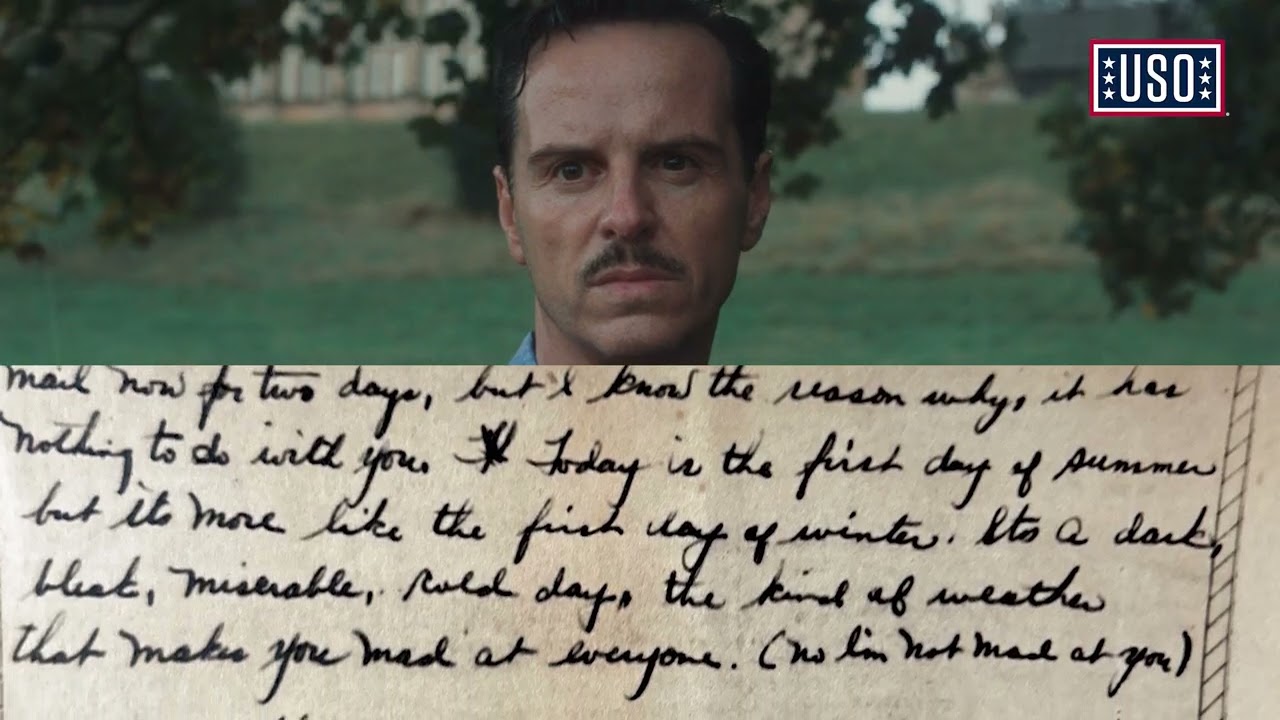
To break the stalemate, the USO launched a high-profile multimedia push in early 2026. The organization digitized a curated selection of the letters onto its "Letters Home" archive and enlisted acclaimed actor Andrew Scott—who starred in the World War II drama Pressure—to publicly read a poignant excerpt of a letter Speedy penned right after D-Day.
"We’re putting the letters back out there as people are talking about this movie," Jennifer Passey, vice president of communications at the USO, explained to reporters. "We would love for anyone who may know more about Speedy or his wife, Frances, to reach out to us."
The strategy worked—not through direct family recognition, but through crowdsourced genealogy. Matthew Brown, an amateur genealogist in California, spent hours cross-referencing records on Ancestry.com until he uncovered a promising lead: Arthur Serota. A reporter at the Washington Post tracked Serota down in Los Angeles, unlocking a lifetime of missing context.
Future Outlook: Unresolved Mysteries and Historical Legacy
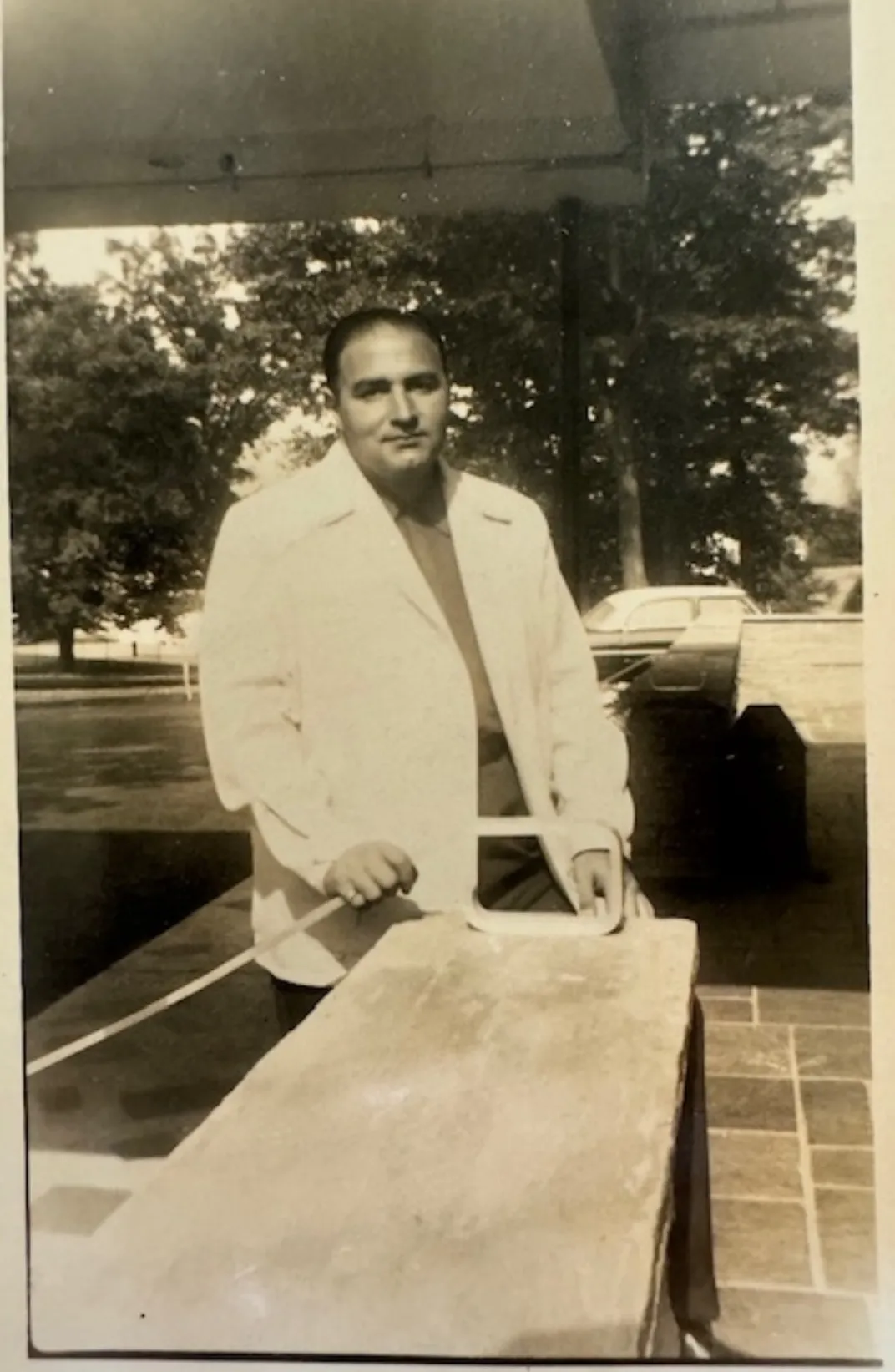
When contacted by journalists, Arthur Serota—now 84 years old and born the exact year Speedy shipped out—immediately recognized his beloved uncle. He described Speedy as a man radiating natural warmth and generosity, while remembering Frances as a "classy," exceptionally sharp woman. Soon after, Karen Weber Figilis, a niece of the couple, came forward with two precious black-and-white photographs, finally giving historians a physical face to match the vivid literary voice.
Despite these breakthroughs, significant mysteries endure:
The Anonymous Donor: Nobody knows who packed up over 300 letters and dropped them off at a New York USO office in 2022. Archivists suspect an individual stumbled upon the trove while cleaning out an estate, recognizing the USO stationery and returning them to the organization.
Frances’s Perspective: While Speedy wrote hundreds of letters, the collection includes only two written by Frances, suggesting that much of her side of the correspondence was lost to time—or left mysteriously unopened by the soldier himself.
Ultimately, Speedy Weber’s letters transcend family history. They serve as an invaluable historical archive detailing how the seismic pressures of a global war manifested in the day-to-day internal life of an ordinary American soldier. As Michael Case aptly notes, Speedy was never a general or a prominent historical figure; he was simply a regular man thrust into the epicenter of history, documenting the human experience one handwritten page at a time.

/https://tf-cmsv2-smithsonianmag-media.s3.amazonaws.com/filer_public/fe/a4/fea4733a-0d55-495d-8871-35601a376f66/gettyimages-2186736524.jpg)
/https://tf-cmsv2-smithsonianmag-media.s3.amazonaws.com/accounts/headshot/Ellen_Wexler.png)
:focal(1500x1000:1501x1001)/https://tf-cmsv2-smithsonianmag-media.s3.amazonaws.com/filer_public/fe/a4/fea4733a-0d55-495d-8871-35601a376f66/gettyimages-2186736524.jpg)
/https://tf-cmsv2-smithsonianmag-media.s3.amazonaws.com/filer_public/94/0d/940dfb2b-7f54-4ad0-8162-d1b5b15d54bc/gettyimages-2186736369.jpg)
/https://tf-cmsv2-smithsonianmag-media.s3.amazonaws.com/filer_public/cc/06/cc0606eb-e5e8-41a8-842c-d31e30c1c266/gettyimages-2287835789.jpg)
/https://tf-cmsv2-smithsonianmag-media.s3.amazonaws.com/filer_public/95/2a/952a9cc4-a2ba-4d8c-ae2e-c7c7a0e4a418/louis_speey_weber_20260608_104427_gmail.jpg)

Comments
Facebook App ID not configured. Please add it in the Customizer.