

Executive Overview
In the wake of the United States Supreme Court’s landmark ruling in Dobbs v. Jackson Women’s Health Organization, the political and legal architecture surrounding American women has undergone a profound transformation. At the core of the conservative movement seeking to restrict reproductive autonomy lies a specific, highly idealized image of motherhood: a state of existence framed as a woman’s total fulfillment. This ideology portrays maternal care as an innate, self-abnegating instinct—one that requires neither economic compensation, explicit consent, nor an active interior life.
By framing domestic labor and child-rearing as biological destiny rather than deliberate work, modern legal and social frameworks effectively obscure the material realities of caregiving. However, a growing body of contemporary literature—spanning autotheory, hybrid memoir, critical theology, and speculative nonfiction—is directly challenging this state-sanctioned narrative.
Rather than presenting motherhood as an extinguishing of the self, writers such as Sarah Manguso, Maggie Nelson, Catherine Cho, Doireann Ní Ghríofa, Margo Steines, Natalie Carnes, and Julietta Singh document a reality where maternal life coexists with obsession, bodily autonomy, intellectual obsession, and political critique. These works demonstrate that rendering a woman’s interiority in full is an inherently political act—one fundamentally incompatible with a society that requires her to function merely as a vessel or a civic utility.
Read Also
Detailed Chronology: The Evolution of Maternal Critique (1970s–Present)
To understand the current literary resistance to conservative maternal policy, it is necessary to trace how feminist theory and creative nonfiction have historically interrogated the domestic sphere.
+-----------------------------------------------------------------------------------+
| HISTORICAL TIMELINE: FEMINIST THEORY TO CONTEMPORARY AUTOTHEORY                  |
+-----------------------------------------------------------------------------------+
| 1975: Silvia Federici publishes "Wages Against Housework"                        |
|       -> Identifies domestic labor as unwaged work disguised as "natural love."   |
|                                                                                   |
| 1976: Adrienne Rich publishes "Of Woman Born"                                     |
|       -> Distinguishes between the experience of mothering and the institution.   |
|                                                                                   |
| 2015: Publication of Sarah Manguso's "Ongoingness" & Maggie Nelson's "The         |
|       Argonauts"                                                                  |
|       -> Establishes autotheory as a primary vehicle for maternal critique.       |
|                                                                                   |
| 2020: Publication of Catherine Cho's "Inferno" & Doireann Ní Ghríofa's "A Ghost  |
|       in the Throat"                                                              |
|       -> Examines postpartum psychosis, historical archives, and domestic labor.  |
|                                                                                   |
| 2021–2023: Publication of Julietta Singh's "The Breaks", Natalie Carnes's         |
|            "Motherhood", and Margo Steines's "Brutalities"                        |
|       -> Directly engages race, bodily sovereignty, and theological orthodoxy.    |
+-----------------------------------------------------------------------------------+
The Theoretical Foundations (1970s)
The ideological battle lines were drawn fifty years ago by feminist theorists examining the economic and social mechanisms of care work. In her 1975 treatise Wages Against Housework, Italian scholar Silvia Federici argued that capitalistic structures rely on framing domestic labor as a natural attribute of the female physique and personality, thereby legitimizing its lack of compensation. Federici famously summarized this dynamic: "They say it is love. We say it is unwaged work."
In 1976, poet and essayist Adrienne Rich published Of Woman Born: Motherhood as Experience and Institution. Rich drew a crucial distinction between two concepts:
- The Experience of Mothering: The personal, complex, and varied relationship a woman has with her children.
- The Institution of Motherhood: The patriarchal enforcement of child-bearing and child-rearing designed to ensure male control over female bodies and social labor.
The Rise of Autotheory and Hybrid Nonfiction (2010s)
By the mid-2010s, writers began moving away from standard memoirs to embrace hybrid forms combining personal narrative with critical theory. Maggie Nelson’s The Argonauts (2015) and Sarah Manguso’s Ongoingness (2015) reshaped the landscape by treating the domestic space as a site of rigorous intellectual inquiry, refusing to separate the maternal body from philosophical discourse.
Post-Dobbs Realities and the New Literary Canon (2020–Present)
Following the erosion of federal abortion rights and rising rates of maternal mortality in the United States, contemporary literature has taken an urgent turn. Recent works reject the romanticization of motherhood, offering uncensored accounts of postpartum mental illness, racial inheritance, physical risk, and political struggle.
Supporting Context, Economic Metrics & Healthcare Realities
The literary pushback against idealized motherhood is grounded in stark economic and public health metrics. When legal systems codify mandatory carrying of pregnancies while reducing social safety nets, the burden falls squarely on individual caregivers.
Economic Valuation of Unpaid Care Labor
Data from international labor organizations and economic policy centers highlight the immense financial value generated by unwaged domestic work:
| Metric Category | Data Indicator / Value | Impact on Maternal Autonomy |
|---|---|---|
| Global Unpaid Care Work Value | Estimated $10.8 Trillion annually | Concealed by framing domestic labor as an innate "female duty." |
| US Caregiver Contribution | Millions of hours of unwaged child care | Reduces female labor participation and career progression. |
| Post-Dobbs Childcare Costs | Rose >20% in major US metro areas | Increases financial dependency on traditional family structures. |
Public Health and Maternal Mortality Crisis
The political assertion that motherhood is natural and devoid of physical or psychological risk directly conflicts with medical statistics in the United States:
- Maternal Mortality: The US maintains the highest maternal mortality rate among developed nations, with severe racial disparities—Black women face a pregnancy-related mortality rate three times higher than white women.
- Perinatal Mental Health: Perinatal mood and anxiety disorders affect approximately 1 in 7 women. Postpartum psychosis—a severe psychiatric emergency characterized by delusions or hallucinations—occurs in 1 to 2 per 1,000 births, yet remains deeply stigmatized and under-resourced.
The Literary Counter-Archive: Key Textual Case Studies
Contemporary writers are actively dismantling the monolithic view of motherhood. By emphasizing their fixations, desires, traumas, and intellectual lives, these authors demonstrate that a mother’s consciousness does not dissolve upon the birth of a child.
1. Sarah Manguso: Ongoingness: The End of a Diary
For 25 years, poet and essayist Sarah Manguso maintained a meticulous diary exceeding 800,000 words, driven by an acute anxiety that unrecorded experiences would be permanently erased.
The onset of pregnancy and early motherhood radically altered this compulsion. In Ongoingness, short, aphoristic passages surrounded by expansive white space illustrate how the relentless demands of a newborn forced her into a perpetual present tense. Rather than framing this as a tragic loss of identity or a simple miraculous cure, Manguso—a Guggenheim fellow and Rome Prize winner—documents the exact cost of maternal forgetting alongside what it affords a mind built to remember everything.
2. Doireann Ní Ghríofa: A Ghost in the Throat
First published by Dublin’s Tramp Press in 2020, Doireann Ní Ghríofa’s hybrid work of autofiction and historical scholarship begins with a declarative statement: "THIS IS A FEMALE TEXT."
While raising four young children and pumping breast milk for a hospital donor bank, Ní Ghríofa becomes obsessed with Eibhlín Dubh Ní Chonaill, an 18th-century Irish noblewoman who composed the legendary lament Caoineadh Airt Uí Laoghaire after finding her husband murdered. Ní Ghríofa hunts for traces of Ní Chonaill through male-dominated historical archives, snatching hours of research while folding laundry and tending to her household. The text interrogates what a woman’s intellect does while her body is engaged in repetitive care work.
  [Domestic Realm: Childcare, Pumping Milk, Household Labor]
                            │
                            ▼ (Intersecting Focus)
  [Intellectual Obsession: Archives, Translation, 18th-Century Literature]
                            │
                            ▼ (Resulting Text)
  [Hybrid Literature: "A Ghost in the Throat"]
3. Maggie Nelson: The Argonauts
National Book Critics Circle Award winner Maggie Nelson provides a seminal text in autotheory by documenting her pregnancy alongside her partner Harry Dodge’s physical transition on testosterone and recovery from top surgery.
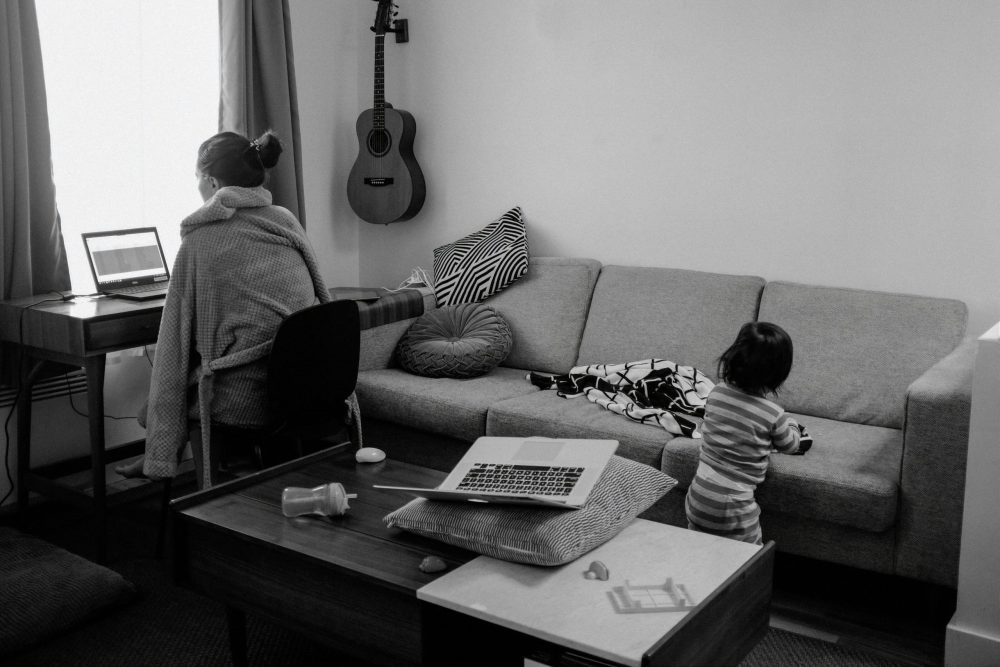
The Argonauts directly challenges the assumption that the traditional nuclear family is the only viable container for child-rearing. Interweaving personal history with the theoretical frameworks of D.W. Winnicott and Eve Kosofsky Sedgwick, Nelson asserts that intellectual labor and maternal care are not mutually exclusive domains. She refuses to allow domestic life to be dismissed as an unserious site of critical philosophy.
4. Catherine Cho: Inferno: A Memoir of Motherhood and Madness
Literary agent Catherine Cho presents a stark account of postpartum psychosis—a condition that directly contradicts the ideological mythology of automatic maternal bliss.
During a trip to visit family in the US with her newborn son, Cho developed severe delusions, eventually seeing "devils" in her infant’s eyes. Her condition led to a two-week hospitalization in a psychiatric ward. In Inferno, Cho examines the terrifying fracturing of her mind, threading her parents’ immigration history and her personal past through her stay in the ward. Her memoir provides an inside perspective on a severe medical reality, exposing the dangers of a society that treats maternal resilience as an infinite, self-replenishing resource.
       [Ideological Myth]                   [Medical & Material Reality]
  Maternal love is automatic        Mind fractures under psychiatric distress
             │                                         │
             ▼                                         ▼
   Societal Expectation                     Clinical Hospitalization
(Unconditional Self-Abnegation)          (Requires Intervention & Support)
5. Margo Steines: Brutalities: A Memoir of My Body
Written during pregnancy amidst the 2020 pandemic lockdowns, Margo Steines’s essay collection conducts a detailed accounting of her physical history. Her past includes a decade working as a dominatrix, surviving interpersonal violence, enduring severe eating disorders, and working ten years as a union ironworker—a job that left her body scarred by burns and industrial chemical exposure.
As a new life forms inside her, Steines interrogates the limits of what her body can endure. In a legal landscape where state institutions attempt to claim ownership over reproductive bodies, Steines’s frank account of deliberately chosen physical risk functions as an assertion of bodily sovereignty.
6. Natalie Carnes: Motherhood: A Christian Exploration of Birth, Grace, and Gracefulness
Addressing the religious frameworks often used to justify restrictive gender roles, theologian Natalie Carnes directly engages with Christian tradition. Saint Augustine structured his foundational Confessions in 13 books addressed to God, featuring his mother, Monica, as a secondary figure devoted to his salvation. Carnes responds in 13 chapters addressed primarily to her young daughter.
Carnes argues across sixteen centuries of theological thought, contesting rigid patriarchal interpretations from within the tradition itself. She asserts that the messiness, demands, and physical realities of motherhood represent a deep philosophical curriculum rather than a passive status.
7. Julietta Singh: The Breaks
In The Breaks, University of Richmond professor Julietta Singh writes an extended letter to her six-year-old daughter. Living as a queer, Brown mother in a co-parenting arrangement, Singh engages with race, climate crisis, and political inheritance.
Drawing on critical theorist Saidiya Hartman’s Lose Your Mother, Singh articulates a maternal goal that contrasts sharply with traditional ideas of maternal control: she wants her daughter to learn how to break with her rather than break from her. This distinction positions motherhood not as an enforcement of conformity, but as a practice of liberation.
Official Statements & Theoretical Frameworks
To further frame the ideological battle over the maternal body, key theorists, authors, and legal commentators offer critical perspectives on the intersection of policy and literature.
Silvia Federici, Feminist Theorist & Author:
"Capitalism must make domestic work appear as a natural attribute of our female physique and personality so that it can go unpaid. To demand wages for housework is to expose the myth that domestic labor is a labor of love, revealing it instead as the economic foundation of the entire system."Adrienne Rich, Poet & Essayist:
"The institution of motherhood has targeted women and forced us to give birth under conditions determined by men… We need to understand the institution in order to liberate the experience."Natalie Carnes, Associate Professor of Theology, Duke Divinity School:
"I am called to a twoness that never dissolves, and desires that frequently do. The maternal body is not a site of passive compliance; it is where acute intellectual and spiritual work takes place."Julietta Singh, Scholar of Gender & Sexuality Studies:
"If I have consciously and unconsciously followed in maternal footsteps by bursting the liberal sheen of social harmony… I do so in the spirit of survival. Yours and mine and everyone else’s."
Future Outlook: Narrative as a Policy and Cultural Counterweight
As legal restrictions on reproductive healthcare persist across various state jurisdictions, the battle over the definition of motherhood will remain a central cultural conflict.
+-----------------------------------------------------------------------------------+
| SOCIOPOLITICAL AND LITERARY DYNAMICS                                             |
+-----------------------------------------------------------------------------------+
| LEGISLATIVE TREND                                 LITERARY COUNTER-MOVEMENT      |
|                                                                                   |
| • Mandated pregnancy policies                    • Documentation of interiority   |
| • Reduction of public health funding             • Exploration of post-partum risk|
| • Framing motherhood as sole female identity     • Assertion of bodily autonomy   |
| • Erasure of unwaged care labor metrics          • Interrogations of care economics|
+-----------------------------------------------------------------------------------+
Key Trends to Watch:
- Expansion of Hybrid and Autotheoretical Forms: Expect a continued rise in published works that combine medical data, legal critique, and personal narrative to challenge legal definitions of maternal duty.
- Focus on Perinatal Mental Health Policy: As memoirs like Catherine Cho’s bring postpartum psychosis and severe depression into the public discourse, advocacy groups are leveraging these narratives to push for expanded maternal mental health resources and longer post-birth Medicaid coverage.
- Reclaiming Religious Narratives: Theoretical works like Natalie Carnes’s indicate a growing effort by progressive religious scholars to reclaim theological texts from conservative political movements, offering alternative interpretations of family, body, and grace.
Conclusion
The political project aiming to limit women’s reproductive autonomy relies on a simplistic, functional view of motherhood. In response, contemporary literature offers a crucial counterweight. By documenting the complex reality of maternal lives—marked by obsession, ambition, intellectual rigor, and grief—these writers demonstrate that a woman’s interior life cannot be legislated out of existence. Propaganda relies on simplification to persuade; these complex works resist by revealing the full truth of lived experience.





Comments
Facebook App ID not configured. Please add it in the Customizer.