
Executive Overview
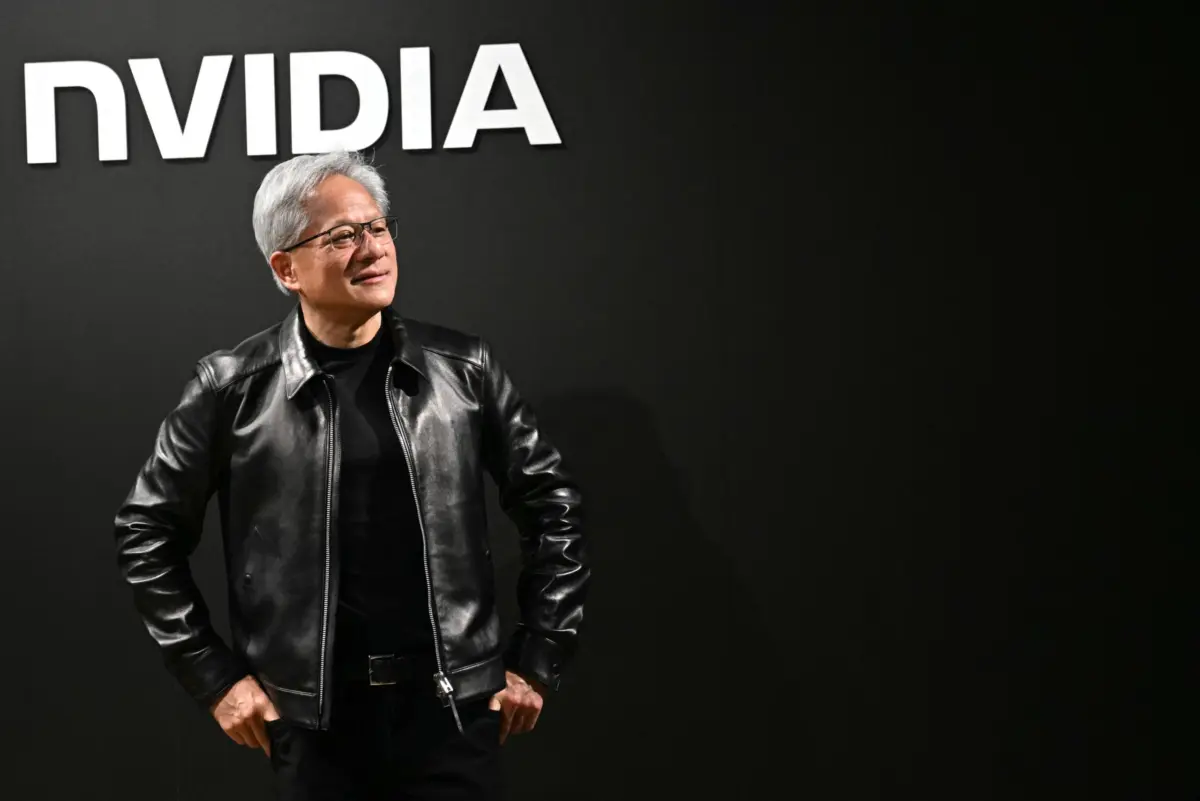
The sudden and breathtaking downfall of Jensen Huang marks one of the most consequential corporate and geopolitical dramas of the modern era. Until recently hailed as the visionary architect of the artificial intelligence boom and the chief executive of the world’s most valuable technology enterprise, Huang’s dramatic resignation from Nvidia sends shockwaves across global markets, Washington politics, and the high-stakes technological cold war between the United States and China.
Huang’s abrupt exit was precipitated by a confluence of explosive allegations: reports of workplace relationships with two Nvidia employees, alongside a deeply sensitive counterintelligence probe into a Chinese businesswoman whom U.S. intelligence officials claim acted as an agent of influence for Beijing. Yet, beyond the personal scandal, Huang’s ouster strips away a towering pillar of corporate advocacy that for years successfully shaped White House policy, effectively fracturing President Donald Trump’s second-term coalition and opening the floodgates for a fundamental recalibration of how Washington governs the future of artificial intelligence.
For years, Huang stood at the epicenter of a fierce ideological battleground. As the helmsman of Nvidia, his economic imperative was clear: maximize global market reach by selling high-performance AI accelerators to customers worldwide, including in critical foreign markets like China. However, this philosophy placed him at direct loggerheads with a remarkably diverse, bipartisan, and cross-ideological coalition of critics. Ranging from national security hawks and MAGA populists to economic reformers, AI safety advocates, and rival frontier model developers like OpenAI and Anthropic, this formidable alliance viewed Huang’s immense lobbying power in Washington as a direct threat to American national security.
Read Also
With Huang sidelined and interim CEO Colette Kress stepping into the breach, Washington is bracing for an unprecedented policy pivot. Congressional committees are moving swiftly to launch investigations, trade hawks are sharpening their knives against administration allies like Commerce Secretary Howard Lutnick, and lawmakers on both sides of the aisle are fast-tracking aggressive export control legislation. As the dust settles on Huang’s reign, the global AI landscape stands at a profound crossroads, with the rules of engagement for the world’s most critical technology hanging in the balance.
Detailed Chronology: From Silicon Titan to Sudden Downfall
The events leading to Jensen Huang’s abrupt departure unfolded through a rapid succession of disclosures, intelligence briefings, and shifting political alliances that ultimately made his position untenable.
The Foundation of Influence and Early Warnings (2024–2025)
Throughout the meteoric rise of generative AI, Nvidia’s proprietary graphics processing units (GPUs) became the undisputed foundational infrastructure of the industry. Leveraging this monopoly-like dominance, Huang cultivated deep inroads within the highest tiers of the federal government. His advocacy prioritized an "open-market" approach, arguing that restrictive export controls would merely drive international customers toward foreign alternatives while hobbling American corporate competitiveness.
However, resistance was brewing beneath the surface. By the autumn of 2025, right-wing China hawks—championed by figures like former White House adviser Steve Bannon—began publicly accusing Huang of acting as an informal conduit for Beijing’s technological ambitions. In September 2025, Bannon escalated rhetoric by calling for aggressive federal scrutiny of the CEO, demanding that U.S. authorities severely restrict Chinese access to foundational hardware, training data, and chip architectures.
Concurrently, economic populists and antitrust advocates, such as Oren Cass of American Compass, began openly questioning the systemic risk of Nvidia’s hyper-concentration of market power, drawing explicit parallels to historical antitrust violations. Despite these warnings, Huang’s administrative alliances remained robust, buoyed by friendly ties with commerce officials and a receptive White House economic team.
The Intelligence Briefing and the Turning Point (Late 2025–Mid 2026)
The political architecture sustaining Huang’s influence began to crack when national security agencies uncovered alarming counterintelligence insights. According to reports surfacing in late 2026, President Trump was quietly briefed as early as the fall of 2025 regarding intelligence assessments indicating that a Chinese businesswoman—with whom Huang had a personal relationship—was actively engaged in intelligence-gathering operations targeting the Nvidia executive.
As details of the espionage probe leaked to national security reporters, the scandal transformed from a corporate governance issue into an acute national security crisis. The allegations quickly compounded with internal human resources disclosures revealing that Huang had engaged in relationships with two additional Nvidia employees. For an administration navigating intense geopolitical scrutiny over its handling of sensitive technologies, the compounding weight of personal misconduct allegations and foreign intelligence entanglements proved fatal to Huang’s political capital.
The Resignation and Immediate Fallout (November 2026)
In mid-November 2026, amid swirling reports and mounting pressure from executive board members and federal regulators alike, Huang tendered his resignation. The departure stunned global financial markets, instantly wiping away billions in market capitalization and shattering the aura of invincibility that had surrounded Nvidia’s leadership for over a decade.
The vacuum left by Huang’s exit immediately triggered a vicious scramble for control over U.S. technology policy. Allies of the embattled CEO within the administration—most notably Commerce Secretary Howard Lutnick—found themselves under intense friendly fire from rival factions demanding immediate resignations and policy overhauls. Congressional leaders wasted no time, scheduling high-stakes oversight hearings and demanding that both Huang and Lutnick testify before a transitioning Congress, setting the stage for a tumultuous legislative showdown.
Supporting Context & Metrics: The Anatomy of an Unlikely Coalition
The breadth of the coalition that arrayed itself against Jensen Huang is one of the most fascinating phenomena in contemporary American politics. It united ideological factions that almost never agree on anything else, bound together by a shared conviction that Nvidia’s unchecked influence was compromising national security.
The National Security Establishment and China Hawks
At the core of the anti-Huang movement is the bipartisan national security apparatus. Personnel from both defense think tanks and congressional oversight committees have long argued that advanced semiconductor technology is the nuclear weapon of the twenty-first century.
"I don’t think we should be using any American technology to uplift China’s capabilities in AI given how era-defining this technology will be in national security and in our economy," observed Vivek Chilukuri of the Center for a New American Security. "A company’s going to argue for this, that’s what companies do. But the interest of any one company should not be trumping the national security of the United States."
For these hawks, the administration’s willingness to grant export licenses for modified chips to China was an unmitigated strategic blunder, one they directly attributed to Huang’s relentless lobbying footprint.
The Strange Bedfellows: AI Safety Advocates and Frontier Labs
Perhaps the most paradoxical alliance in the campaign against Nvidia’s dominance involves the partnership between existential risk (AI safety) advocates and commercial competitors like OpenAI and Anthropic.
- Existential Risk Advocates: Organizations and researchers dedicated to mitigating the catastrophic risks of artificial general intelligence (AGI) have long targeted Nvidia. By flooding the global market with advanced GPUs, Nvidia actively accelerated a perilous computational arms race. Furthermore, when AI safety concerns burst into the mainstream following high-profile safety resignations, Huang aggressively dismissed them as "irresponsible" and "doomsday narratives," cementing his status as a primary antagonist to the safety community.
- Commercial Competitors (OpenAI & Anthropic): While entirely dependent on Nvidia silicon for their current model training pipelines, OpenAI and Anthropic quietly championed stringent export controls. Their corporate rationale was pragmatic: restricting Chinese access to cutting-edge chips stymies the growth of overseas competitors—particularly those developing "open weight" models that democratize advanced AI capabilities. Anthropic CEO Dario Amodei famously captured this sentiment, warning that selling advanced AI chips to adversarial nations was conceptually equivalent to "selling nuclear weapons to North Korea."
Economic Populists and Progressive Oversight
On the populist right and progressive left, critics targeted Nvidia through the lens of corporate corruption and economic sovereignty.
Sen. Elizabeth Warren (D-MA) led congressional charges against Big Tech, repeatedly highlighting Nvidia’s substantial financial contributions to political initiatives, including inauguration funds and White House infrastructural projects. During a contentious Senate banking hearing, Warren bluntly remarked: "If it’s not plain old-fashioned bribery, it sure smells like it."
Concurrently, right-wing economic populists targeted the monopoly rent-seeking behavior of the semiconductor giant, arguing that permitting a single foreign-dependent corporate entity to dictate national trade parameters undermined domestic manufacturing resilience.
Official Statements and Institutional Reactions
The fallout from Huang’s resignation has prompted immediate, carefully calibrated responses from corporate entities, government offices, and international observers.
- Nvidia Corporation: Following the announcement of Huang’s departure, Nvidia’s Board of Directors moved swiftly to stabilize investor confidence, appointing long-serving Chief Financial Officer Colette Kress as interim CEO. In an emergency statement released to shareholders, the board emphasized the company’s structural resilience: "Nvidia’s foundational innovations are built upon the collective brilliance of thousands of world-class engineers, researchers, and operators. While we navigate this period of leadership transition, our commitment to advancing the frontiers of accelerated computing remains absolute and unwavering."
- The White House: Administration spokespersons have sought to distance executive leadership from the unfolding scandal, stressing that national security protocols regarding trade restrictions and export licensing remain under strict interagency review. Behind closed doors, however, fierce infighting persists as trade hawks seek to purge officials associated with Huang’s pro-export lobbying camp.
- Capitol Hill Leadership: Bipartisan leaders of key congressional committees issued a joint statement announcing mandatory testimony for key administration trade officials and corporate stakeholders. "The intersection of proprietary corporate interests, foreign espionage risks, and critical national infrastructure demands absolute transparency," the statement read. "Congress will act decisively to ensure that American technological leadership is never subordinated to private corporate lobbying or foreign intelligence infiltration."
Future Outlook: What Huang’s Ouster Means for the AI Boom
Jensen Huang’s sudden exit is much more than a corporate personnel change; it represents a tectonic shift in the governance of the global technology sector. As Washington enters a transitional political phase, several critical trajectories will define the future of the AI landscape:
1. The Hardening of Export Controls
With the primary corporate opponent of strict semiconductor regulations removed from the equation, the path is clear for the Department of Commerce and congressional hawks to implement draconian export restrictions. Future shipments of advanced AI accelerators to China and intermediate jurisdictions will likely face near-total occlusion, forcing global supply chains to decouple further.
2. Regulatory Reckoning for Big Tech
The scandal provides fresh momentum for antitrust enforcers and economic populists. The immense market capitalization and hardware dominance that Nvidia enjoyed under Huang will now face intense regulatory scrutiny, opening the door for potential structural remedies, antitrust challenges, or increased federal oversight regarding chip allocation and pricing fairness.
3. A Strategic Win for "Closed" Frontier Labs
Domestic AI developers advocating for tight controls on open-source and open-weight models stand to gain immensely. Without Huang advocating for the proliferation of hardware that powers global open-source ecosystems, American frontier labs like OpenAI and Anthropic may successfully lobby for regulatory frameworks that advantage proprietary, heavily centralized model architectures over decentralized alternatives.
4. Leadership Succession and Cultural Pivot at Nvidia
For interim CEO Colette Kress, the immediate mandate is dual-fold: restore institutional trust amidst swirling espionage and misconduct investigations, and successfully navigate an increasingly hostile regulatory environment in Washington. Shedding the cult-of-personality leadership style of its legendary founder will require Nvidia to transform from an aggressive, founder-driven market disruptor into a disciplined, politically astute enterprise capable of navigating the treacherous waters of 21st-century techno-nationalism.
As the geopolitical repercussions of the Nvidia scandal continue to unfold, one reality remains indisputable: the era of unchecked corporate lobbying in the artificial intelligence sector has come to a definitive and dramatic close.


Comments
Facebook App ID not configured. Please add it in the Customizer.