
Executive Overview
In an era defined by geopolitical shifts and digital connectivity, cultural diplomacy remains one of the most enduring tools for fostering international harmony. On Friday, the bustling coastal metropolis of Karachi bore witness to a striking manifestation of this diplomacy as the Consulate-General of Japan hosted Japan Fest 2026 at the historic Beach Luxury Hotel.
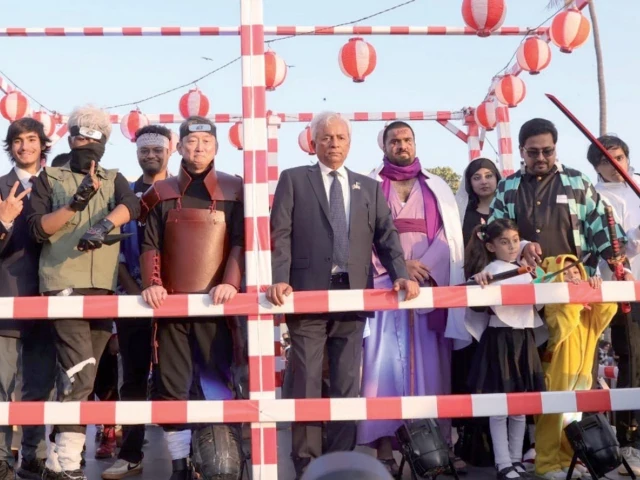
Designed as an immersive celebration of Japanese heritage, arts, traditions, and contemporary pop culture, the festival transcended the boundaries of a conventional exhibition. It served as a dynamic nexus for bilateral engagement, bringing together diplomats, business leaders, cultural enthusiasts, and thousands of enthusiastic citizens—particularly the younger demographic of Pakistan’s financial capital.
Organized in strategic collaboration with the Pakistan-Japan Cultural Association, Sindh (PJCA), and the Pakistan-Japan Business Forum (PJBF), Japan Fest 2026 was explicitly curated to reinforce the historical, economic, and cultural bridges binding Pakistan and Japan. Beyond the dazzling displays of cosplay, traditional dance, and culinary arts, the event offered a profound platform for leadership dialogue. Dignitaries emphasized that while economic
Read Also
partnerships and technological trade are vital to bilateral health, mutual cultural understanding provides the indispensable emotional and intellectual foundation required for long-term diplomatic resilience.
This comprehensive report examines the multifaceted dimensions of Japan Fest 2026. It analyzes the chronology of events, evaluates the official discourses delivered by key stakeholders, contextualizes the event within the broader historical and evolutionary framework of Japanese culture, and outlines the strategic future outlook for Pak-Japan relations.
Detailed Chronology of the Event
The atmosphere at the Beach Luxury Hotel on Friday afternoon was palpable with anticipation as crowds began streaming into the venue, which had been meticulously transformed to evoke the aesthetic sensibilities of both traditional and modern Japan.
The Grand Opening and Inaugural Ceremonies
The proceedings commenced in the late afternoon with an official ribbon-cutting ceremony and opening remarks that set an appreciative, forward-looking tone for the evening. VIPs, foreign dignitaries, and executive board members of the PJCA and PJBF gathered to mark the formal inauguration. The opening session underscored the collaborative spirit behind the festival, highlighting months of rigorous planning between Japanese diplomatic missions and local Pakistani organizations.
Cultural Performances and Interactive Highlights
As daylight faded, the festival grounds transitioned into a vibrant spectacle of sights and sounds. The event schedule was meticulously structured to offer a continuous stream of entertainment and educational engagement:
- The Atsushi Crew Showcase: One of the most anticipated highlights of the evening was the performance by the renowned Japanese dance group Atsushi Crew. Their high-energy routine blended contemporary street styles with traditional rhythmic motifs, captivating the audience and demonstrating the universal appeal of movement and music.
- Traditional Bon Odori Dance: Guests were treated to mesmerising performances of the Bon Odori, a style of traditional folk dancing performed during the Obon festival in Japan. In a powerful display of cultural exchange, local attendees joined hands with Japanese expats to participate in the circle dance, breaking down cultural barriers through shared physical rhythm.
- Cosplay Competitions: Demonstrating the immense popularity of Japanese contemporary pop culture—specifically anime and manga—among Karachi’s youth, the cosplay competition drew participants dressed as iconic characters from legendary franchises. The creativity, precision, and dedication invested in the costumes highlighted the deep penetration of Japanese soft power into Pakistani youth culture.
- Fine Arts and Traditional Craft Exhibits: For those seeking a more contemplative experience, the festival featured masterclass exhibits of classic Japanese arts. Visitors crowded around displays of Ikebana (the meditative Japanese art of flower arrangement), intricate Bonsai horticulture that showcased decades of patient arboriculture, and delicate Origami folding workshops where attendees tried their hands at paper sculpture.
The seamless integration of high-energy contemporary performances with serene traditional arts ensured that visitors of all age groups found resonance within the festival’s diverse itinerary.
Official Statements and Leadership Perspectives
The true weight of Japan Fest 2026 lay not only in its visual spectacle but in the authoritative pronouncements made by the leaders steering Pak-Japan relations. The podium speeches delivered during the event provided profound insights into the strategic intent behind cultural programming.
Consul General Hattori Masaru: Cultural Exchange as a Diplomatic Catalyst
Addressing the packed gathering, Consul General of Japan Hattori Masaru delivered a compelling address that underscored the strategic evolution of bilateral ties.
"Japan Fest has evolved far beyond a simple community gathering; it is now a meaningful, institutionalized platform for introducing the multifaceted richness of Japanese culture to the local community while fundamentally strengthening our bilateral friendship," Consul General Masaru stated.
He elaborated on the concept of grassroots diplomacy, noting that economic treaties and governmental agreements, while essential, require the fertile soil of mutual empathy and cultural appreciation to truly flourish. By exposing Karachiites to both historical and contemporary facets of Japanese society, the Consulate aims to cultivate a generation of Pakistanis who view Japan not merely as an advanced industrial nation, but as a trusted cultural partner.
Sindh Governor Syed Muhammad Nehal Hashmi: Looking Beyond Technology and Anime
Attending the festival as the esteemed chief guest, Sindh Governor Syed Muhammad Nehal Hashmi offered a deeply reflective perspective that resonated powerfully with the young audience. Describing the event as a "vibrant and beautiful evening," Governor Hashmi expressed profound gratitude to the Japanese Consulate for gifting Karachi’s youth an immersive window into Japanese civilization.
However, the Governor’s address went beyond standard diplomatic pleasantries. He issued a thoughtful call to action for the younger generation:
"While anime, robotics, and technological gadgets are wonderful entry points to modern Japan, I urge our youth to look deeper. We must study Japan’s remarkable nation-building journey. We must draw inspiration from their post-war industrial resilience, their disciplined societal frameworks, and their unwavering commitment to collective progress and development."
Governor Hashmi emphasized that Pakistan, a nation currently navigating its own complex socio-economic challenges, stands to gain immeasurably by adopting the ethos of diligence, civic responsibility, and innovation that characterizes modern Japanese society.
Supporting Context & Metrics: The Evolution of Japanese Culture
To fully appreciate the cultural weight of festivals like Japan Fest 2026, one must examine the vast historical continuum that has shaped Japanese civilization over millennia. Japanese culture is a masterclass in syncretism—the ability to absorb external influences while fiercely preserving a distinct, indigenous core.
Prehistoric Roots and Continental Influences
Japanese cultural history is broadly categorized into distinct epochs, beginning with the prehistoric Jōmon period (c. 14,000 – 300 BCE), characterized by hunter-gatherer societies renowned for some of the world’s oldest pottery.
As centuries progressed, the Japanese archipelago underwent profound demographic and cultural transformations driven by continental migrations. Ancestral groups arrived from the Korean Peninsula (during the Yayoi period, introducing wet-rice cultivation, metallurgy, and stratified social structures) and from China (during the Kofun period, laying the groundwork for centralized leadership and state formation).
The Sinosphere and the Tang Dynasty Impact
Throughout its medieval history, Japan maintained a complex, deeply influential relationship with Chinese dynasties, most notably the Tang Dynasty. During this era, Japanese missions to China imported writing systems (Kanji), philosophies (Confucianism and early forms of Buddhism), architectural styles, administrative codes, and artistic techniques. Rather than erasing indigenous traditions (Shinto), these continental imports were creatively synthesized into a uniquely Japanese expression—a historical precedent that explains why modern Japan is so adept at blending ancient traditions with hyper-modern innovations.
Contemporary Culture and Global Soft Power
In the contemporary era, Japan’s cultural footprint extends to every corner of the globe. From manga and anime to culinary arts (such as sushi, ramen, and kaiseki dining) and high-end automotive and technological engineering, Japan projects a formidable soft power. Events like Japan Fest 2026 in Karachi act as localized nodes in this global network of cultural dissemination, allowing cities in South Asia to experience firsthand the living heritage of an East Asian powerhouse.
Future Outlook: Deepening Pak-Japan Bilateral Relations
As the lights dimmed on the Beach Luxury Hotel grounds following the conclusion of Japan Fest 2026, the underlying momentum generated by the event pointed firmly toward an expansive future.
Expanding Economic and Technological Corridors
The active participation of the Pakistan-Japan Business Forum (PJBF) at the festival underscores the intertwining of cultural goodwill with economic enterprise. Bilateral trade between Pakistan and Japan has historically encompassed automotive manufacturing, machinery, chemicals, and textile goods. However, leadership from both sides recognizes that untapped potential exists in information technology, renewable energy infrastructure, and specialized vocational training.
By fostering an environment of cultural familiarity through festivals like Japan Fest, business negotiations are imbued with a higher degree of mutual trust. Pakistani entrepreneurs and tech professionals who grow up appreciating Japanese aesthetic discipline and corporate ethics are uniquely positioned to forge successful joint ventures with Japanese corporations.
Educational and Human Resource Exchanges
Looking ahead, both the Consulate-General of Japan and local bodies like the PJCA are setting their sights on expanding educational exchanges. Scholarships, Japanese language proficiency programs, and technical internship programs for Pakistani youth are slated for scaling in the coming years.
As Japan faces a shrinking domestic workforce due to demographic shifts, it increasingly looks outward for skilled human resources. Programs that facilitate the training of Pakistani engineers, healthcare workers, and technicians in Japanese standards represent a win-win proposition: mitigating Japan’s labor shortages while providing high-value employment and skill acquisition for Pakistan’s burgeoning youth population.
Institutionalizing Cultural Diplomacy
Plans are already underway to make Japan Fest an even more expansive annual fixture on Karachi’s cultural calendar. Future iterations aim to incorporate regional culinary masterclasses, academic symposiums on sustainable urban development, and collaborative artistic residencies that bring Japanese and Pakistani painters, musicians, and filmmakers together.
Conclusion
Japan Fest 2026 was far more than a single evening of entertainment. It was a reaffirmation of the enduring bonds between two distinct nations separated by geography but united by a shared vision of peace, progress, and mutual respect. As the echoes of the Bon Odori dances fade and Karachi’s youth return to their daily routines, the seeds planted at the Beach Luxury Hotel—seeds of curiosity, respect, and shared ambition—will undoubtedly yield a richer, more collaborative chapter in Pak-Japan relations for years to come.





Comments
Facebook App ID not configured. Please add it in the Customizer.