
Executive Overview
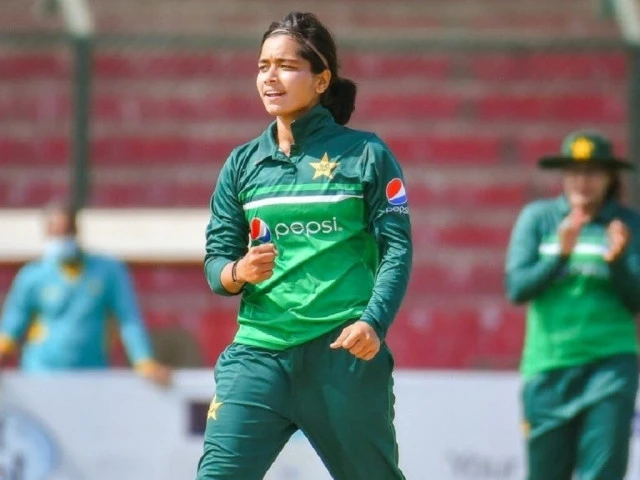
Pakistan women’s national cricket team captain Fatima Sana has issued a passionate call for gender parity in sports, urging fans, administrators, and stakeholders to offer equal support to both men’s and women’s cricket. In a wide-ranging interview, Sana emphasized that true growth for the women’s game in Pakistan requires robust structural changes, chief among them being increased opportunities for female athletes to participate in elite overseas T20 leagues.
Sana, who is currently making waves in Australia’s prestigious Women’s Big Bash League (WBBL) with the Perth Scorchers, highlighted how international exposure accelerates the development of young players. Sharing the dressing room with global icons such as New Zealand all-rounder Sophie Devine has provided the young Karachi-born leader with invaluable insights into high-performance cultures. By advocating for a broader pipeline of Pakistani cricketers to compete abroad, Sana hopes to dismantle traditional barriers, inspire the next generation of girls to pick up the bat and ball, and ultimately shift cultural perceptions regarding women in sports back home.
As one of the youngest and most dynamic leaders in international cricket today, Sana’s vision extends far beyond her own personal milestones. Her journey from street cricket in Karachi to captaining her country on the global stage serves as a powerful testament to resilience. This comprehensive report explores Sana’s recent statements, her trailblazing stint in the WBBL, the historical context of Pakistan women’s cricket, and the roadmap required to elevate the sport to unprecedented heights.
Read Also
Detailed Chronology: From the Streets of Karachi to Global Stardom
To truly understand Fatima Sana’s vision for the future of Pakistan cricket, one must examine the remarkable trajectory of her career. Her rise is a narrative of grit, natural talent, and an unwavering determination to succeed against the odds.
Humble Beginnings and Domestic Breakthrough
Born in Karachi, Pakistan, Sana’s fascination with cricket began in her own neighborhood. Like many South Asian cricketers, she honed her skills playing tape-ball cricket with her brothers in narrow streets—an environment that fosters quick reflexes, adaptability, and fearlessness. Recognizing her raw talent, local coaches encouraged her to transition into formal structured cricket.
Sana quickly climbed the ranks through Pakistan’s domestic cricket structure, impressing selectors with her athletic fielding, aggressive lower-order batting, and deceptive pace bowling. Her consistent performances in domestic tournaments caught the attention of national selectors, setting the stage for her international ascension.
International Debut and Rising Stardom
In May 2019, at just 17 years of age, Fatima Sana made her international debut for Pakistan against South Africa. Thrust immediately into the demanding environment of international cricket, she adapted rapidly. Utilizing her skills as a right-arm medium-fast bowler and a handy lower-order batter, Sana established herself as an indispensable asset to the team’s balance.
Her breakout year arrived in 2021. Through stellar performances with both bat and ball, Sana captured the global cricketing community’s attention, culminating in her being awarded the prestigious ICC Women’s Emerging Cricketer of the Year award. She became the first Pakistani woman to win the accolade, instantly cementing her status as a generational talent and a role model for young athletes across the nation.
Ascending to the Captaincy
In August 2024, the Pakistan Cricket Board (PCB) appointed Fatima Sana as the captain of the national women’s team, just ahead of the ICC Women’s T20 World Cup. Taking over the leadership mantle at such a young age is a formidable challenge, yet Sana embraced the responsibility with characteristic poise. Her appointment marked a strategic shift within Pakistan cricket—paving the way for youth, modern tactical approaches, and fearless leadership.
Making History in the WBBL
Sana’s career reached another historic milestone when she signed with the Perth Scorchers for the Women’s Big Bash League (WBBL) 2026-27 season. Her arrival in Australia made her only the second Pakistani woman to feature in the world-renowned franchise tournament, following in the footsteps of former captain Nida Dar, who represented the Sydney Thunder in 2019.
Sana made an immediate, impactful debut against the Melbourne Renegades. Displaying nerves of steel and tactical maturity, she claimed two crucial wickets while conceding just 27 runs in her four allotted overs, helping guide the Scorchers to a commanding nine-wicket victory. Her seamless integration into the team has validated her belief that Pakistani players possess the skill set required to excel in the world’s most competitive leagues.
Supporting Context & Metrics: The State of Women’s Cricket
Fatima Sana’s calls for equality and global exposure are grounded in objective realities regarding the current landscape of women’s cricket globally and within Pakistan.
The Power of Overseas Leagues
T20 franchise leagues—such as the WBBL in Australia, The Hundred in England, and the Women’s Premier League (WPL) in India—have fundamentally transformed the financial and competitive landscape of women’s cricket. These tournaments offer:
- High-Intensity Competition: Players face the world’s best bowlers and batters on a regular basis, accelerating tactical adaptation.
- Professional Infrastructure: Access to elite coaching staffs, state-of-the-art sports science, and advanced recovery facilities.
- Financial Empowerment: Enhanced earnings that allow female athletes to treat cricket as a full-time, lucrative profession without secondary economic anxieties.
Historically, Pakistani women’s cricketers have had limited access to these global platforms due to various logistical, political, and systemic factors. Sana’s successful stint with the Perth Scorchers serves as a vital bridge, proving that opening doors for Pakistani talent benefits both the individual players and the national side.
Shifting Cultural Perceptions in Pakistan
In conservative segments of Pakistani society, sports careers for young women have historically faced skepticism from families and communities. However, increased media visibility changes this dynamic. As Sana noted, when parents see young women competing on international television screens, proudly representing their country on global stages, cultural attitudes begin to shift. Seeing role models succeed internationally reassures families that athletic careers are viable, respected, and secure paths for their daughters.
Official Statements and Insights from Fatima Sana
In her recent interview, Sana articulated her vision with clarity and passion. Her remarks offer a profound look into the mindset of a modern sports leader.
On the Value of Global Exposure and Mentorship
Reflecting on her time with the Perth Scorchers, Sana spoke candidly about the privilege of sharing a dressing room with seasoned international stars:
"It is a pleasure to play and get the opportunity for this, especially with the kind of team we have. Playing with [Sophie Devine] is like playing with a world-class player. Her performances are great, and seeing that as a youngster makes you want to learn."
Sana emphasized that this firsthand experience of high-performance environments is something she hopes to share with her teammates back in Pakistan:
"However many more Pakistanis play will be an honour. It is my wish that women from Pakistan come here and play and women’s cricket grows under the ICC umbrella."
On Inspiring the Next Generation and Parental Support
Addressing the broader social impact of women’s cricket, Sana highlighted the crucial link between visibility and participation:
"When people see girls playing in the cup, it will convince their parents to send more children into the game."
On the Fight for Gender Equality in Sports
Perhaps her most resonant message was her fervent plea for parity between men’s and women’s cricket. Sana called for a unified fan base that values athletic achievement over gender:
"I hope that one day a time comes where men’s and women’s cricket becomes equal. Playing sports matters regardless of being a man or woman. I hope the crowd continues to support both in that matter."
Future Outlook: The Roadmap for Pakistan Women’s Cricket
Fatima Sana’s leadership arrives at a critical juncture. As global cricket experiences an unprecedented boom in the women’s sector, Pakistan stands at a crossroads. To capitalize on Sana’s vision and the momentum generated by her success, several strategic imperatives must be addressed by the Pakistan Cricket Board (PCB) and international stakeholders.
1. Expanding the Domestic Pipeline
To sustain a steady stream of internationally competitive players, Pakistan must continuously invest in its domestic infrastructure. This includes:
- Increasing the frequency and quality of women’s domestic T20 and multi-day tournaments.
- Enhancing grassroots coaching programs across all provinces, ensuring young girls in rural areas have access to quality training facilities.
- Introducing age-group national tournaments (Under-16 and Under-19) to build a robust talent pyramid.
2. Facilitating Global League Participation
The PCB must proactively work to forge diplomatic and operational pathways with international boards and franchise owners. Encouraging and facilitating NOCs (No Objection Certificates) for Pakistani women to participate in leagues like the WBBL, WPL, The Hundred, and the Women’s Caribbean Premier League (WCPL) will pay massive dividends for the national team’s skill level.
3. Parity in Compensation and Facilities
While strides have been made in central contracts, closing the financial and logistical gap between the men’s and women’s national teams remains paramount. Equal access to high-performance centers, dedicated coaching staff, sports psychologists, and equitable match fees will signal to female athletes that their labor is equally valued.
4. Cultivating Fan Engagement
Sana’s wish for equal crowds requires active marketing campaigns by cricket boards. Broadcasting women’s matches on mainstream television channels at prime viewing times, aggressive digital media promotion, and community outreach programs can foster a dedicated fan base for the women’s national team.
Conclusion
Fatima Sana is more than just a talented pace-bowling all-rounder and a national team captain; she is an ambassador of change for Pakistan cricket. Her stellar performances in the Women’s Big Bash League have proven that Pakistani players possess the caliber to shine on the world’s biggest stages. More importantly, her vocal advocacy for equal crowds, greater international exposure, and cultural empowerment provides a clear blueprint for the future.
As Sana continues to lead Pakistan on the international stage—breaking records, taking wickets, and inspiring a new generation—her ultimate hope remains clear: a cricketing world where excellence is judged solely by skill, dedication, and passion, entirely unburdened by gender. If administrators, fans, and stakeholders heed her call, Pakistan women’s cricket is poised to enter a golden era of growth, recognition, and unprecedented success.





Comments
Facebook App ID not configured. Please add it in the Customizer.