
Executive Overview
In an era saturated by glowing screens, push notifications, and the perpetual anxiety of low battery warnings, consumer electronics are undergoing a quiet philosophical shift. The market is slowly pivoting away from high-powered, attention-draining displays toward ambient technology—devices designed to blend into the background of daily life quietly, efficiently, and with minimal environmental impact. At the forefront of this niche yet rapidly expanding movement is Tapmora, an innovative electronics brand that has captured the attention of minimalists, photography enthusiasts, and tech early adopters alike.
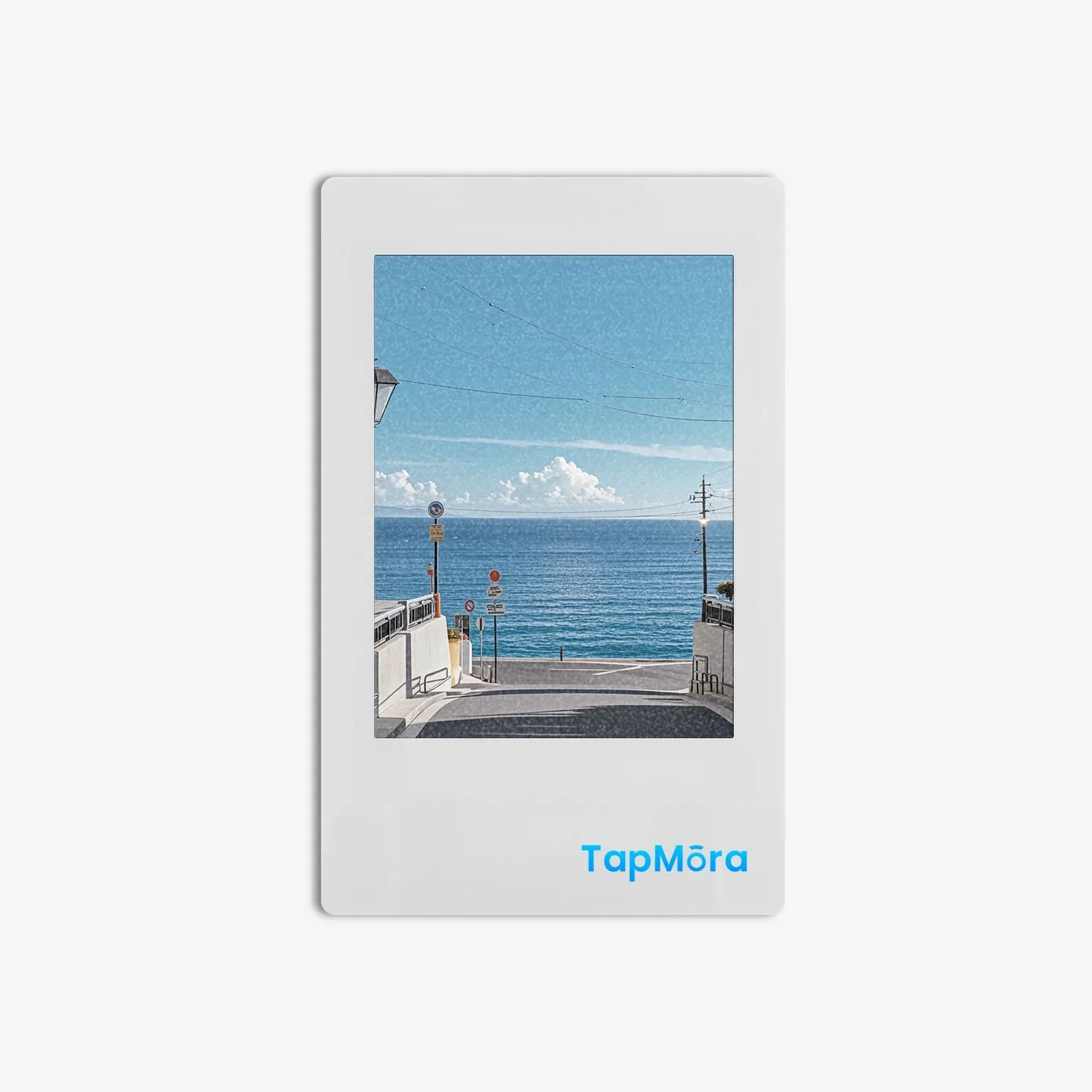
Tapmora’s flagship device—touted as the world’s first battery-free E Ink Photo Magnet—redefines how we interact with personal memories. Retailing at an accessible $45, the pocket-sized, cordless digital frame allows users to instantly transfer photographs from their smartphones directly onto a paper-like, magnetic canvas. Operating entirely without charging cables, internal batteries, Wi-Fi connectivity, or Bluetooth pairing, the device represents a fascinating convergence of classic electronic paper technology and modern Near Field Communication (NFC) energy-harvesting engineering.
This report provides a comprehensive examination of the Tapmora E Ink Photo Magnet, analyzing its underlying technology, design philosophy, performance trade-offs, and its broader implications for the future of ambient computing and sustainable consumer electronics.
Read Also
Detailed Chronology: From Concept to Consumer Reality
The journey of passive, battery-free displays did not happen overnight. For over a decade, electrophoretic displays (commonly known as E Ink) have dominated the e-reader market, prized for their exceptional readability under direct sunlight and their near-zero power consumption when static. However, scaling this technology down into portable, low-cost consumer photo frames without traditional power sources presented significant engineering hurdles.
The Engineering Breakthrough of NFC Energy Harvesting
Historically, digital photo frames required either a permanent connection to a wall outlet or a rechargeable lithium-ion battery pack, alongside wireless modules (Wi-Fi or Bluetooth) to receive images. These requirements made traditional digital frames bulky, expensive, and high-maintenance.
The breakthrough came with the maturation of NFC energy harvesting—a technology that allows small electronic devices to draw instantaneous, temporary micro-currents of electricity from the NFC antenna of an active smartphone held in close proximity. Tapmora’s engineering team leveraged this principle to eliminate the need for an internal power source. When a user taps their smartphone against the magnetic photo frame, the localized electromagnetic field generated by the phone transfers enough energy to wake the E Ink controller, power the refresh cycle, and rewrite the image matrix on the screen.
Commercial Launch and Market Reception
Following initial prototype rollouts and beta testing phases targeted at tech minimalists, Tapmora officially commercialized the product, pricing it competitively at $45. Available directly through the company’s web store, the device quickly found a dedicated audience looking for an alternative to traditional instant film or permanent photo printing. Early reviews from independent tech journalists and consumer advocacy sites highlighted the novelty of a screen that requires zero maintenance, leading to an organic surge in online interest and community-driven video reviews.
Supporting Context & Metrics: Under the Hood of the Tapmora Magnet
To truly understand the value proposition of the Tapmora E Ink Photo Magnet, one must examine the specific hardware components and display metrics that set it apart from cheaper, legacy alternatives on the market.

The Power of Spectra 6 Color Accuracy
One of the most critical technical differentiators noted by reviewers is Tapmora’s utilization of the advanced Spectra 6 full-color array.
- The Problem with 4-Color Panels: Cheaper, older-generation portable electronic paper panels typically rely on a restrictive 4-color pigment system (black, white, red, and yellow, or similar constrained palettes). When users attempt to push complex digital photographs—such as vibrant outdoor landscapes or delicate human skin tones—through these legacy panels, the lack of intermediate color depth forces dithering algorithms that often result in muddy, washed-out grays and distorted hues.
- The Spectra 6 Advantage: The integration of the Spectra 6 array allows Tapmora to render a significantly richer, more accurate color spectrum. While it cannot compete with the blistering refresh rates or infinite color depths of an OLED smartphone screen, it successfully bridges the gap between monochrome e-paper and true-to-life photographic reproduction. Skin tones remain natural, and landscape blues and greens retain their vibrancy, preserving the emotional integrity of the original photograph.
Form Factor, Aesthetics, and Physical Specifications
Measuring strictly in pocket-sized dimensions, the device functions as a physical card or tile. Key physical characteristics include:
- Paper-Like Matte Finish: The surface eliminates the harsh, reflective glare associated with glass-faced LCD or OLED displays, ensuring that the image looks genuinely printed rather than digitally projected.
- Magnetic Backing: Designed to integrate seamlessly into domestic and office environments, the unit easily mounts to refrigerators, magnetic whiteboards, or metal desk accessories.
- Zero Infrastructure Requirements: Because it lacks Wi-Fi radios, Bluetooth chips, and batteries, the device has a virtually nonexistent electronic footprint during day-to-day use. It consumes zero standby power.
Official Perspectives and Operational Trade-Offs
While the Tapmora E Ink Photo Magnet has been widely praised for its aesthetic charm and innovative power delivery, industry analysts and hands-on reviewers emphasize that consumers must approach the device with realistic expectations.
The User Experience: Simplicity vs. Interactivity
From a functional standpoint, the device operates strictly as a static canvas rather than a responsive, interactive gadget.
- Transfer Speeds: Because the screen relies entirely on a brief, harvested burst of electricity transferred over NFC, image uploads are not instantaneous. Users must wait a few seconds as the data packets transfer and the electrophoretic capsules mechanically shift to form the new image.
- Absence of Backlighting: To maintain its zero-battery design, the device does not feature internal LEDs or backlighting. Much like a traditional printed photograph, it requires ambient external light to be viewed clearly. In dark rooms, the image is invisible.
- No Manual Control Buttons: The frame is entirely devoid of physical buttons, meaning users cannot manually cycle through stored images or adjust display settings directly on the hardware itself; every change must be initiated via the smartphone application.
Market Positioning: Niche Novelty or the Future of Decor?
Industry commentators note that Tapmora occupies a fascinating psychological space. For consumers weary of "screen fatigue"—the exhaustion of constantly staring at backlit, notification-heavy displays—the Tapmora magnet offers a meditative counter-narrative. It serves as a modern replacement for physical polaroids and printed snapshots, allowing users to rotate family memories, pet photos, or artistic inspirations on their refrigerators without generating physical waste or recurring printing costs.
However, hardcore tech enthusiasts seeking programmable smart-home integration, touchscreens, or dynamic widgets may find the device too limited for their tastes. Tapmora has deliberately chosen simplicity over feature bloat, targeting consumers who value tranquility and tactile design over raw computational power.
Future Outlook: Where Battery-Free Ambient Tech Goes From Here
The commercial debut of products like the Tapmora E Ink Photo Magnet signals a growing appetite for low-power, sustainable consumer technology. As electronic paper manufacturing matures and energy-harvesting protocols become more efficient, several key industry trends are likely to emerge:
- Broader Color Gamuts in Smaller Form Factors: As suppliers refine electrophoretic technologies beyond Spectra 6, future iterations of pocket-sized displays will likely achieve even higher resolutions and broader color palettes, narrowing the fidelity gap between digital screens and physical paper.
- Expansion of NFC-Powered IoT Devices: The successful elimination of batteries in consumer decor opens the door for a wider array of passive smart-home accessories. Price tags, informational desk cards, and interactive business cards powered entirely by smartphone taps are poised to enter the mainstream market.
- The Push Against Screen Fatigue: As societal awareness regarding digital wellness and screen addiction grows, products that mimic the analog world while retaining digital flexibility will command significant consumer loyalty. Tapmora’s success demonstrates that the future of technology is not always brighter, faster, or louder—sometimes, it is quieter, paper-thin, and entirely off the grid.
In conclusion, the Tapmora E Ink Photo Magnet is much more than a $45 novelty. It is a functional proof-of-concept for a world less dependent on lithium batteries, charging cables, and perpetual digital stimulation. For those willing to embrace its deliberate physical and functional limitations, it offers a refreshing, sustainable way to keep cherished memories close at hand.





Comments
Facebook App ID not configured. Please add it in the Customizer.