
Executive Overview
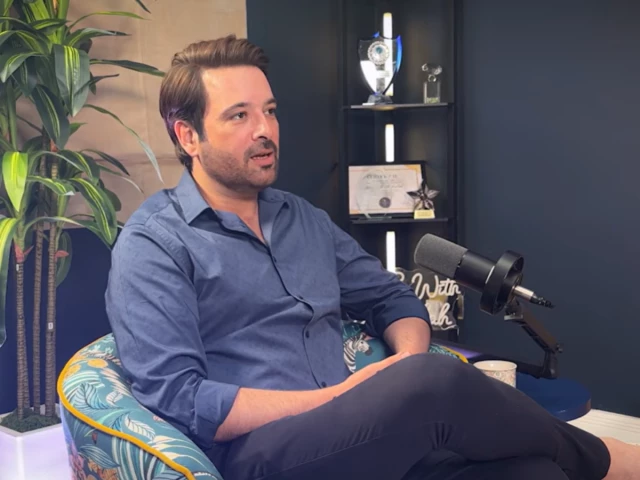
In an expansive and revealing recent interview, prominent Pakistani television and film star Mikaal Zulfiqar opened up about the complexities of international art, regional geopolitics, and his foundational experiences working alongside Indian cinema icons. Best known for his critically acclaimed performances in monumental Pakistani television serials such as Sang-e-Mar Mar, Shehr-e-Zaat, Diyar-e-Dil, and Fraud, Zulfiqar addressed the frozen state of artistic collaboration between Pakistan and India with a mix of pragmatic realism and sharp critique.
Characterizing the ongoing bans and political roadblocks preventing cross-border creative partnerships as "childish and ridiculous," the actor emphasized that artists should ideally act as cultural ambassadors and peacemakers rather than pawns in larger geopolitical conflicts. However, Zulfiqar made it explicitly clear that while he is not desperate for work across the border—drawing immense satisfaction and professional fulfillment from his thriving domestic career in Pakistan—he is not entirely closed off to returning to Bollywood. His openness, nevertheless, comes with strict stipulations: any potential future engagement must be built upon a foundation of mutual respect, professional parity, and safeguards against exploitation.
Beyond geopolitical commentary, Zulfiqar’s reflections offered a nostalgic and deeply educational look back at his early international breakthroughs. He detailed his experiences sharing screen space with legendary Indian actors such as the late Vinod Khanna, Arbaaz Khan, Naseeruddin Shah, and the late Om Puri during the mid-2000s. Describing these formative collaborations as defining milestones in his artistic development, Zulfiqar shared rare anecdotes illustrating the legendary discipline, humility, and profound work ethic of Indian cinema’s heavyweights.
Read Also
Additionally, the actor offered candid insights into his personal life and the pragmatic boundaries he maintains within the entertainment industry, including his deliberate choice to avoid romantic relationships with industry peers. Through this wide-ranging conversation, Zulfiqar emerges not only as a seasoned professional fiercely protective of his dignity and craft, but also as a vocal proponent of cultural exchange in a climate increasingly defined by institutional isolationism.
Detailed Chronology: From Modeling Roots to International Collaborations
The Early Transition and Godfather (2006)
Mikaal Zulfiqar’s journey into the upper echelons of South Asian entertainment did not begin overnight. Having initially established himself as a prominent face in the high-fashion modeling circuit, Zulfiqar possessed the cinematic presence and natural charisma required to transition smoothly into acting. However, his ambitions were never restricted solely to Pakistan’s burgeoning television landscape.
The turning point in his international career arrived in 2006 with the high-profile cross-border co-production Godfather. Shot across the dynamic international backdrops of Dubai and Bulgaria, the project was a pioneering attempt to meld technical and artistic talent from both Pakistan and India. For a young actor still finding his footing in feature films, being cast in Godfather was a trial by fire. It placed him alongside established Indian cinematic heavyweights such as Vinod Khanna and Arbaaz Khan.
Reflecting on this foundational period, Zulfiqar noted that working in a multinational, multi-ethnic crew forced him to elevate his professional standards immediately. The experience provided him with a firsthand education in how major film productions operate outside the constraints of traditional domestic television formats, ultimately preparing him for even larger international stages.
The Shoot on Sight Era and Masterclasses with Legends (2007)
If Godfather served as Zulfiqar’s introduction to international co-productions, his follow-up project, the 2007 socio-political drama Shoot on Sight, cemented his capability to hold his own alongside absolute masters of the craft. In this gripping feature, Zulfiqar shared the screen with towering theatrical and cinematic figures, including the legendary Naseeruddin Shah and the fiercely versatile late Om Puri.
For Zulfiqar, sharing set space with actors of such magnitude was nothing short of a "defining moment" in his professional evolution. Rather than being intimidated by their towering reputations, the young actor adopted a posture of eager, respectful apprenticeship. He recognized that opportunities to work with actors of Shah and Puri’s caliber were exceedingly rare and approached every day on set as an organic masterclass in acting.
Zulfiqar has frequently spoken about the profound humility displayed by these veterans. Despite their decades of experience and global acclaim, Shah and Puri treated their younger Pakistani co-star with utmost warmth, patience, and professional courtesy. Zulfiqar maximized this dynamic by engaging them in deep conversations about character motivation, script analysis, and the psychological demands of cinematic storytelling.
A particularly vivid memory shared by Zulfiqar highlights the legendary discipline of Naseeruddin Shah. Recalling an early morning shoot where Zulfiqar arrived slightly late, he found Shah already seated in his designated spot on set, entirely in character, meticulously reading a newspaper while fully prepared for the day’s sequences. This stark display of professional punctuality and mental immersion left an indelible mark on Zulfiqar, altering his own approach to set etiquette and character preparation for the remainder of his career.
Supporting Context & Metrics: The Geopolitical Freeze on Cross-Border Art
The Rise and Fall of Cultural Exchange
To fully contextualize Mikaal Zulfiqar’s commentary, one must examine the turbulent history of artistic collaboration between Pakistan and India. For decades, despite volatile political relations at the state level, the cultural domain often served as a vital bridge between the two populations. Artists, musicians, and filmmakers routinely crossed borders, resulting in critically acclaimed collaborative projects, cross-cultural musical albums, and shared cinematic universes.
During the late 2000s and early 2010s—precisely when Zulfiqar was making his foray into Bollywood-adjacent projects—the climate was relatively favorable to such exchanges. Pakistani television dramas enjoyed immense digital popularity across India, while actors like Fawad Khan, Mahira Khan, Ali Zafar, and Mikaal Zulfiqar carved out significant fanbases in the neighboring country. Similarly, Indian technicians, musicians, and actors frequently collaborated with Pakistani production houses.
The Geopolitical Turning Point
This fragile bridge began to systematically fracture following a series of high-profile geopolitical security incidents, most notably the 2016 Uri attack. In the wake of heightened bilateral tensions, Indian trade bodies and film associations enacted strict bans on the casting of Pakistani artists in Indian productions. Concurrently, Pakistani regulatory authorities clamped down on the broadcast of Indian cinematic content on domestic television and theatrical screens.
Over the subsequent years, these informal bans hardened into institutionalized policies. What was once a fluid exchange of creative talent became entirely paralyzed by political posturing on both sides. For contemporary artists like Zulfiqar, navigating this frozen landscape requires a delicate balance of professional diplomacy and unflinching personal dignity. While cultural enthusiasts continue to lament the loss of collaborative potential, the current regulatory climate makes any immediate, large-scale return to cross-border filmmaking exceedingly difficult.
Official Statements & Candid Insights
On Returning to Bollywood: Conditions and Self-Worth
Addressing persistent queries regarding a potential Bollywood comeback, Mikaal Zulfiqar maintained a stance characterized by absolute self-respect and clear-eyed pragmatism. He refused to pander to the romanticized notion of Bollywood as the ultimate validation for a South Asian actor, proudly pointing to his established legacy in Pakistan.
"I am open to the idea of returning, provided I am invited respectfully and treated on equal footing without being misused," Zulfiqar stated explicitly during his recent interview.
Expanding further on his current career satisfaction, he added:
"I am not desperate for work in Bollywood; I am very happy with my career in Pakistan, but I would consider good opportunities if the circumstances were right."
This sentiment underscores a broader shift among contemporary Pakistani stars, who increasingly recognize the global reach and high production quality of their domestic industry (commonly referred to as Lollywood or the Pakistani drama television sector). Rather than viewing international markets as a necessity for survival, successful actors now view them strictly as optional extensions of an already established home-market career.
Critiquing the Political Freeze
Zulfiqar did not mince words when addressing the institutional bans and political barriers preventing cultural collaboration. Displaying a frustration shared by many intellectuals and artists across the subcontinent, he labeled the current state of affairs as fundamentally counterproductive.
"Unfortunately, politics often overrides everything in the relationship between Pakistan and India. An individual is never bigger than the political situation or regional conflicts," Zulfiqar observed.
Characterizing the prohibitions against creative exchange with stark clarity, he noted:
"The current situation and bans on Pakistani actors are childish and ridiculous. An actor needs to be a peacemaker, not part of political games."
Navigating Personal Boundaries in the Industry
Shifting away from international politics, the interview also shed light on Zulfiqar’s personal philosophy regarding relationships within the entertainment ecosystem. Known for maintaining a relatively private personal life, the actor was refreshingly candid when explaining why he has historically avoided romantic entanglements with his co-stars.
"They’re lovely people, but they’re very high maintenance," Zulfiqar remarked, before offering a balanced clarification that removed gender bias from his critique. "It’s not just female co-stars, male actors can be just as difficult. The high-stress environment of the industry is tough on everyone’s temperament."
For Zulfiqar, the emotional calculus required to sustain a relationship within a high-pressure, hyper-visible industry simply does not align with his personal needs.
"It’s just not a good match for me to be involved with people in the same profession," he concluded, reinforcing his preference for clear boundaries between his demanding professional life and his personal peace.
Future Outlook: The Legacy and Next Chapter of Mikaal Zulfiqar
As Mikaal Zulfiqar looks toward the horizon, his career remains firmly anchored in the powerhouse of Pakistani television, where he continues to headline high-rating, critically acclaimed serials. Having built an enviable resume featuring legendary performances in Sang-e-Mar Mar, Shehr-e-Zaat, Diyar-e-Dil, and Fraud, Zulfiqar’s status as a household name across South Asia is secure, irrespective of shifting geopolitical winds.
The actor’s recent reflections serve as both a timely cultural critique and a masterclass in professional self-preservation. By calling out the absurdity of politically motivated artistic bans while keeping the door conditionally open for respectful international collaboration, Zulfiqar models a mature, dignified approach to globalized stardom.
Whether or not the political climate between Pakistan and India will ever thaw sufficiently to allow for a new wave of cross-border cinema remains an open question for the future. However, one thing remains certain: if Mikaal Zulfiqar ever graces the Indian screen once more, it will be entirely on his own terms—backed by the unshakeable confidence of a seasoned artist who honors his craft, respects his roots, and refuses to compromise his personal dignity for the sake of political expediency.


Comments
Facebook App ID not configured. Please add it in the Customizer.