
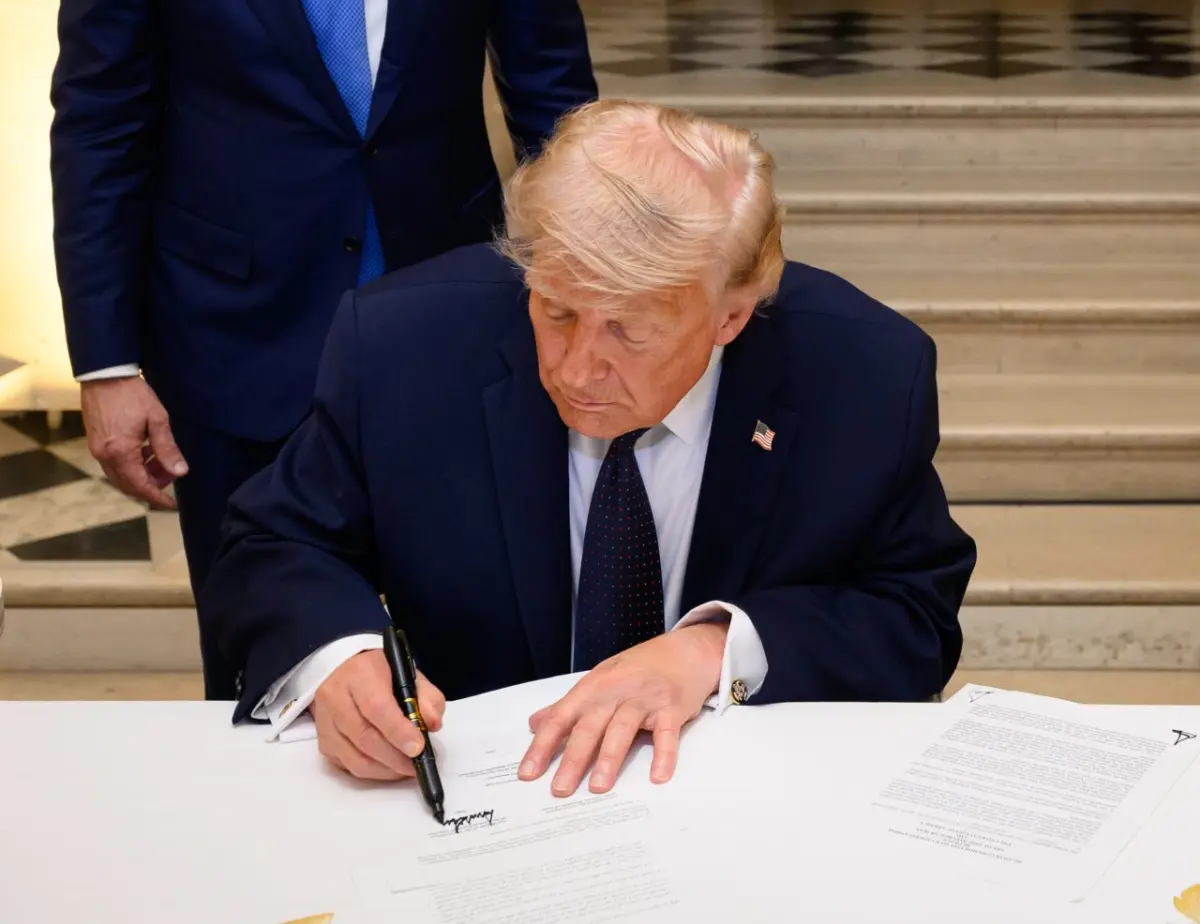
The unexpected signing of a Memorandum of Understanding (MoU) between the United States and Iran has radically upended decades of bipartisan foreign policy orthodoxy. Brokerage of this diplomatic pivot—arriving barely two months after severe threats of total military annihilation—has exposed stark fractures within both the American political establishment and the broader Western alliance.
What began as an escalating confrontation culminating in the Islamic Revolutionary Guard Corps’ (IRGC) defensive posture has pivoted, through a combination of pragmatic exhaustion and economic realities, toward tentative bilateral engagement. The resulting accord aims for an immediate and permanent cessation of hostilities, the lifting of crippling economic sanctions, and the unfreezing of tens of billions in Iranian sovereign assets.
Yet, this sudden diplomatic lurch has triggered intense blowback. Congressional Democrats, traditionally critical of foreign interventions yet fiercely opposed to perceived capitulations, have united with hardline Republicans to denounce the MoU as an unconscionable surrender. Simultaneously, the Israeli government under Prime Minister Benjamin Netanyahu has actively sought to sabotage the agreement, escalating military operations in Lebanon to preserve a state of regional conflict vital to its domestic political survival.
Read Also
This investigative report examines the chronology, geopolitical metrics, official rhetoric, and structural vulnerabilities defining this unprecedented diplomatic turning point.
Detailed Chronology of the Diplomatic Shift
The path from the precipice of total war to an improbable peace framework unfolded through a rapid sequence of tactical reversals and candid admissions by the Trump administration.
- Early April: Amid escalating tensions, the United States executed devastating kinetic strikes, including a catastrophic attack on a school in Minab that resulted in civilian casualties numbering in the hundreds—strikes that the administration would later dismissively wave away.
- Late May to Early June: Faced with the resilient geography of the Strait of Hormuz and the economic pressures of a protracted conflict, the administration’s posture shifted. Behind-the-scenes negotiations facilitated by regional intermediaries began laying the groundwork for a de-escalation framework.
- June 14: President Trump posted a blunt directive on social media declaring, "Let the oil flow!", signaling an abrupt pivot away from the total economic strangulation of Iran’s energy sector.
- June 17: The United States and Iran formally signed a comprehensive Memorandum of Understanding. The document outlined a plan for a permanent ceasefire, the reopening of strategic waterways, the unfreezing of sovereign assets, and a projected $300 billion reconstruction framework.
- June 18–21: Senior administration figures faced intense media scrutiny. Vice President JD Vance defended the economic realities of the deal during a tense press conference, asserting that national security cannot be achieved through violence alone, while congressional hawks from both parties lined up to condemn the accord as a historic strategic blunder.
Supporting Context & Metrics: The Anatomy of the Deal
The economic and geographic realities underpinning the MoU reveal why Washington ultimately stepped back from the brink of perpetual conflict.
The Geography of Attrition
Military planners quickly ran up against the immovable physical reality of the Strait of Hormuz. Iran’s strategic positioning allowed it to choke global energy flows, driving up oil prices and directly threatening Western economic stability. Despite the United States possessing overwhelming offensive capabilities, prolonged naval blockades yielded diminishing returns, highlighting the limits of asymmetric power projection.
Financial Stakes and Sanctions Relief
The economic dimensions of the MoU are both sweeping and legally complex:
- Unfreezing Assets: Tens of billions of dollars in Iranian sovereign assets, frozen in international accounts, are slated for return to prevent a catastrophic loss of global investor confidence in the U.S. dollar.
- Fossil Fuel Exports: Permanent permission for Iran to sell its oil globally—and settle transactions in U.S. dollars for the first time in decades—restores a vital economic lifeline to an isolated state of 91 million citizens.
- The "$300 Billion" Question: While the MoU outlines a tentative framework for economic reconstruction and development, the financing mechanism remains ambiguous. Administration officials suggest funding will derive from Gulf allies and international corporations, though financial analysts view the figure as a hyperbolic placeholder typical of executive-level negotiation tactics.
Official Statements and Political Fallout
The political fallout from the MoU has triggered strange ideological realignments across Capitol Hill and international capitals.
The Domestic Opposition Chorus
Congressional leadership met the agreement with fierce hostility. Democratic leadership, while historically critical of foreign entanglements, castigated the deal as an unconditional surrender.
- Senator Richard Blumenthal (D-CT): Decried the terms as a "disgraceful" surrender.
- Senator Tammy Duckworth (D-IL): Dismissed it as "one of the worst deals ever made."
- Senate Minority Leader Chuck Schumer: Vowed fierce opposition, claiming Democrats would not facilitate financial flows to Tehran, despite the structural reality that the funding mechanisms rely largely on external or private capital.
Concurrently, traditional Republican hawks expressed deep betrayal. Senator Roger Wicker (R-MS) termed the agreement entirely disconnected from long-term security goals, while Senator Bill Cassidy (R-LA) lamented that the move represented the worst foreign policy blunder in decades.
The Administration’s Pragmatic Defense
Defending the pivot, Vice President JD Vance articulated a blunt realist philosophy during his press briefings. Striking a note that shocked traditional foreign policy circles, Vance remarked that the United States cannot "kill its way out of solving every single national security problem." Furthermore, addressing tensions with long-standing allies, Vance warned that external partners must recognize geopolitical realities, explicitly noting the heavy reliance on American defensive architecture.
Future Outlook and Geopolitical Implications
The sustainability of the U.S.-Iran MoU hangs by a thread, threatened by institutional inertia, regional spoilers, and the sheer complexity of codifying a lasting peace.
The Israeli Factor
The most acute threat to the agreement emanates from Jerusalem. Prime Minister Benjamin Netanyahu’s government views the cessation of hostilities—particularly regarding Lebanon—as a severe strategic defeat that threatens the survival of his far-right coalition. Despite the nominal commencement of a ceasefire, Israeli military operations in southern Lebanon have continued unabated. This active sabotage has complicated diplomatic channels, prompting renewed threats from Tehran and threatening to drag the United States back into an active posture of confrontation.
The Implementation Horizon
From a technical standpoint, a 60-day negotiation window is exceptionally narrow for resolving complex issues such as nuclear enrichment verification, infrastructure inspections, and sanctions dismantling. Past precedents, such as the Joint Comprehensive Plan of Action (JCPOA), required years of painstaking diplomacy driven by career diplomats rather than executive directives.
Ultimately, the Memorandum of Understanding represents a profound paradox: a historic diplomatic breakthrough born of military exhaustion, championed by an administration notorious for its volatility, and fiercely resisted by an entrenched national security establishment. Whether this fragile accord survives the crossfire of domestic politics and regional belligerence remains one of the defining questions of contemporary geopolitics.




Comments
Facebook App ID not configured. Please add it in the Customizer.