Across the vast, arid expanse of the Western United States, more than 90,000 wild horses and burros roam public lands that once echoed with the thundering hooves of their ancestors for millions of years. Today, these mustangs—widely regarded as living symbols of the American frontier—exist in a precarious regulatory limbo. Every year, the federal government dispatches helicopters to drive thousands of these iconic animals into traps, removing them from public rangelands under the premise that their populations threaten ecological balance.
While the Bureau of Land Management (BLM) officially maintains that rounded-up equids are placed in long-term holding facilities or adopted out to private caretakers, a darker reality persists. A combination of regulatory blind spots, low purchase prices, and aggressive middlemen has created a clandestine pipeline. Through this system, wild horses purchased from the federal government for as little as $25 apiece are funneled through intermediaries, shipped across the northern border, and sold to Canadian slaughterhouses for up to $750 each. Their meat is subsequently packaged and exported to lucrative European and Asian markets.
Although slaughtering horses for human consumption is technically illegal within the United States, clever legal workarounds have rendered domestic protections toothless for thousands of captured mustangs. This crisis has intensified significantly during Donald Trump’s second presidential term, highlighting a profound ideological battle over the management of the American West. At the center of this conflict is a powerful, yet frequently overlooked, stakeholder: the multi-billion-dollar beef industry.
For decades, powerful cattle associations have lobbied for aggressive herd removals, arguing that wild equids compete directly with privately owned livestock for scarce natural forage on public lands. With millions of cattle grazing across roughly 250 million acres of federal public land—often heavily subsidized by dirt-cheap leasing fees—the pressure to eradicate competing wildlife and wild animals has never been higher. As public outrage mounts over the hidden slaughter pipeline, conservationists, policymakers, and land managers face a reckoning over how public lands are shared, who benefits from federal subsidies, and whether humane alternatives like fertility control can finally break the cycle of captivity and slaughter.
Detailed Chronology: From the Range to the Abattoir
The modern management of America’s wild horses and burros is governed largely by the Wild Free-Roaming Horses and Burros Act of 1971, a landmark piece of legislation designed to protect these animals from "capture, branding, harassment, or death." However, the legislation included provisions allowing the federal government to remove "excess" animals from public ranges to prevent overgrazing and land degradation. Over the decades, this mandate has evolved from a conservation-minded check on population into a massive, industrial-scale roundup operation.
1. The Mid-1990s to the 2010s: Industrializing the Roundups
Beginning in the mid-1990s, the BLM established a routine rhythm of execution. On average, the agency has captured roughly 8,800 wild horses and burros annually. Utilizing bait traps and low-flying helicopters—tactics that animal welfare advocates criticize for causing severe panic, exhaustion, and physical trauma—federal contractors herd families of mustangs into corrugated metal chutes.
During this era, captured animals were sorted. A fraction were adopted by private citizens, but the vast majority were placed into sprawling off-range corrals and pastures. As the number of captured horses outpaced the pool of willing adopters, the federal holding inventory swelled. By the early 2010s, the system was financially buckling under the weight of tens of thousands of captive horses.
2. The 2013–2024 Shift: Surging Sales and the Slaughter Loophole
To alleviate the soaring costs of long-term captivity, the BLM increasingly turned to sales programs. In 2013, the agency sold a modest 65 wild horses directly to private buyers with minimal restrictions. However, policy changes and lax oversight over subsequent years opened the floodgates.
By 2024, the number of sold horses skyrocketed to approximately 1,500. By the close of the most recent reporting cycle, that figure more than doubled, exceeding 3,700 horses sold in a single year. Investigative reporting by outlets such as The New York Times revealed that these volume sales acted as a direct conduit for kill-buyers. Livestock speculators—exploiting regulatory gaps that fail to track animals past their initial purchase—acquired horses at government auctions for rock-bottom prices ($25 to $100 per head). They then transferred the titles through a network of middlemen before loading the animals onto trucks bound for Canadian packing plants.
3. The 2019 "Path Forward" and Present Day
In 2019, an uneasy alliance of select animal welfare organizations and livestock associations forged a compromise known as "The Path Forward." The agreement sought to secure increased federal funding for the BLM to simultaneously ramp up aggressive helicopter roundups and deploy large-scale fertility control measures.
Congress responded by injecting tens of millions of dollars into the BLM’s wild horse and burro budget, elevating annual expenditures past the $100 million mark. While funding for fertility vaccines has ticked upward—reaching roughly $5 million in 2024 with projections of up to $11 million—roundups have accelerated at a far more aggressive pace. Today, roughly 58,000 wild horses and burros languish in federal holding facilities, while thousands more face the continuous threat of commercial exploitation through the slaughter pipeline.
Supporting Context & Metrics: The Economics of Public Rangelands
To fully understand why wild horses are systematically removed from Western lands, one must examine the economic architecture of the American rangeland. The Western United States functions, in many respects, as a giant, federally subsidized cattle ranch.
Grazing Statistics and Subsidies
Public Land Footprint: Approximately 250 million acres of public land managed by the BLM and the U.S. Forest Service—representing roughly 13 percent of all land in the contiguous United States—are made available to private ranchers for livestock grazing.
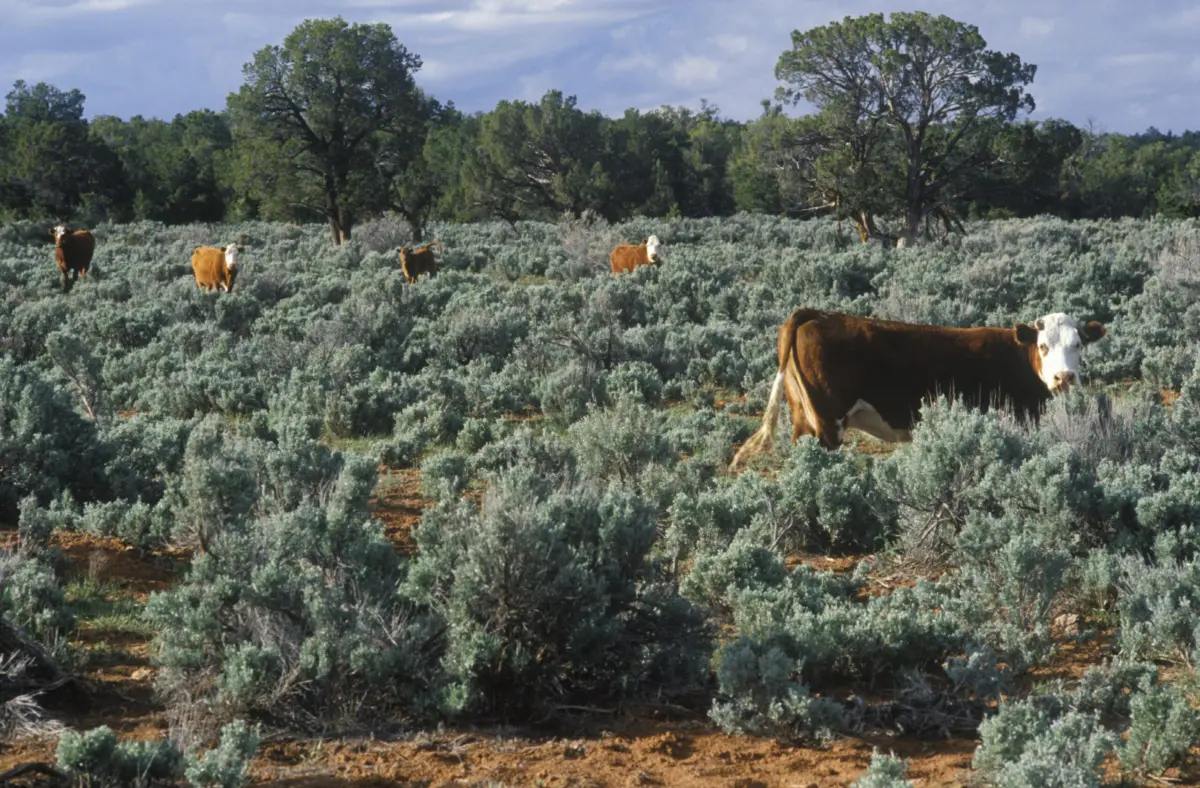
Livestock vs. Equids: While the total population of wild horses and burros across public lands hovers around 93,000 (concentrated primarily in Nevada, Wyoming, Arizona, and California), they share these ecosystems with several million privately owned cattle.
Grazing Fees: Livestock operators lease federal grazing rights at an exceptionally low rate of just $1.69 per animal unit month (AUM). Conservation economists frequently characterize this setup as a massive taxpayer subsidy that grants commercial livestock producers cheap forage while shifting environmental management costs onto the public.
The Ecological Pretext
The BLM determines appropriate management levels (AMLs) for wild horses based on available forage and water resources, aiming to prevent ecological degradation. However, conservation groups and former federal employees argue that these calculations are heavily skewed to prioritize cattle. Because cattle and horses consume similar vegetation and utilize the same watering holes, livestock producers view mustangs as direct competitors for resources.
When rangeland vegetation is depleted—often a cumulative result of both cattle and equine grazing—wild horses are routinely blamed for the damage, serving as a convenient scapegoat that justifies the reduction of wild herds to maximize commercial livestock grazing capacity.
Official Statements & Industry Influences
The machinery driving wild horse removals and opposing their protection involves powerful industrial lobbying groups and federal officials with deep financial ties to the livestock sector.
The Cattle Industry Lobby
The nation’s largest beef industry representative, the National Cattlemen’s Beef Association (NCBA), alongside its public lands affiliate, the Public Lands Council (PLC), has long championed aggressive wild horse management. In their official policy documents, these organizations explicitly characterize the wild horse population as an out-of-control "crisis." They actively lobby Congress to increase agency budgets for faster, more extensive roundups and openly advocate for the legalization of horse slaughter within the United States.
Neither the NCBA nor the PLC responded to requests for comment regarding allegations that federal wild horses are entering the Canadian slaughter pipeline.
Federal Denials and Conflicts of Interest
The Bureau of Land Management continues to vigorously deny that its sales program feeds the slaughter industry. In an official statement to investigators, a BLM spokesperson asserted:
"The BLM does not send wild horses or burros to slaughter. No loophole exists that would allow people who adopt or buy wild horses to ever sell animals directly or to middlemen for slaughter."
Despite these assurances, ethics watchdogs and conservation groups point to persistent conflicts of interest within the Department of the Interior, which oversees the BLM. Regulatory oversight has frequently been placed in the hands of political appointees with direct financial stakes in the livestock industry. For instance, high-level Department of the Interior officials appointed during the Trump administration have publicly advocated for easing grazing restrictions and reducing habitat protections on hundreds of thousands of acres of public land operated by their own family-tied ranching enterprises.
Beyond horses, the broader ecosystem management approach favored by the cattle industry impacts a wide array of native wildlife. Organizations aligned with the livestock lobby have pushed to restrict bison grazing near Yellowstone National Park over unfounded fears of disease transmission, advocated for the removal of Endangered Species Act protections for gray wolves, and supported federal wildlife eradication programs (such as those run by USDA Wildlife Services) that kill millions of native animals annually to protect livestock and commercial feed crops.
Future Outlook: Charting a Humane and Sustainable Path
As public scrutiny intensifies over the clandestine export of American mustangs to foreign abattoirs, the path forward requires fundamental structural reforms in how federal agencies manage public lands and wildlife.
1. Prioritizing Fertility Control
The most viable and broadly supported solution to reducing roundups, holding facility overcrowding, and slaughter vulnerability lies in non-lethal population management. Animal welfare advocates, including Patricia Miller, executive director of American Wild Horse Conservation, argue that scaling up the deployment of porcine zona pellucida (PZP) and other long-acting fertility control vaccines can stabilize herd sizes humanely.
While the BLM has incrementally increased its investment in fertility vaccines—spending roughly $5 million in recent years and eyeing up to $11 million—critics emphasize that these measures remain underfunded relative to the hundreds of millions funneled into physical roundups and long-term captivity. Making fertility control a mandatory, primary management tool rather than a secondary afterthought could dramatically reduce the number of foals born on the range, ultimately eliminating the "excess" inventory that triggers large-scale sweeps.
2. Closing the Sales Loophole
Legislative action is urgently required to close the regulatory loopholes that allow low-priced adoption and sales animals to fall into the hands of kill-buyers. Implementing strict, enforceable tracking mechanisms, lifetime ownership restrictions, and permanent bans on commercial resale would ensure that animals adopted or purchased from federal custody never reach an abattoir.
3. Re-evaluating Public Lands Policy
Ultimately, the wild horse crisis is a symptom of a larger, systemic debate over the use of America’s public lands. True reform will necessitate a transparent, balanced reassessment of rangeland allocations—one that weighs the economic demands of the beef industry against the ecological value of native wildlife, public recreation, and the preservation of an irreplaceable American icon. Without such systemic changes, the majestic mustangs of the West will remain trapped in a relentless cycle of government persecution, corporate lobbying, and tragic exploitation.








Comments
Facebook App ID not configured. Please add it in the Customizer.