
Executive Overview
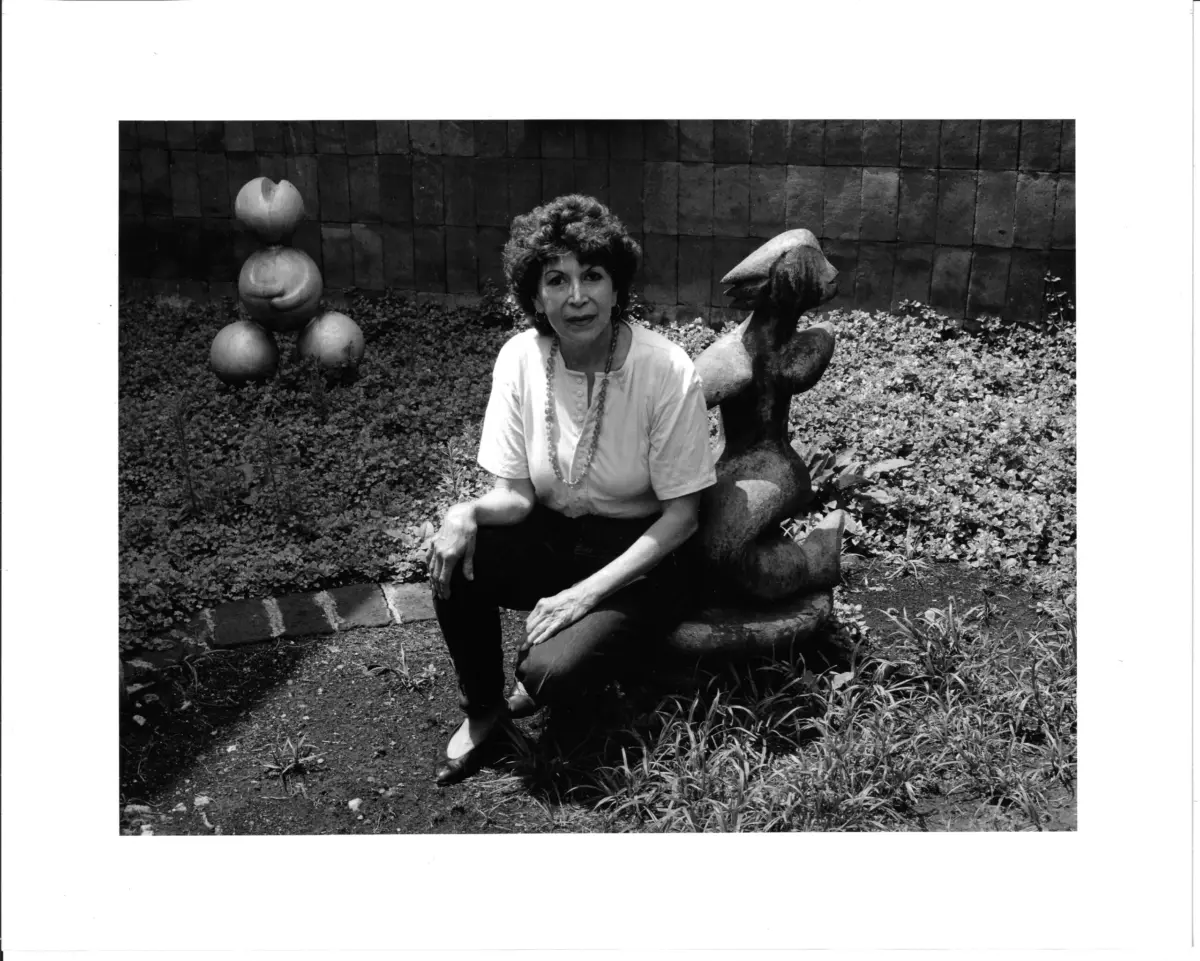
Geles Cabrera, celebrated as Mexico’s first professional female sculptor and an instrumental figure in the avant-garde Generación de la Ruptura (Breakaway Generation), passed away on September 1, 2026, at the remarkable age of 100. Her death was first announced by the Spanish culture magazine Bonart and subsequently confirmed by the National Institute of Fine Arts and Literature (INBAL) in Mexico City.
Spanning more than seven decades, Cabrera’s artistic practice challenged patriarchal conventions, defied institutional exclusion, and redefined the physical and conceptual boundaries of modern sculpture. Working primarily with rough volcanic stone (recinto), wood, and terracotta, she forged an instantly recognizable visual vocabulary centered on voluptuous, abstracted human figures. Her tactile creations evoked both pre-Hispanic ritual objects and the fluid dynamism of dance.
Beyond her studio practice, Cabrera was an institutional pioneer. She co-founded the Salón de la Plástica Mexicana in 1949 and independently established the Museo Escultórico in Coyoacán in 1966—the country’s first artist-run museum dedicated to a living artist. Though systemic sexism and the dominance of the Mexican muralist movement delayed widespread institutional recognition until her later years, Cabrera’s tenacity left an indelible mark on Latin American art history. Her legacy is defined not only by her striking sculptures, but by her unyielding advocacy for gender equity within the global arts ecosystem.
Read Also
Detailed Chronology: A Century of Artistic Revolution
Formative Years and Pre-Hispanic Roots (1926–1945)
Born Ángeles María Cabrera Alvarado in 1926, the artist grew up surrounded by the physical strata of Mexican history. Her father, a civil engineer, oversaw major urban construction projects in Mexico City while actively participating in archaeological excavations of pre-Hispanic artifacts. Growing up amidst these ancient relics profoundly influenced Cabrera’s tactile sensibility. The heavy, monolithic volumes of indigenous Mexican sculpture would echo throughout her mature work, connecting her modernist abstractions to ancient ritualistic forms.
Artistic lineage also ran through her family; her aunt, Rosario Cabrera, was an innovative painter who spearheaded early Open-Air Painting Schools in Mexico. In the mid-1940s, Cabrera enrolled in the prestigious San Carlos Academy. Simultaneously, she pursued formal training in dance, joining Alfonso Pallares’s experimental troupe. This rigorous physical training instilled in her a deep understanding of bodily kinematics, weight distribution, and spatial tension—qualities that would quickly manifest in her figurative sculptures, which often combined fertility symbols with intertwined couples.
Early Breakthroughs and Cuban Interlude (1946–1949)
As a young woman navigating the male-dominated Mexican art world of the mid-20th century, Cabrera faced immediate systemic barriers. Sculpture, in particular, was viewed almost exclusively as a masculine pursuit requiring physical strength and industrial fabrication techniques that women were discouraged from exploring.
Seeking fertile ground for her burgeoning practice, Cabrera relocated to Cuba with her family in her early twenties. There, she enrolled in the San Alejandro Academy, quickly establishing herself within the local avant-garde scene and winning two major awards for her early sculptural works.
Returning to Mexico City in 1949, Cabrera made history at just 22 years old by securing a solo exhibition at the Mont-Orendáin Gallery—becoming the first Mexican female sculptor to achieve this milestone. That same year, alongside 52 fellow artists, she co-founded the Salón de la Plástica Mexicana, a collective dedicated to fostering modern Mexican art outside traditional academic constraints. She also continued her formal education at La Esmeralda School of Painting, Sculpture, and Engraving.
The Ruptura and Material Exploration (1950s–1960s)
During the 1950s and 1960s, Mexican art was dominated by the socio-political muralism of figures like Diego Rivera and David Alfaro Siqueiros. Cabrera, however, gravitated toward abstraction, psychological interiority, and universal human forms. This aesthetic alignment brought her into the orbit of the Generación de la Ruptura (Breakaway Generation), a coalition of artists who rejected nationalist realism in favor of international abstraction and avant-garde experimentation. She also collaborated with the avant-garde collective GUCADIGOSE alongside artists like Mathias Goeritz and Angela Gurría.
It was during this period that Cabrera mastered her signature material: recinto, a porous, dark gray or black volcanic stone historically utilized in indigenous Mesoamerican architecture. Rejecting the pristine, polished finish typical of classical marble or bronze, Cabrera embraced the raw, tactile nature of volcanic rock.
"I left them like that on purpose. I don’t like to polish them. That is why I barely ever worked with marble," Cabrera remarked in a 2018 interview with artist Pedro Reyes.
The Coyoacán Museum and Decades of Marginalization (1966–2006)
Despite her early achievements and active participation in the avant-garde, mainstream cultural institutions largely ignored Cabrera’s contributions for decades. Faced with institutional exclusion, she took matters into her own hands. In 1966, she founded the Museo Escultórico in the historic Coyoacán neighborhood of Mexico City.
Operating independently for four decades until its closure in 2006, the museum stood as Mexico’s first artist-run institution dedicated to a living practitioner. Cabrera funded the venue largely out of her own pocket using her salary as an art teacher, and admission remained free to the public. The museum permanently housed over 50 of her major works while serving as a vital exhibition space for her contemporaries.
As a mother of five balancing domestic responsibilities, teaching, and an uncompromising studio practice, Cabrera maintained a relentless work ethic despite receiving little state support or critical attention during the height of her career.
Late Recognition, Retrospectives, and Final Honors (2018–2026)
The twenty-first century brought a long-overdue reassessment of Cabrera’s monumental place in art history. A major turning point occurred in 2018 when Mexico City’s Museo Experimental El Eco mounted the landmark solo exhibition "Geles Cabrera: Mexico’s First Female Sculptor."

Reflecting on her decades of struggle in a filmed interview with Pedro Reyes accompanying the exhibition, Cabrera did not mince words regarding the structural sexism of the Mexican cultural apparatus:
"They wouldn’t let women in. It was so hard to achieve anything. They built museums for all the [male] artists, but they never supported me. Tell me the Mexican art system isn’t sexist; of course it is."
International and major national institutions finally caught up to her pioneering vision. In 2022, she celebrated her first U.S. institutional solo exhibition at the Americas Society in New York. In 2023, the Mexican government awarded her the Medal for Fine Arts—the nation’s highest lifetime achievement honor in the arts.
The crowning achievement of her late career arrived in 2025, when Mexico City’s premier cultural venue, the Museo del Palacio de Bellas Artes, presented a comprehensive retrospective titled Geles Cabrera: Partituras Corporales. Cabrera personally attended the installation, witnessing her life’s work celebrated in the very halls that had long ignored female modernist sculptors.
Supporting Context & Metrics
Key Statistical Milestones in Cabrera’s Career
- Age at Passing: 100 years old (born 1926, died September 1, 2026).
- Career Span: Over 70 years of continuous sculptural production.
- First Solo Exhibition: Age 22, at the Mont-Orendáin Gallery (1949).
- Founding Member: Co-founder of the Salón de la Plástica Mexicana (1949, alongside 52 peers).
- Museum Directorship: Founder and director of the Museo Escultórico in Coyoacán, which operated independently for 40 years (1966–2006).
- Institutional Retrospectives & Highlights:
- Museo Experimental El Eco (2018)
- Americas Society, New York (2022) — First U.S. solo exhibition.
- National Medal for Fine Arts (2023) — Mexico’s highest cultural honor.
- Museo del Palacio de Bellas Artes (2025) — Major career retrospective (Partituras Corporales).
Artistic Materials and Technical Philosophy
Cabrera’s material palette evolved from early experiments in terracotta, wood, and plant fibers into a profound mastery of heavy, geologic substances. Her technical philosophy prioritized tactile immediacy over polished perfection:
- Recinto (Volcanic Stone): Her signature medium. Porous, dark, and historically resonant with pre-Hispanic construction, recinto allowed her to emphasize organic curves while maintaining a raw, unvarnished texture.
- Bronze and Wood: Utilized to capture elongated, flexible bodily configurations that reflected her early training in modern and experimental dance.
- Rejection of Marble: She famously avoided marble because its sleek, classical finish required a level of artificial refinement that distanced the viewer from the raw, visceral truth of the material.
Official Statements & Tributes
The cultural community responded to Cabrera’s passing with widespread tributes, highlighting both her artistic genius and her fierce independence.
The National Institute of Fine Arts and Literature (INBAL) released a statement commemorating her impact:
"Geles Cabrera was a tireless promoter of modern sculpture in Mexico. Over seven decades, she built a sculptural practice that explored the human figure through abstracted, voluptuous forms, effectively leading the way for younger generations of modern and contemporary Mexican artists."
Mexico City’s OMR Gallery, which represented the artist, shared an emotional tribute on social media:
"It is with deep sadness that we pay tribute to Geles Cabrera… a pioneer of modern sculpture in Mexico and an artist whose work transformed the way we think about the body, movement, and space. She was both an artist and her own muse. She didn’t wait for the world to make a place for her — she shaped it with her own hands."
Art historians and critics writing in publications such as The Art Newspaper and Bonart noted that Cabrera’s life serves as both an inspiration and a cautionary tale about the systemic erasure of women artists within 20th-century Latin America. Her longevity allowed her to witness the correction of historical omissions, proving that perseverance can outlast institutional neglect.
Future Outlook: Preserving the Legacy of a Century-Long Practice
As the international art world continues to re-evaluate mid-century modernism through a decolonial and gender-inclusive lens, Geles Cabrera’s work stands as a cornerstone of Latin American sculpture.
Her passing closes a remarkable chapter in Mexican art history, yet it simultaneously opens a new phase for her critical legacy. With major retrospectives at venues like the Museo del Palacio de Bellas Artes and the Americas Society having re-introduced her oeuvre to global audiences, museum curators, researchers, and collectors are increasingly acquiring and studying her volcanic stone carvings and bronzes.
Furthermore, the story of the Museo Escultórico—her independent, self-funded museum in Coyoacán—serves as an enduring blueprint for artist-run spaces and institutional autonomy. Cabrera did not merely critique the exclusionary nature of the mid-century art establishment; she built physical alternatives, taught generations of students, and carved out a permanent space for female agency in modern sculpture.
Though Geles Cabrera lived to see only the final years of her rightful place in art history, her monumental forms in volcanic stone ensure that her presence will remain carved into the cultural landscape for centuries to come.

Comments
Facebook App ID not configured. Please add it in the Customizer.