
Executive Overview
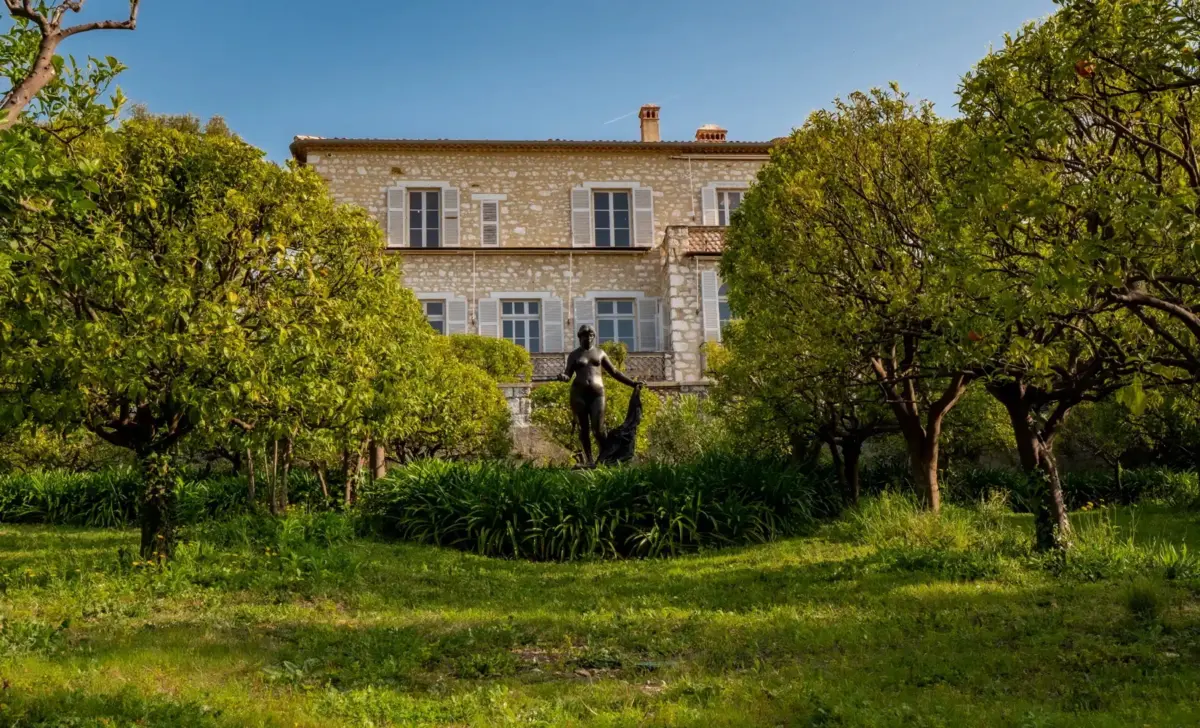
In the misty pre-dawn hours of a Tuesday morning, the tranquil French Riviera town of Cagnes-sur-Mer became the epicenter of an international art security crisis. Two masked intruders breached the perimeter of the Musée Renoir—the historic final residence and sanctuary of legendary Impressionist master Pierre-Auguste Renoir—making off with priceless cultural treasures valued at an estimated €9 million ($10.5 million).
While quick-thinking law enforcement response times and the chaotic haste of the perpetrators prevented a total annihilation of the museum’s core exhibition, the heist underscores a deeply troubling, escalating trend across Europe: regional museums housing world-class masterpieces have become soft targets for sophisticated criminal syndicates. The targeted strike resulted in the theft of two irreplaceable canvases, while two others were frantically abandoned on the museum grounds as the suspects fled through the lush gardens.
This high-profile burglary is not an isolated incident; rather, it represents the latest chapter in a surging wave of cultural property crimes plaguing smaller European institutions. Just months prior, Italian authorities successfully recovered a similarly valued trio of masterworks by Paul Cézanne, Henri Matisse, and Pierre-Auguste Renoir stolen from the Fondazione Magnani Rocca near Parma. As major global institutions bolster their fortresses with multi-million-dollar security infrastructures, criminal elements are increasingly turning their gaze toward provincial galleries, where historic architecture and tight municipal budgets often leave priceless heritage dangerously exposed.
Read Also
Detailed Chronology: The Raid on the Musée Renoir
The precise sequence of events on Tuesday morning reads like a cinematic thriller, though the implications for cultural heritage are deadly serious. According to detailed reports from French outlets Le Monde, AFP, and BFM TV, the operation began well before sunrise.
5:48 AM: The Breach and the Alarm
At precisely 5:48 a.m. local time, the advanced security grid of the Musée Renoir tripped. The alarm system instantly transmitted an alert to local law enforcement dispatchers, signaling an unauthorized intrusion at the property located on the verdant hills overlooking the Mediterranean.
5:53 AM: Law Enforcement Interception
Demonstrating remarkable efficiency, local police units arrived at the museum gates just five minutes after the initial alarm sounded. However, the five-minute window proved to be just enough time for the determined thieves to execute their smash-and-grab objective inside the historic villa.
According to local officials, including National Assembly member Bryan Masson, the two suspects realized they were running out of time as sirens wailed in the distance. In their frantic bid to escape, the criminals dropped two of the four targeted canvases directly on the museum grounds. Nevertheless, they managed to scale perimeter walls and vanish into the dense vegetation, making good on their escape with two masterworks safely tucked beneath their arms.
The Stolen and Recovered Masterworks
Before the early morning raid, the Musée Renoir had proudly placed a tightly curated selection of 12 original Renoir paintings on public view. The exhibition space—which doubles as the artist’s preserved family home—displays a deeply personal collection of his paintings, original sculptures, and period furniture.
The four specific artworks targeted by the thieves represent pivotal periods in the artist’s illustrious career:
- Portrait of Madame Pichon (1895): A stunning exploration of bourgeois femininity and light, showcasing Renoir’s mature Impressionist brushwork.
- Portrait of Madame Colonna Romano (1910): A sophisticated later-period portrait highlighting the artist’s transition toward richer, warmer palettes.
- Coco Lisant (1905): An intimate, tender depiction of Renoir’s youngest son, Claude (affectionately known as "Coco"), deeply engrossed in reading.
- Jeune fille au puits (1886): A luminous pastoral scene capturing a young girl by a well, echoing the classical influences that began to permeate his mid-career outputs.
At the time of this publication, French authorities have intentionally withheld which specific two paintings were successfully stolen and which two were recovered from the gardens, citing the integrity of an ongoing, high-level criminal investigation led by specialized art-crime units.
Supporting Context & Metrics: A Continental Wave of Art Thefts
The raid in Cagnes-sur-Mer cannot be viewed in a vacuum. It is part of a chilling pattern targeting regional cultural institutions across Western Europe. While world-renowned venues like the Musée d’Orsay in Paris, the Louvre, or London’s National Gallery invest heavily in military-grade security systems, climate-controlled vitrines, and armed guards, smaller municipal museums often operate on constrained public sector budgets.
The Italian Precedent
This vulnerability was starkly illustrated just months prior in Northern Italy. In March, thieves executed a calculated break-in at the Fondazione Magnani Rocca, located near Parma, escaping with a trio of blue-chip masterpieces. The haul included:
- Paul Cézanne’s Still Life with Cherries (1890)
- Henri Matisse’s Odalisque on the Terrace (1922)
- Pierre-Auguste Renoir’s late-career masterpiece Les Poissons (1917)
The collective value of that heist was estimated to be in excess of $10.4 million. Investigative reporting by the BBC highlighted the staggering worth of Les Poissons—the sole oil on canvas in the group—which alone accounted for roughly €6 million ($6.9 million) of the total valuation.
Fortunately, in a rare victory for international cultural preservation, Italian Carabinieri specialized in the protection of cultural heritage successfully tracked down and recovered all three masterworks in August. Art security experts note, however, that recoveries of this speed and precision are the exception rather than the rule.
The Global Market for Stolen Impressionism
Impressionist and Post-Impressionist works remain prime targets for international theft rings. The sheer liquidity of Renoir’s market—driven by an insatiable global demand from private collectors, hedge fund managers, and illicit syndicates willing to trade in the shadows—makes these canvases valuable collateral.
Ironically, this theft occurs just as the art world prepares for a massive celebration of the artist’s legacy. A major blockbuster exhibition titled "Renoir and Love," featuring 40 landmark paintings by the master, is scheduled to open at the National Gallery in London on October 3. The exhibition follows a triumphant summer run at the Musée d’Orsay in Paris, further driving up public interest, media visibility, and, regrettably, the black-market cachet of Renoir’s physical works.
Official Statements and Political Fallout
The brazen nature of the Cagnes-sur-Mer heist has sparked immediate outrage and finger-pointing among French political figures, drawing intense scrutiny to the state of regional museum security infrastructure.
Bryan Masson, a prominent far-right member of the National Assembly representing the Alpes-Maritimes department, did not mince words when addressing the press following the incident.
"Attacking the Renoir Museum is an attack on a part of Cagnes-sur-Mer’s history and heritage," Masson declared, capturing the deep sense of violation felt by local residents. Describing the frantic moments of the crime, Masson confirmed that the suspects "fled by running in the gardens," exploiting the sprawling, heavily foliaged grounds that surround the historic property to evade immediate capture.
Local law enforcement agencies, working in tandem with national cultural property protection units (Office central de lutte contre le trafic des biens culturels – OCLBC), have sealed off the Musée Renoir for forensic processing. Investigators are currently dusting the abandoned frames and the surrounding garden pathways for DNA, fingerprints, and footwear impressions. Furthermore, digital forensics teams are scouring regional traffic cameras and automated license plate readers along the coastal roads connecting Cagnes-sur-Mer to Nice and the Italian border.
Cultural preservation advocates are now demanding emergency audits of all municipal museums across France. Critics argue that relying on standard residential-grade alarm systems and rapid-response police patrols is wholly inadequate when safeguarding multi-million-dollar national treasures against organized, professional criminal elements.
Future Outlook: Securing the Past Against Modern Threats
As the investigation into Tuesday’s morning raid deepens, museum directors and security consultants across Europe are confronting an uncomfortable reckoning. The golden age of accessible, open-air, and intimately scaled regional museums may be drawing to a close.
The Impending Security Pivot
Moving forward, institutions like the Musée Renoir will likely be forced to implement draconian security enhancements that threaten to alter the visitor experience permanently. Anticipated changes include:
- Hardened Architectural Barriers: Installation of ballistic glass, reinforced entry points, and restricted perimeter landscaping to prevent suspects from utilizing gardens as rapid escape routes.
- Advanced Biometric and AI Surveillance: Integration of artificial intelligence-driven CCTV monitoring capable of detecting suspicious loitering or behavioral anomalies before a break-in occurs.
- Redistribution of Collections: Regional museums may increasingly rely on high-fidelity museum-grade replicas for daily public display, rotating original, high-risk canvases into hyper-secure subterranean vaults or central metropolitan hubs.
The Race Against Time
For the two missing Renoir masterworks—Portrait of Madame Pichon, Portrait of Madame Colonna Romano, Coco Lisant, or Jeune fille au puits—the immediate future is perilous. Stolen art of this caliber is notoriously difficult to sell on the open market. Consequently, experts fear the paintings may end up languishing in damp basements as bargaining chips in international narcotics or arms syndicates, or worse, suffering irreversible environmental damage due to improper storage.
International police organizations, including Interpol and Europol, have already flagged the stolen pieces, alerting customs agents and art dealers worldwide. Yet, as past heists have demonstrated, the recovery window closes rapidly once the canvases cross international borders.
For the picturesque town of Cagnes-sur-Mer, the trauma of Tuesday morning serves as a harsh reminder that even the sun-drenched sanctuaries of the French Riviera are not immune to the dark underworld of global art theft. As the search for the elusive suspects intensifies, the international cultural community watches with bated breath, hoping for the safe return of two more irreplaceable fragments of human history.


Comments
Facebook App ID not configured. Please add it in the Customizer.