
Executive Overview
The contemporary landscape of family planning, domestic economics, and emotional resilience is frequently viewed through the lens of clinical statistics and sociological trends. However, the human reality of exponential family expansion remains an intensely intimate experience, fraught with moments of overwhelming shock, quiet reflection, and profound adaptation. This dynamic is powerfully captured in the literary sphere, notably underscored by the recent announcement of the 2026 First Things Poetry Prize, where a poignant sonnet taking readers into the heart of unexpected twin parenthood secured second place.
The winning piece—beginning with the deeply familiar yet heavily contested adage, "God never gives us more than we can take"—chronicles the exact moment a young family learns they are expecting twins, suddenly facing the daunting reality of managing four children under the age of four. Far from being a mere domestic anecdote, the poem serves as a micro-cosmic reflection of modern parenting under pressure. It bridges the gap between the chaotic, unpredictable demands of a rapidly expanding household and the vast, indifferent beauty of the natural world, symbolized by a drifting, wave-battered ice floe observed on the drive home from the clinic.
This journalistic feature investigates the cultural, psychological, and economic implications of sudden multi-child expansion. Drawing upon demographic shifts in the mid-2020s, psychological frameworks surrounding parental coping mechanisms, and the intersection of contemporary literature with lived family experiences, we explore what it means to be "freighted under such excess" in an era of heightened economic anxiety and unprecedented domestic multitasking.
Read Also
Detailed Chronology: From the Sonogram Suite to the Shoreline
The narrative captured in the award-winning verse unfolds across a compressed, highly emotional timeline of mere hours—a transition from the sterile environment of a medical examination room to the vast, open expanse of a lakeside dusk.
The Diagnostic Revelation
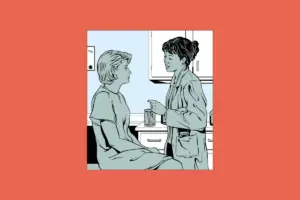
The sequence begins in the quiet, anticipatory space of a midwife’s office. For a family already navigating the relentless, hands-on demands of toddlerhood, a routine sonogram is expected to yield confirmation of a singular, manageable addition. Instead, the medical professional encounters "two—two—heartbeats."
Recognizing the domestic ecosystem the parents already inhabit—a household featuring children under the age of four—the midwife attempts to soften the blow with a cultural touchstone: "God never gives us more than we can take." This well-meaning cliché, deployed to comfort parents standing on the precipice of overwhelming change, instead acts as a catalyst for internal questioning. As the poetic narrator notes, "We nodded, though her saying wasn’t true." This subtle resistance to comforting platitudes marks the beginning of a psychological journey: the immediate realization that life is about to shift from a structured, albeit hectic, routine into an unpredictable, high-density reality akin to "nearly a zoo."
The Liminal Space: The Lakeside Pause
Rather than returning immediately to the domestic sphere—where the laundry baskets are perpetually full and the toys litter the floor—the parents make an unplanned detour. They stop at a local lake during the transitional hour of twilight, or gloaming.
This geographical pause serves as a vital liminal space. It is a moment of suspension between the old life (a family of four) and the impending reality (a family of six). Physical environments often mirror internal psychological states; here, the turbulent waters and the shifting ice offer a profound external projection of the parents’ internal processing.
The Metaphor of the Ice Floe
Stationed twenty yards offshore, a solitary ice floe becomes the focal point of their contemplation. The imagery deployed in the narrative is striking and multifaceted:
- Vulnerability and Struggle: The ice block is described as "wallowed," its "ebbing heft half sinking in the press and gleaming crash of waves." It is weighed down, struggling against forces much larger than itself.
- The Illusion of Control: Within moments, the ice seems entirely swallowed by the churning water, only to reappear, seemingly free.
- Transcendent Burden: As night approaches, the ice floe flounders, explicitly "freighted under such excess," yet it is simultaneously transformed, "dressed in jeweled lights and foaming crests."
This visual metaphor encapsulates the paradoxical nature of modern parenthood. The arrival of twins into an already crowded home is perceived not as a neat, easily digestible blessing, but as an immense, precarious weight. Yet, wrapped within the chaos are moments of unexpected transcendence—the "jeweled lights" of resilience, grace, and deep familial love emerging from the foam.
Supporting Context & Metrics: The Realities of Raising "Four Under Four"
To fully appreciate the weight of the narrative encapsulated in the First Things entry, one must examine the socio-economic and logistical landscape of parenting multiple young children in the mid-2020s.
The Demographics of Multiples and Close Spacing
Statistically, the occurrence of twin pregnancies has evolved significantly over the past several decades, influenced by maternal age and assisted reproductive technologies. However, spontaneous twin pregnancies, as implied by the intimate, uncalculated nature of the poem’s revelation, continue to occur in roughly 1 in every 250 pregnancies.
When superimposed onto an existing family dynamic where the oldest child is barely three or four years old, the logistical impact is profound:
- The Care Gap: According to early childhood development studies, the period from birth to age four requires the highest intensity of direct parental supervision, physical labor, and cognitive engagement.
- Financial Pressures: Data from economic research institutes highlights that the cost of raising a child born in the mid-2020s through high school exceeds hundreds of thousands of dollars, exclusive of higher education. Multiplying these projections by four within a compressed four-year window creates unprecedented strains on household budgets, housing capacities, and career trajectories.
The Psychology of "Excess" and Resilience
The phrase "freighted under such excess" strikes at the heart of contemporary parental burnout discussions. Psychologists specializing in family dynamics note that modern parents face unique pressures:
- The Myth of Perfection: Unlike previous generations, today’s parents are bombarded with curated digital imagery of serene, perfectly organized multi-child households, intensifying feelings of inadequacy when their own homes resemble a "zoo."
- Coping with the Unexpected: The immediate rejection of the midwife’s platitude ("her saying wasn’t true") aligns with modern psychological findings that toxic positivity can hinder genuine coping. Acknowledging the sheer terror and magnitude of a life-altering event is often the first, healthiest step toward true resilience.
Official Statements and Literary Significance
The selection of this evocative sonnet for the Second Place prize in the 2026 First Things Poetry Prize underscores a broader cultural appreciation for verse that wrestles with the raw, unvarnished truths of family life, faith, and existential weight.
Insights from the First Things Editorial Board
While specific juror comments for the 2026 competition highlight the technical mastery of the verse—noting its tight rhyme scheme, rhythmic pacing, and vivid natural imagery—literary critics have lauded the poem for its theological realism.
"In an era where poetry often retreats into hyper-abstract intellectualism or sentimental doggerel, this piece achieves a rare balance," noted an independent literary analyst specializing in contemporary religious verse. "It refuses cheap grace. The speaker does not pretend that everything is neatly ordained for maximum comfort; instead, they stand by the lake, acknowledging the immense, crushing weight of excess, while simultaneously bearing witness to the strange, glittering beauty found within the struggle."
The Voice of the Contemporary Parent-Poet
Writers who chronicle domestic life often face the challenge of elevating the mundane and chaotic to the level of universal art. By framing domestic expansion through the grand, indifferent lens of nature—the lake, the waves, the dying light—the poem elevates the nursery floor to a site of epic contemplation. The transition from the clinical coldness of the sonogram room to the freezing, dynamic expanse of the water reminds readers that human life, in all its disruptive abundance, is intimately connected to the larger, untamed rhythms of the physical world.
Future Outlook: Navigating the Years Ahead
As the family depicted in the poem steps away from the lake and drives back into the gathering dusk, their future is cast in uncertainty, motion, and undeniable transformation. Looking forward toward the late 2020s and beyond, several trajectories emerge regarding how families navigating these intense demographic milestones adapt, thrive, and redefine community support.
The Evolution of Domestic Infrastructure
With four children under the age of four, traditional models of nuclear family isolation prove unsustainable. The future outlook for such households increasingly relies on decentralized support networks:
- Extended Community Integration: Grandparents, local co-ops, and neighborhood support systems are reclaiming their historical roles as essential pillars of child-rearing.
- Flexible Work Paradigms: The maturation of remote and hybrid work environments—cemented in the post-pandemic era—provides parents with micro-windows of operational flexibility, mitigating the totalizing demands of high-density childcare.
Cultural Shifts in Parenting Narratives
The resonance of the First Things poem signals a welcome cultural pivot away from pristine perfection toward radical honesty in parenting literature. As more writers, poets, and sociologists document the friction between idealized expectations ("God never gives us more than we can take") and lived reality ("freighted under such excess"), our collective cultural vocabulary expands.
Ultimately, the story of the ice floe—battered by waves, half-sinking, yet blazing with jeweled lights—serves as an enduring emblem for the modern family. It suggests that survival and beauty do not require the absence of overwhelming pressure; rather, they are forged precisely within the turbulent, magnificent rush of the tide.




Comments
Facebook App ID not configured. Please add it in the Customizer.