
In the landscape of modern children’s literature and historical biographies, few figures command the quiet yet formidable legacy of Yuri Kochiyama. A Japanese American activist whose life spanned nearly a century (1921–2014), Kochiyama transformed personal tragedy and systemic injustice into an unyielding engine for social change. Now, her remarkable trajectory is introduced to a new generation of readers aged 8 to 12 through the forthcoming picture-book biography, Postcards from Malcolm X: How Yuri Kochiyama Became a Civil Rights Activist.
Authored by Mia Wenjen and illustrated by critically acclaimed artist Keith Henry Brown, the 42-page hardcover volume is slated for publication on October 13, 2026, by Red Comet Press. Retailing at $19.99 (ISBN: 9781636550893), the book examines how an idyllic, all-American childhood was fractured by the geopolitical shockwaves of World War II, ultimately channeling Kochiyama into the heart of the American Civil Rights Movement.

However, early critical reception—notably from Kirkus Reviews—has sparked vibrant literary discourse regarding the book’s narrative framing. While reviewers universally praise Brown’s vivid watercolor, ink, and charcoal illustrations, questions have been raised about whether anchoring Kochiyama’s sprawling, multi-decade life primarily to her 16-month relationship with Malcolm X inadvertently compresses her broader achievements. This exhaustive review investigates the book’s structural choices, the historical gravity of its subject, and its potential impact on young readers entering the realm of social justice literature.
Read Also
Detailed Chronology: From All-American Childhood to Harlem Activism
To fully appreciate the narrative arc constructed by Mia Wenjen in Postcards from Malcolm X, one must examine the profound historical milestones that shaped Yuri Kochiyama’s evolution. Born in 1921, Kochiyama grew up in San Pedro, California, experiencing what she later described as an "all-American life" completely untouched by systemic racism—until the morning of December 7, 1941.

The Crucible of World War II
The bombing of Pearl Harbor served as a cataclysmic turning point. In the wake of Executive Order 9066, the United States government subjected more than 120,000 men, women, and children of Japanese descent to forced removal and incarceration. Kochiyama’s family was imprisoned, a traumatic uprooting compounded by the psychological and physical toll taken on her father, whose health deteriorated rapidly following his interrogation and detention by federal authorities. He passed away at the age of 56, just as the family’s world collapsed.
These formative injustices planted the seeds of a lifelong commitment to civil rights. Following her release and subsequent marriage to U.S. Army Nisei veteran Bill Kochiyama, Yuri’s worldview expanded far beyond her West Coast roots.

Relocation to Harlem and the Crucible of Civil Rights
In 1960, the Kochiyama family relocated to New York City, settling in the heart of Harlem. Surrounded by the vibrant yet turbulent cultural landscape of the era, Yuri "noticed injustice all around her." True to her expansive spirit, the Kochiyama home became an open sanctuary, welcoming everyone "from neighbors to notables."
It was during this period that Kochiyama crossed paths with Malcolm X, an encounter that would define the final phase of her mentor’s life and permanently alter her own. Rather than serving as a passive admirer, Kochiyama immediately challenged the prominent leader upon meeting him, sparking a dynamic, largely epistolary relationship built on mutual intellectual respect and shared revolutionary zeal.

This relationship culminated in one of the most tragic moments in American history: on February 21, 1965, Malcolm X was assassinated at the Audubon Ballroom in New York City. Kochiyama was present at the event and held the mortally wounded leader in her lap as he drew his final breaths.
Five Decades of Unrelenting Activism
Far from retreating into the shadows after this devastating loss, Kochiyama channeled her grief into action. Inspired by her friendship with Malcolm X, her tireless activism persisted for nearly 50 more years. Her portfolio of causes grew exponentially: she fought for Black liberation, Puerto Rican independence, nuclear disarmament, and reparations for Japanese Americans wrongfully imprisoned during World War II—ultimately playing an instrumental role in securing the Civil Liberties Act of 1988.

Supporting Context & Metrics: Book Specifications and Critical Reception
Postcards from Malcolm X enters the marketplace backed by precise publication metrics and a growing wave of educational anticipation.
Publication Data Sheet
- Postcards from Malcolm X: How Yuri Kochiyama Became a Civil Rights Activist
- Author: Mia Wenjen
- Illustrator: Keith Henry Brown
- Publisher: Red Comet Press
- Publication Date: October 13, 2026
- Review Issue Date: August 15, 2026
- Online Publish Date: July 20, 2026
- Target Demographic: Children’s Picture Book (Ages 8–12)
- Page Count: 42 Pages
- Binding & Price: Hardcover, $19.99
- ISBN-13: 9781636550893
- Ancillary Materials: Includes a historical timeline, brief biographical sketches, and a glossary.
Critical Analysis of Narrative Framing
While the book provides an invaluable introduction to a "should-be-better-known Japanese American" icon, literary critics have engaged in a nuanced debate regarding its structural focus.

In its official assessment, Kirkus Reviews noted a potential narrative imbalance: "Focusing so much of Kochiyama’s biography through her relationship with Malcolm ultimately reads like a misstep. While pivotal, that emphasis seemingly shrinks the nonagenarian’s achievements to a 16-month relationship."
Literary analysts point out that compressing a life spanning nearly a century—one filled with multi-ethnic solidarity, anti-imperialist campaigns, and decades of grassroots organizing—into a narrative heavily weighted toward her time with Malcolm X risks overshadowing her independent legacy. Nevertheless, the review lauded the visual artistry of Keith Henry Brown. Rendered in watercolor, ink, and charcoal, Brown’s illustrations capture dynamic motion and emotional depth, with critics singling out a bustling Harlem sidewalk scene featuring "young children with attitude" as a masterclass in picture-book illustration.
Official Statements and Promotional Rollout
Red Comet Press, alongside author Mia Wenjen, has orchestrated a robust multi-platform promotional rollout to establish Postcards from Malcolm X as a staple in contemporary youth literature. The campaign features official book trailers, curriculum tie-ins, and direct engagement with youth literacy advocates.
In promotional statements accompanying the book’s trailer release, Wenjen emphasized the urgency of exposing young readers to intersectional civil rights histories. By highlighting how an Asian American woman became a core pillar of the Black-led Civil Rights Movement, the book aims to dismantle monolithic perceptions of historical activism and model cross-cultural solidarity.
Furthermore, the publisher has ensured that the volume serves as more than a narrative account. By incorporating supplementary educational tools—such as a curated historical timeline, glossary terms, and mini-biographies—Postcards from Malcolm X positions itself as an adaptable classroom resource for educators navigating the complex histories of mid-20th-century America.
Future Outlook: Impact on Young Readers and Educational Curricula
As schools and libraries increasingly seek literature that reflects the complex, interconnected threads of American history, Postcards from Malcolm X arrives at a critical juncture. Despite critical discussions concerning its structural focus, the book fills a glaring void in middle-grade historical non-fiction by elevating Yuri Kochiyama from historical obscurity into the educational mainstream.
Fostering Critical Dialogue in Classrooms
Educational strategists suggest that the book’s narrative choices—specifically the heavy emphasis on the Malcolm X mentorship—can be leveraged by educators as a pedagogical tool. Rather than treating the framing as a flaw, teachers can use it to prompt discussions among readers aged 8 to 12 about how mentors shape personal trajectories, while simultaneously prompting students to explore what happened in Kochiyama’s life after 1965.
Broadening the Scope of Youth Activism Literature
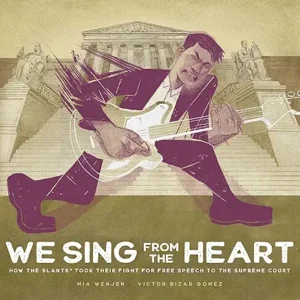
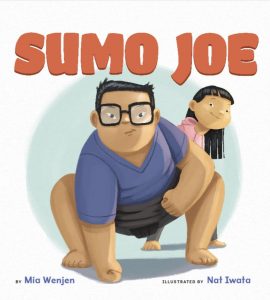
Mia Wenjen’s contributions to youth activist literature—spanning works such as Barbed Wire Between Us, Fortune Cookies for Everyone!, and We Sing from the Heart: How the Slants Took Their Fight for Free Speech to the Supreme Court—consistently center marginalized voices fighting for systemic equity. Postcards from Malcolm X extends this vital mission.
As the October 2026 release date approaches, anticipation continues to build across educational networks, independent bookstores, and library systems. By introducing children to the tenets of resilience, cross-racial alliance, and relentless civic engagement, Postcards from Malcolm X promises to inspire a new generation of changemakers to recognize injustice in their own backyards and rise to meet it.

Comments
Facebook App ID not configured. Please add it in the Customizer.