
Executive Overview
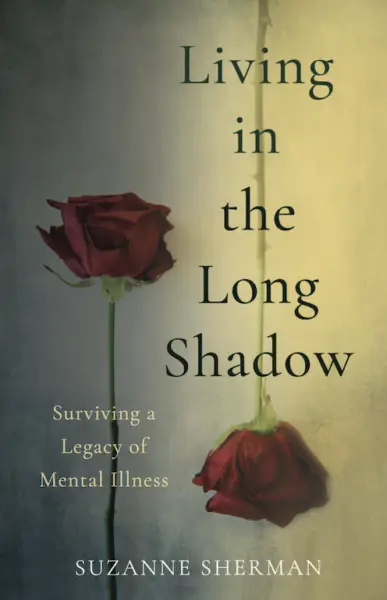
For author Suzanne Sherman, the journey to publishing her debut literary memoir, Living in the Long Shadow, spanned exactly 40 years and five weeks. While the drafting process itself was famously compressed into an intense, five-week sprint, the psychological prelude required four decades of emotional maturation, professional development in the literary arts, and a profound reckoning with family trauma.
Sherman was just 18 years old and a college creative writing major when her mother died by suicide. The tragedy was compounded by the complex realities of severe mental illness, the limitations and inefficacies of antipsychotic medications, and the deep-seated desire to capture the holistic truth of her mother’s humanity beyond her psychiatric diagnosis. Yet, despite a lifelong career as a book and magazine editor, memoir specialist, teacher, and coach, Sherman found herself perpetually locked out of her own narrative. The fear of falling down an emotional rabbit hole and never returning to her stable, fulfilling present kept the project relegated to the back burner year after year.
That stalemate ended abruptly due to an unscripted technological failure: a broken appointment calendar on her website. The resulting scheduling vacuum provided an unexpected window of time, prompting Sherman to sit before a blank screen at 9:25 a.m. on a May morning and finally break a 40-year silence.
Read Also
This article explores the anatomy of that creative breakthrough, examining the mechanics of her rapid drafting process, the perilous psychological landscape of deep-memory excavation, and the innovative ritual of the "creative container"—a psychological boundary-setting technique she developed to safely navigate generational trauma without losing herself to the past.
Detailed Chronology: From the Seeds of Tragedy to the 5-Week Sprint
The Genesis of a Silence (1974–1980s)
The psychological architecture of Livingin the Long Shadow began taking shape in 1974, when Sherman was a teenager navigating the turbulent waters of college while absorbing the shockwave of her mother’s death. Her mother’s suicide was the tragic culmination of a long battle with severe mental illness—a battle exacerbated by the double-edged sword of psychiatric pharmacology. At the time, Sherman knew she possessed an obligation to chronicle their shared journey, to expose the systemic shortcomings of antipsychotic treatments, and to immortalize her mother not as a patient, but as a vibrant, multifaceted human being.
However, the raw material was too volatile. At 18, the structural blueprint for such a complex narrative was entirely out of reach. Where does one begin a story rooted in such profound loss? What should be included, and what should be omitted to protect the author’s psyche? Unsure of how to harness her craft to service such weighty material, Sherman stepped back. The project went into deep freeze as she turned 30, 40, and then 50, quietly building a career in the publishing industry that centered around helping other writers shape their memoirs while leaving her own untouched.
The Catalyst: A Digital Interruption
Decades later, the universe intervened via a mundane piece of modern infrastructure: a database glitch. Sherman’s website appointment calendar malfunctioned, silently halting incoming client bookings without her immediate knowledge. Suddenly, her meticulously managed days opened up.
Confronted with unexpected hours of free time, Sherman experienced a fleeting sense of childhood liberation—akin to finding a dollar on the sidewalk and rushing to the corner store. Rather than filling the void with administrative tasks, she sat down at her desk at 9:25 a.m., set a modest timer for 10:00 a.m., and stared at a blank word processor document.
The initial hesitation melted away instantly. The moment her fingers touched the keyboard, she instinctively knew where the story needed to begin. A powerful sense of urgency surged through her veins, overriding decades of avoidance. Writing as if the book were a closely guarded secret—a psychological necessity she could share with no one until it was safe—she wrote through the day, looking up only to realize that May sunset was fast approaching at 6:00 p.m.
The Five-Week Sprint and Structural Revelation
Operating under a cloak of self-imposed secrecy, Sherman wrote with relentless momentum. By sneaking up on the project rather than subjecting it to months of premeditated anxiety, she bypassed her internal censor. Five weeks later, the first complete draft—clocking in at an impressive 86,000 words—was finished.
Breaking her own cardinal rule, Sherman immediately scrolled back to page one. She needed to verify the reality of what she had just accomplished. The verdict was definitive: the book was real, and the writing was strong, though page one would inevitably demand refinement.
Simultaneously, her webmaster diagnosed and corrected the website glitch. To Sherman, the timing was unmistakable: the technological malfunction had been a cosmic intervention, delivering a clear directive from the universe: Write your book.
Supporting Context & Metrics: Navigating the Perils of Memoir Writing
Writing a literary memoir about suicide and mental illness is not a purely creative exercise; it is an act of psychological archaeology. For Sherman, the drafting phase required descending into the subterranean layers of her adolescent memory, resurrecting key figures, and inhabiting uncomfortable emotional spaces from 1974.
The Mechanics of Structural Evolution
One of the most critical breakthroughs during the five-week drafting period was abandoning a traditional, linear timeline in favor of a braided narrative structure. In memoir writing, a braided structure weaves together multiple narrative threads—such as past trauma, present reflection, and historical context—allowing themes to echo and reinforce one another without forcing the author to live exclusively in the chronological agony of the past.
[Thread A: The Past (1974)]
                             ---> [Braided Narrative: "Living in the Long Shadow"]
[Thread B: The Present (2019)] /
This structural shift was transformative, providing the aesthetic distance necessary to turn painful raw truth into compelling art. Yet, technical solutions could not entirely eliminate somatic triggers. As Sherman noted, immersing herself in scenes from her fourteenth year made her feel physically shaky and psychologically vulnerable, proving that memory has a physiological weight.
Quantitative Overview of the Project
- Time from Conception to Execution: 40 years, 5 weeks.
- Drafting Duration: 5 weeks of continuous, daily writing.
- Word Count of First Draft: 86,000 words.
- Core Themes: Maternal suicide, efficacy of antipsychotic medications, generational trauma, psychological resilience, and the publishing lifecycle.
The Innovation of the "Creative Container"
To survive the emotional crossfire of writing Living in the Long Shadow, Sherman invented a proprietary psychological and environmental boundary known as the "creative container." Recognizing that her mind needed absolute safety to invite the muse while establishing an impenetrable shield against retraumatization, she designed a three-step ritual centered around an antique writing table.
The Anatomy of the Creative Container
-
The Ignition of Presence (Step 1):
Before putting pen to paper (or fingers to keys), Sherman would light a designated "writing candle" positioned beside a small vase of fresh flowers on an antique table. The flowers served as a living symbol of her own survival and emotional blooming out of the ashes of her past. She used a box of wooden matches, allowing the sharp, sensory sound of the match striking and catching flame to demarcate the strict boundary between everyday life and deep creative work. -
The Invocation of the Muse (Step 2):
With the candle burning, she would quietly call upon her creative muse and spirit guide without a rigid agenda. She asked simply for strength and linguistic fluidity. The flickering flame served as a silent anchor, holding her prayers and keeping her company through hours of harrowing memory work. -
The Conscious Closure (Step 3):
Crucially, the ritual required a formal closing sequence. Upon finishing her daily writing session, Sherman would stand before the lit candle, consciously acknowledging her courage in transmuting truth into art, and then blow out the flame. This physical act signaled to her nervous system that the work was done and she was free to re-enter her contemporary life.
The Cost of Skipping the Ritual
The necessity of Step 3 was proven through a cautionary error. On one occasion, eager to escape the heavy emotional atmosphere of her writing room, Sherman left the desk without extinguishing the candle. She spent the next 15 minutes moving through her house—making tea and practicing yoga—while experiencing an inexplicable sense of malaise, chest tightness, and deep unease.
The past had broken containment and followed her into the present. Realizing her omission, she rushed back to the writing room, stood before the flame, and consciously performed the closing ritual. The psychological relief was instantaneous; the heaviness lifted, proving that somatic boundaries require deliberate, physical termination markers.
Future Outlook and Industry Impact
As Living in the Long Shadow prepares to enter the literary marketplace via its publication through major distribution channels, its cultural resonance extends far beyond one author’s personal triumph.
- Advocacy and Mental Health Discourse: By addressing the systemic failures and limitations of antipsychotic medications from an intimate, familial perspective, Sherman’s work contributes to an increasingly vital modern conversation regarding psychiatric care, patient dignity, and the medical establishment’s approach to severe mental illness.
- Pedagogical Tools for Memoirists: Sherman’s "creative container" methodology provides a practical, replicable framework for writers tackling trauma, grief, and difficult autobiographical material. Her journey validates the slow-burn maturation of stories while demonstrating that productivity is often unlocked not by force, but by clearing structural and psychological bottlenecks.
- The Universal Message of Timing: For the millions of aspiring authors who carry unwritten books for decades, Sherman’s 40-year gestation period stands as a powerful testament to timing, resilience, and the profound truth that it is never too late to reclaim one’s narrative.
Suzanne Sherman’s debut memoir, Living in the Long Shadow: Surviving Mental Illness, Suicide, and the Grief That Remains, is available now across major literary platforms.





Comments
Facebook App ID not configured. Please add it in the Customizer.