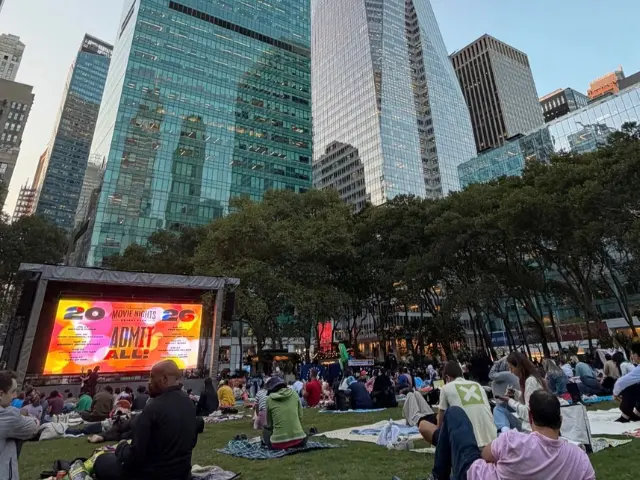
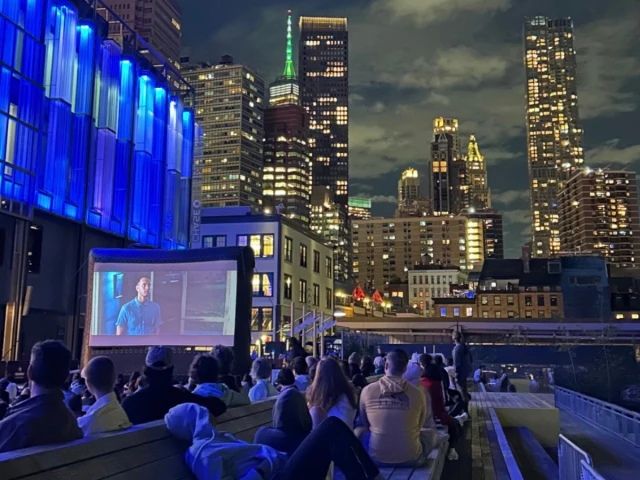
In an era defined by hyper-individualized media consumption—where algorithms curate solitary viewing habits on glowing handheld screens and streaming services encourage endless scrolling from the isolation of a sofa—New York City is spearheading a sweeping cultural counter-movement. Across the five boroughs, from the meticulously manicured lawns of Bryant Park to the industrial-chic rooftops of Pier 17 and Brooklyn Bridge Park, open-air cinema and communal television screenings have evolved from casual summer novelties into sophisticated, high-demand civic rituals.
This renaissance of shared viewing is much more than a nostalgic nod to the drive-ins of the mid-20th century. It is a calculated convergence of urban placemaking, experiential marketing, and psychological craving for community. As millions of urbanites grapple with the paradox of living in densely populated environments while experiencing profound social isolation, outdoor screenings offer a powerful antidote. By anchoring cinematic and episodic narratives to iconic physical geographies—such as the soaring Midtown skyline or the twinkling lights of the Brooklyn Bridge—these events transform passive entertainment into active, collective memory-making.
Furthermore, the commercial landscape surrounding these gatherings has undergone a seismic shift. Media conglomerates, streaming platforms, and luxury brands have recognized that the modern consumer no longer wishes to merely watch content; they desire to inhabit it. By integrating immersive brand worlds, live cast appearances, and curated giveaways into open-air screenings, organizers have turned public parks and Manhattan rooftops into epicenters of experiential capitalism. This deep-dive report examines the mechanics, cultural implications, and economic drivers behind New York City’s booming open-air entertainment culture, charting its evolution from grassroots gatherings to billion-dollar brand activations.
Detailed Chronology: The Evolution of New York’s Open-Air Screening Culture
To understand how outdoor screenings became the premier cultural currency of a New York summer, one must trace their lineage from unstructured public gatherings to highly orchestrated, multi-sensory productions.
The Foundation: Grassroots Public Park Cinema
Decades ago, outdoor film series in New York were largely municipal or non-profit endeavors designed to activate neglected public spaces during humid summer months. Programs like Bryant Park Movie Nights began as simple, low-tech affairs: a makeshift inflatable screen, a modest sound system, and an open lawn inviting neighborhood residents to pack a brown-bag dinner.
During this foundational era, the allure was primarily utilitarian and romantic—an affordable way to enjoy fresh air while catching a canonical classic like Breakfast at Tiffany’s or Forrest Gump. The audience was local, spontaneous, and unburdened by commercial sponsorships or digital integration. Blankets were laid out organically hours in advance, and the city skyline served as an unintended, albeit magnificent, backdrop.
The Streaming Boom and the Crisis of Isolation
As broadband speeds increased and the "Golden Age of Television" transitioned into the "Streaming Wars" of the late 2010s, home entertainment systems became formidable competitors to traditional movie theaters. Consumers could access virtually any film or television series on demand, eliminating the friction of travel, ticket purchases, and scheduled showtimes.
However, this technological triumph introduced an unintended social deficit. Entertainment became increasingly solitary. The collective gasp in a packed auditorium or the shared watercooler debates the morning after a major television finale began to fade, replaced by asynchronous viewing schedules and algorithmically siloed content diets. The cultural fabric of shared media consumption frayed.
The Post-Pandemic Resurgence and Experiential Pivot
The post-pandemic urban recovery catalyzed an urgent public hunger for open-air, socially restorative spaces. New Yorkers flooded back to parks and waterfronts with an unprecedented appetite for collective experiences. Recognizing this psychological shift, programmers, streaming giants, and brands seized the opportunity to scale up outdoor screenings.
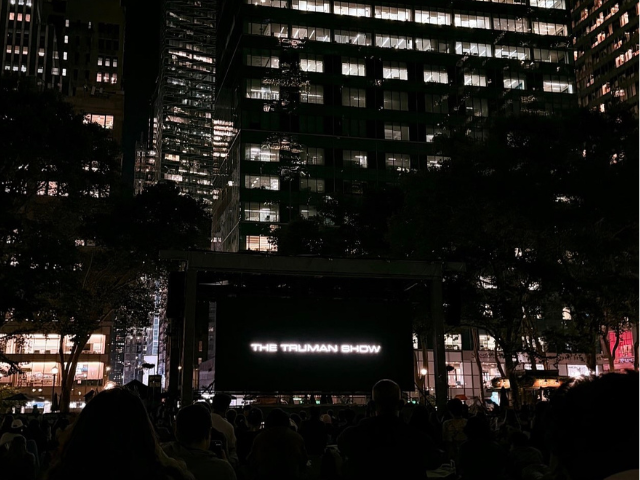
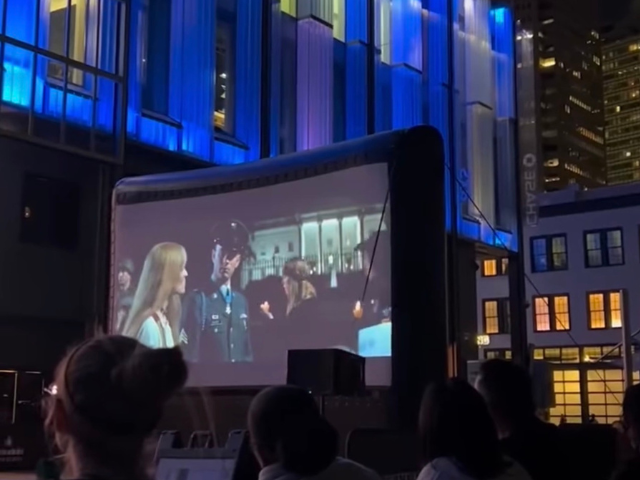
What emerged was a hybrid model of entertainment. Screenings of classic films like The Truman Show in Bryant Park were no longer just about the projection; they were about the collective anticipation—hours spent picnicking, socializing, and soaking in the urban atmosphere before the opening credits rolled. Simultaneously, platforms realized that premiering high-stakes television content outdoors could transform a digital product into a monumental physical event.
The Era of Immersive Brand Collaborations
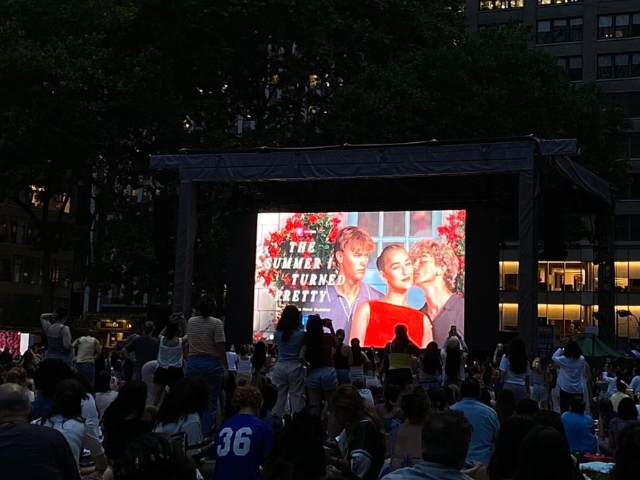
Today, the chronology of open-air cinema culminates in the fully realized experiential activation. Events like the open-air premiere of Prime Video’s The Summer I Turned Pretty third and final season elevated the medium to new heights. By integrating live cast Q&As, themed architectural installations mimicking fictional beach towns, and exclusive brand partnerships (such as targeted collaborations with beauty brands and telecommunications giants), these gatherings became fully realized pop-up worlds. The screening had officially evolved from a film presentation into a marquee cultural milestone, documented extensively across social media and etched into the collective memory of thousands of attendees.
Supporting Context & Metrics: The Economics and Psychology of Communal Media
The boom in outdoor screenings is underpinned by profound socio-psychological drivers and measurable economic impacts that justify heavy corporate investment.
Combating the Urban Loneliness Epidemic
Sociological data consistently ranks hyper-dense urban centers like New York City among the most paradoxically isolating places to live. Millions of residents cross paths daily without exchanging a word. Outdoor cinema acts as a temporary social lubricant.
When hundreds—sometimes thousands—of strangers sit shoulder-to-shoulder on a lawn, staring upward at the same illuminated rectangle, a temporary micro-community is forged. Psychological studies on "collective effervescence"—a term coined by sociologist Émile Durkheim—demonstrate that humans synchronized in shared emotional experiences report higher levels of well-being and social cohesion. When an entire crowd laughs at a familiar punchline during a screening of Forrest Gump at Pier 17 or gasps at a plot twist during a series finale at a rooftop venue, individual isolation melts away into a shared pulse.
The Metrics of Experiential Marketing
From a commercial standpoint, traditional banner ads and digital pre-roll videos suffer from staggering consumer fatigue, largely driven by ad-blockers and viewer avoidance. In contrast, experiential marketing delivers staggering return on investment (ROI) through organic amplification and deep emotional resonance.
Engagement Duration: While a digital video ad captures attention for a mere 15 to 30 seconds, an outdoor screening event holds a captive audience for two to three hours.
User-Generated Content (UGC): Events curated with aesthetic backdrops—such as Manhattan waterfronts or branded beach-themed park installations—generate thousands of social media posts, stories, and videos across platforms like TikTok and Instagram, exponentially amplifying reach without traditional media spend.
Brand Recall: Psychological research confirms that consumers retain memories tied to multi-sensory physical experiences at significantly higher rates than passive digital impressions. A branded gift bag containing luxury beauty items distributed at a rooftop screening leaves a permanent, tangible footprint that a digital pop-up ad can never replicate.
Official Statements & Industry Perspectives
Industry leaders, cultural commentators, and experiential directors have increasingly weighed in on the structural shift toward open-air, communal entertainment.
Elena Vance, a senior urban placemaking consultant in Manhattan, notes how outdoor screenings redefine public architecture:
"We often view urban parks and waterfronts through a purely functional lens—spaces for jogging, dog-walking, or quiet contemplation. What outdoor cinema achieves is the radical democratization and activation of public verticality and horizontal space. It turns dead zones after sunset into vibrant cultural plazas where the city itself becomes a co-star in the cinematic narrative."
Markus Lindner, a brand partnership strategist who has collaborated with major streaming networks on outdoor activations, explains the strategic pivot away from traditional advertising:
"Audiences today possess an advanced radar for corporate manipulation. They don’t want to be talked at; they want to be invited in. When we transform a public park into Cousins Beach or curate a sunset rooftop watch party complete with live actors and sensory touchpoints, we aren’t selling a subscription—we are offering an invitation to a memory. That is something an algorithm can never replicate."
Regular attendees echo these sentiments from a cultural perspective. Chloe Martinez, a 28-year-old graphic designer who has attended Bryant Park movie nights for five consecutive summers, shares:
"You can stream any movie in 4K on your OLED television at home, but you can’t replicate the energy of three hundred people groaning at the same sad plot point or cheering when the protagonist finally wins. Coming here with a blanket and a bottle of wine turns watching a movie from a chore into a ritual. It reminds you that you live in a city full of living, breathing people."
Future Outlook: The Next Frontier of Open-Air Entertainment
As municipal authorities, real estate developers, and entertainment executives look toward the future, the open-air screening model is poised for continued innovation and structural expansion.
Technological Integration and Silent Cinema Evolution
Future iterations of outdoor screenings are likely to leverage advanced audio-visual technologies while preserving the intimate communal atmosphere. The growing popularity of high-fidelity wireless headphone systems ("silent cinema" setups) enables screenings in dense urban environments without noise ordinance restrictions, opening up unprecedented rooftop spaces and historic courtyards previously barred from hosting loud audio events. Furthermore, the integration of augmented reality (AR) elements during live-streamed premieres allows attendees to interact with digital layers superimposed over physical skylines via their mobile devices.
Real Estate and Urban Planning Integration
Forward-thinking real estate developers in New York City are no longer treating public plazas and expansive green roofs as secondary amenities; they are designing them from the ground up to accommodate large-scale public screenings. Newly developed mixed-use waterfront districts in Brooklyn, Queens, and Manhattan are incorporating built-in projection infrastructure, tiered lawn seating, and weather-resistant acoustic baffling into their master plans. This institutionalization ensures that outdoor cinema will remain a permanent fixture of urban civic life rather than a transient seasonal trend.
The Decentralization of Community Media
While Manhattan flagships like Bryant Park and Pier 17 currently dominate the cultural imagination, the future points toward hyper-localized, neighborhood-driven screenings. Community-led initiatives in outer-borough parks are utilizing outdoor cinema to bridge cultural divides, celebrate local independent filmmakers, and bring residents together around shared narratives.
Ultimately, New York City’s thriving open-air cinema culture serves as a powerful reminder of human resilience and our enduring need for connection. In a hyper-digitized world where isolation is just a click away, the simple act of gathering under the open sky to watch a story unfold together remains one of our most radical and restorative urban traditions.





Comments
Facebook App ID not configured. Please add it in the Customizer.