
Executive Overview
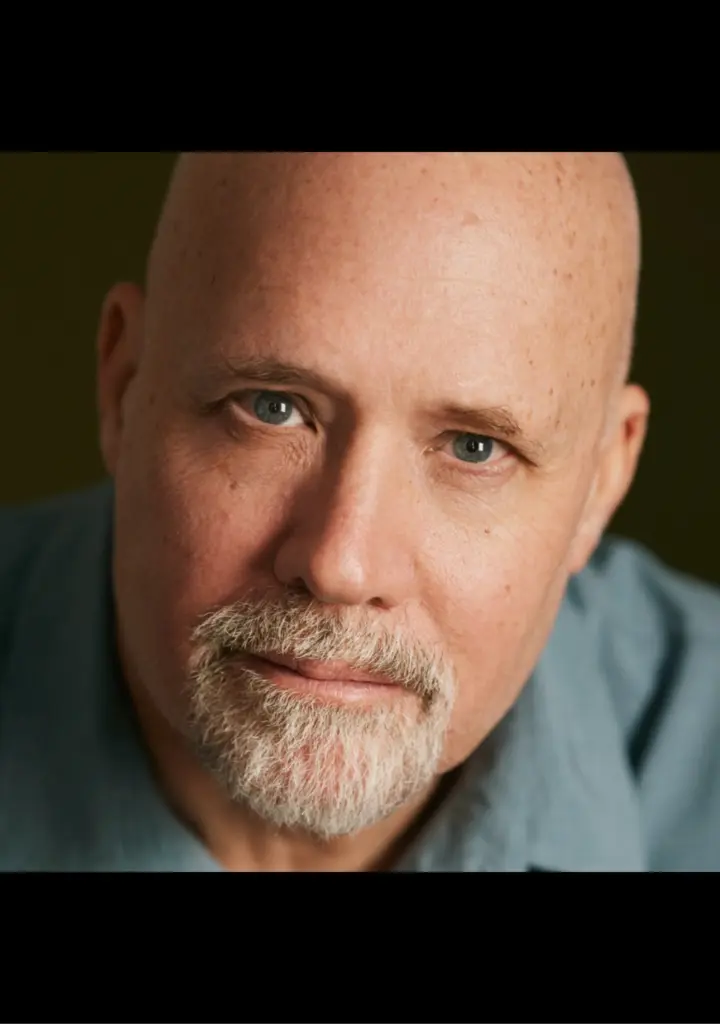
Nearly ten years after the debut of his acclaimed short story “Snow Angels” in the summer 2015 edition of The Missouri Review, author Mitch Wieland is expanding that initial creative spark into a sweeping, deeply resonant novel. Titled The Ghosts of Okuma, Wieland’s third novel has already earned a coveted starred review from Kirkus Reviews and secured a spot as a Best Indie Book for March. The book is officially slated for release on November 3, coinciding with the thirtieth anniversary of the publication of his debut novel, Willy Slater’s Lane.
In a wide-ranging, reflective interview conducted by Scout Hudson, Wieland details the arduous, decades-spanning evolution of the project. He discusses how witnessing the devastating 2011 Tōhoku earthquake and tsunami on television fundamentally altered a 500-page manuscript he had spent years crafting, driving him to discard it entirely and rebuild his narrative around the lingering existential fallout of Fukushima.
Beyond the creative mechanics of novel-writing, the conversation explores Wieland’s profound ties to Japan—forged during five years of living abroad in the late 1980s and early ’90s—and his parallel legacy as an academic and founding editor of The Idaho Review. Ultimately, the genesis of The Ghosts of Okuma stands as a masterclass in literary perseverance, sensorially driven narrative technique, and the delicate art of translating national and personal grief onto the page.
Read Also
Detailed Chronology: The Ten-Year Evolution of The Ghosts of Okuma
The path from an 8,000-word short story to a fully realized 275-page novel was neither linear nor straightforward. It was a process defined by major historical disruptions, editorial pivots, and relentless drafting.
The Spark: From Idaho to The Missouri Review
Wieland’s relationship with The Missouri Review dates back to his return from Japan in 1991, when he secured his first-ever subscription to a literary journal. Years later, while living on a farm near the Oregon border with his wife, Cindy, Wieland received a pivotal rejection letter from editor Speer Morgan regarding a story from his Idaho-set collection, God’s Dogs.
As Wieland recalls, the letter arrived in dramatic fashion: a windstorm had blown their rural mailbox open, scattering mail across the fields. While flood-irrigating his crops in hundred-degree heat wearing gumboots, Wieland waded into the mud to retrieve a letter from Morgan. Although that specific story hadn’t cleared the editorial vote, Morgan encouraged him to submit again. That subsequent submission was “Snow Angels.”
The 2011 Turning Point and the Decision to Scrap
Before “Snow Angels” was published in 2015, Wieland had already spent years working on a different novel about Japan under the guidance of legendary agent Wendy Weil (who notably represented Alice Walker). By March 2011, Wieland had amassed a 500-page draft.
That trajectory shifted abruptly on March 11, 2011. Watching NHK news—Japan’s public broadcaster—Wieland saw footage of the tsunami surging ashore. Realizing the historic magnitude of the triple disaster (earthquake, tsunami, and nuclear meltdown), Wieland experienced an immediate artistic epiphany: he could not honestly write about contemporary Japan without confronting this unprecedented national trauma.
In the months that followed, Wieland set aside his massive manuscript. He retained a single, minor character named Yoshimi, who had previously appeared as a passing figure on the street.
Research, Fellowships, and Structural Training
Bolstered by a National Endowment for the Arts (NEA) grant and a one-year fellowship from Boise State’s Arts and Humanities Institute, Wieland secured the funding and time needed to return to Japan for eight weeks of intensive research in 2012. He visited every major setting featured in the novel—excluding the immediate Fukushima exclusion zone, which remained restricted—soaking in sensory details from Tokyo’s Kichijoji neighborhood, Yanaka Cemetery, Shinjuku, and Shibuya.
Simultaneously, Wieland sought to sharpen his command of plot and structure. He attended seminars led by prominent story theorists Robert McKee and Christopher Vogler in Los Angeles. By 2013–2014, he finalized “Snow Angels,” recognizing that this narrative core would form the foundation of his next novel.
Revisions, Representation, and Publication
The subsequent phase of publication faced typical contemporary hurdles. Wieland completed the novel around 2020, just as pandemic lockdowns began—a challenging climate for securing representation. In 2021, literary agent Julie Stevenson of Massie & McQuilken took him on.
A rigorous editorial overhaul followed. Wieland estimates he wrote roughly 2,000 pages of material across various drafts to yield the final 275-page book. Under Stevenson’s guidance, they cut an additional seventy pages from the opening, shifting the narrative entry point. Despite these structural evolution steps, the novel’s opening scene remains identical to the original "Snow Angels" short story. After a decade of development, The Ghosts of Okuma is set for release on November 3.
Supporting Context & Metrics: Cultural Parallels, Sensory Technique, and Academic Legacy
Experiencing Japan Across Two Eras
Wieland’s connection to Japan spans two distinctly contrasting economic and cultural eras. During his initial five-year stay (1986–1991), Japan’s economy was superheating during the height of the asset price bubble. He vividly remembers "Big Trash Day," when streets were routinely lined with discarded, perfectly functional refrigerators and small stoves as affluent citizens constantly upgraded their belongings.
When Wieland returned in 2012 for research, the landscape had transformed under the weight of a decades-long recession following the bubble’s collapse. Secondhand stores had surged in popularity, and public consumption habits had grown markedly frugal. Yet, beneath these socioeconomic shifts, the underlying cultural heartbeat remained familiar, allowing Wieland to seamlessly plug back into the sensory environment of Tokyo.
Sensory Realism and Neuroscience
A core tenet of Wieland’s writing philosophy—imparted to him by his mentor, George Garrett—is the creation of a "sensuously effective texture." Wieland explains that the goal is to transport the reader into the scene moment-by-moment, heartbeat-by-heartbeat, rendering the fictional experience virtually indistinguishable from reality in the mind’s eye.
Modern neuroscience validates this traditional creative writing wisdom. Functional MRI (fMRI) brain-scan studies show that when readers encounter vivid sensory descriptions (such as a character smelling of "clove cigarettes and lavender"), the brain activates not only its linguistic processing centers but also its olfactory cortex, simulating the physical sensation of the smell. This sensory overload is naturally amplified in a setting as hyper-dense as Tokyo, making experiential descriptions a powerful vehicle for narrative immersion.
The Legacy of The Idaho Review and Boise State MFA
In addition to his career as a novelist, Wieland has left an indelible mark on the American literary landscape through his academic leadership. Having studied under George Garrett and Ted Solotaroff, Wieland helped co-found the MFA Program in Creative Writing at Boise State University, modeling its structure heavily on the University of Alabama program.
In 1998, Wieland launched The Idaho Review, serving as its editor for twenty issues. The journal achieved remarkable critical acclaim, landing pieces in seventeen major prize anthologies—including three selections in The Best American series and numerous Pushcart Prizes—while publishing literary luminaries such as Joyce Carol Oates, T.C. Boyle, and Joy Williams.
Upon stepping down from the journal, Wieland handed the reins to his colleague Anna Caritj. The program’s commitment to fully funding its cohort of fifteen graduate teaching assistants has yielded an extraordinary roster of alumni publishing success stories, including:
- Mary Pauline Lowry, author of The Roxy Letters (Simon & Schuster)
- Ariel Delgado Dixon, author of Sourland and Don’t Say We Didn’t Warn You (Penguin Random House)
- Jackie Polzin, author of Brood, winner of the Los Angeles Times Book Prize and the Sue Kaufman Prize for First Fiction
- Ayotola Tehingbola, a former Nigerian lawyer whose debut short story collection, Lagos Will Be Hard For You, emerged directly from her time in Wieland’s workshop.
Official Statements & Key Insights
Reflecting on the emotional architecture of The Ghosts of Okuma, Wieland shared several profound insights regarding national trauma, grief, and character development:
- On the Paralysis of National Disaster: Commenting on the psychological aftershocks of the Fukushima nuclear disaster, Wieland noted how the sudden realization of systemic vulnerability rippled through Japan’s younger generations. "A lot of students in Tokyo began to think, ‘Well, I won’t get married. I guess I won’t have a house. I guess I won’t have kids.’ I mean, what’s the point? I think there was this period of despair right after, and a sense of hopelessness because once you learn that can happen…"
- On Institutional Failure and Public Anger: Drawing comparisons between nuclear safety oversights and historical tragedies, Wieland observed how public fury was justifiably directed toward TEPCO (Tokyo Electric Power Company) and regulatory bodies. "Before any of this happened, it seems that TEPCO decided there would never be a 9.0 [earthquake], so there could not be a wave higher than [the seawall]… When the public learned some of that decision making, anger did really turn toward TEPCO itself."
- On Artistic Defiance as Inspiration: Wieland cited real-life protest art as a catalyst for his fictional character Yoshimi’s fierce independence. He recalled the young Tokyo artist troupe Chim↑Pom, who marched into the Okuma exclusion zone one month after the disaster wearing hazmat suits and tennis shoes to unfurl a modified Japanese flag bearing the international radiation symbol. "When I watched that video for the first time, I thought it was utterly brilliant… The protest and the anger they must have felt is partly what drew me to create the character of Yoshimi."
- On Approaching Grief as an Outsider: Balancing personal and national grief within his protagonist Wyatt—an American outsider searching for his missing sister while carrying his mother’s ashes—Wieland leaned into universal themes of loss. Following the passing of his own father during the novel’s composition, Wieland used Wyatt’s clear outer objective and internal need for closure to anchor the narrative amid the broader canvas of Japanese societal grief.
Future Outlook
With The Ghosts of Okuma arriving on shelves on November 3, 2025, the literary community anticipates the wide release of what critics are already heralding as a masterwork of international fiction and psychological depth. For Wieland, the launch marks a poignant milestone: exactly thirty years since the release of his debut novel, Willy Slater’s Lane.
As he nears the conclusion of his distinguished tenure at Boise State University—where he continues to teach narrative structure and fiction writing while witnessing his former students claim major national book prizes—Wieland’s legacy as both a dedicated educator and a visionary novelist remains firmly cemented. The Ghosts of Okuma stands as the culmination of a decade-long artistic expedition, proving that the most enduring literature is forged at the intersection of rigorous sensory craft, profound empathy, and historical witness.

Comments
Facebook App ID not configured. Please add it in the Customizer.