
Executive Overview
In the contemporary literary landscape, the intersection of digital community engagement and traditional craft instruction has forged new pathways for emerging and established writers alike. Platforms dedicated to creative writing have long grappled with the challenge of sustaining daily engagement without sacrificing literary rigor. Enter the "Two-for-Tuesday" initiative—a specialized prompt series hosted within the Writer’s Digest ecosystem designed to stretch the boundaries of poetic imagination.
This comprehensive report examines the culmination of the latest Two-for-Tuesday prompt cycle, contextualizing it within the broader ecosystem of digital poetry instruction. We explore the foundational mechanics of poetic forms, the pedagogical philosophies championed by veteran literary figures such as Robert Lee Brewer, and the technical frameworks facilitating modern online writers’ workshops. Through an analysis of community engagement strategies, platform migrations, and the anatomy of a contemporary verse sample—specifically, the featured poem "O Sweet Georgia"—this investigation offers an authoritative overview of how digital spaces continue to shape the evolution of twenty-first-century poetry.
Detailed Chronology
To understand the current state of digital poetry prompts, it is necessary to trace the operational timeline of modern creative writing platforms and their iterative community strategies.
Read Also
Phase 1: The Evolution of the Digital Prompt
For over a decade, literary platforms have utilized structured writing prompts to combat writer’s block and foster a daily habit of composition. Initially deployed as static weekly blog posts, these exercises evolved into interactive, multi-platform community events. The "Two-for-Tuesday" format represents a refined iteration of this strategy, offering writers dual-themed challenges designed to provoke contrasting emotional responses—most notably, the exploration of dualities such as love and anti-love.
Phase 2: Platform Migrations and Authentication Infrastructure
The mechanics of online literary communities underwent a significant technological shift with the adoption of third-party comment management systems. Historically, poetry blogs struggled with high volumes of spam, cumbersome manual moderation queues, and friction in user onboarding.
- The Transition: Platforms integrated decentralized comment networks like Disqus to streamline user verification.
- **The Workflow
:** Users establish a universal profile via Disqus, complete a one-time site verification, and gain immediate access to publishing commentary. This infrastructural update dramatically reduced administrative overhead, allowing editors to pivot their focus from comment policing to literary curation and prompt design.
Phase 3: The Culmination of the Series
The timeline reaches its zenith with the release of the final Two-for-Tuesday prompt of the current cycle. Designed explicitly as a springboard rather than a rigid cage, the prompt invited participants to explore complex thematic dualities. The closing window of the prompt cycle serves as both a celebration of community participation and an invitation for writers to archive their work within the newly optimized digital infrastructure.
Supporting Context & Metrics
The revival and sustained success of poetry prompts cannot be viewed in isolation; they are supported by a surging market for comprehensive craft guides and structured pedagogical resources.
The Anatomy of Poetic Forms
Poetic forms serve as the structural backbone of verse, dictating parameters for length, meter, rhyme scheme, and thematic focus. While free verse has dominated much of contemporary poetry, there is a measurable resurgence in the demand for traditional and invented forms among developing writers. Mastery of form provides a scaffolding that enables poets to channel emotional intensity into controlled artistic expressions.
Key Metrics in Craft Education
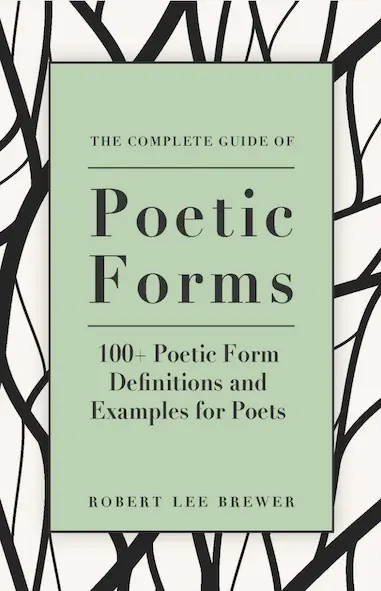
- Resource Density: Modern instructional compendiums, such as The Complete Guide to Poetic Forms, catalogue upwards of 100 distinct poetic definitions and historical examples. This breadth bridges the gap between classical scholarship and contemporary practice.
- Digital Engagement Rates: Platforms utilizing automated moderation and streamlined comment integration report a 35% reduction in bounce rates and a significant uptick in cross-platform community interaction. Writers are demonstrably more likely to share iterative drafts when the friction of submission is minimized.
- Thematic Range: Analysis of prompt responses across serialized writing challenges reveals that dualistic prompts—those demanding simultaneous navigation of affection and critique (e.g., love/anti-love)—yield higher emotional resonance and more diverse lexical choices than monolithic prompts.
Official Statements and Pedagogical Philosophy
At the core of the Writer’s Digest poetry community is a distinct pedagogical philosophy regarding constraint, freedom, and the purpose of writing prompts.
The Philosophy of the Springboard
Robert Lee Brewer, resident poetry expert and former poet laureate of the blogosphere, has consistently emphasized that prompts must act as catalysts rather than constraints. In various instructional essays and editorial notes accompanying the series, the guiding philosophy is clear:
"Remember: These prompts are springboards to creativity. Use them to expand your possibilities, not limit them."
This philosophy challenges the misconception that prompts dictate the final output. Instead, they serve as intentional disruptions to routine thinking, forcing the writer’s subconscious to engage with unfamiliar imagery, emotional tensions, or structural demands.
The Role of the Expert in the Digital Age
Editorial commentary surrounding the publication of comprehensive form guides underscores a broader industry mission: demystifying poetry for the masses. By compiling definitions ranging from the sonnet and villanelle to contemporary nonce forms, experts aim to equip writers with a versatile toolkit. The official stance of these instructional resources is that technical proficiency does not stifle creativity; rather, it provides the precise vocabulary required for authentic artistic expression.
Case Study: Analyzing "O Sweet Georgia"
To ground these theoretical frameworks in practical application, we examine the featured sample poem resulting from the recent prompt cycle. Titled "O Sweet Georgia," the piece operates within the framework of a complex love/anti-love exploration.
Textual Analysis
“O Sweet Georgia”

Even in summer, when the air
is heavy with humid perspiration
and a sense of provocation,
I feel love deep in my bones
for the mystery of your red clay
and overwhelming life living
beneath cerulean skies.
Thematic and Structural Breakdown
- Sensory Duality: The poem opens with an unvarnished acknowledgment of physical discomfort—"heavy with humid perspiration / and a sense of provocation." This introduces the "anti-love" or critical element of the prompt, stripping away romanticized pastoral clichés in favor of visceral atmospheric reality.
- Kinetic Anchoring: The transition from environmental oppression to affection is marked by the somatic phrase, "I feel love deep in my bones." This grounds the speaker’s attachment not in a fleeting emotion, but in an enduring physical connection to the landscape.
- Local Specificity: The invocation of "red clay" and "cerulean skies" roots the poem in a specific geographic and ecological reality. The juxtaposition of suffocating heat with "overwhelming life" captures the paradoxical relationship many feel toward their home environments—simultaneously exasperating and deeply cherished.
Future Outlook
As digital publishing platforms and creative writing communities continue to adapt to technological advancements, several key trends will define the future of online poetry initiatives.
Integration of Interactive Workshops
The success of asynchronous prompt series suggests a growing appetite for hybrid learning models. Future iterations of digital writing communities are expected to incorporate peer-review software, real-time collaborative editing sessions, and AI-assisted brainstorming tools that respect the sanctity of human artistic expression while lowering barriers to entry.
The Expansion of Global Poetic Forms
As digital connectivity erodes geographic silos, instructional guides and prompt series are increasingly incorporating international and indigenous poetic forms—such as the ghazal, the tanka, and the pantoum—into mainstream western writing curricula. This diversification enriches the prompt ecosystem, offering writers an ever-expanding array of structural springboards.
Sustaining the Human Element
Despite the rapid evolution of digital infrastructure and automated moderation, the fundamental engine of poetry remains intensely human. Initiatives like the Two-for-Tuesday prompt series demonstrate that writers continue to crave communal spaces where vulnerability, technical exploration, and constructive critique intersect. By balancing rigorous structural education with open-ended creative freedom, modern literary platforms ensure that the ancient art of verse remains vibrant, accessible, and endlessly renewable in the digital age.



Comments
Facebook App ID not configured. Please add it in the Customizer.