In an era where children are constantly bombarded with digital distractions, reconnecting them with the tangible, courageous, and transformative power of science is more critical than ever. Picture book biographies serve as an essential literary bridge, translating complex medical breakthroughs and historical resilience into accessible, deeply engaging narratives for young readers.
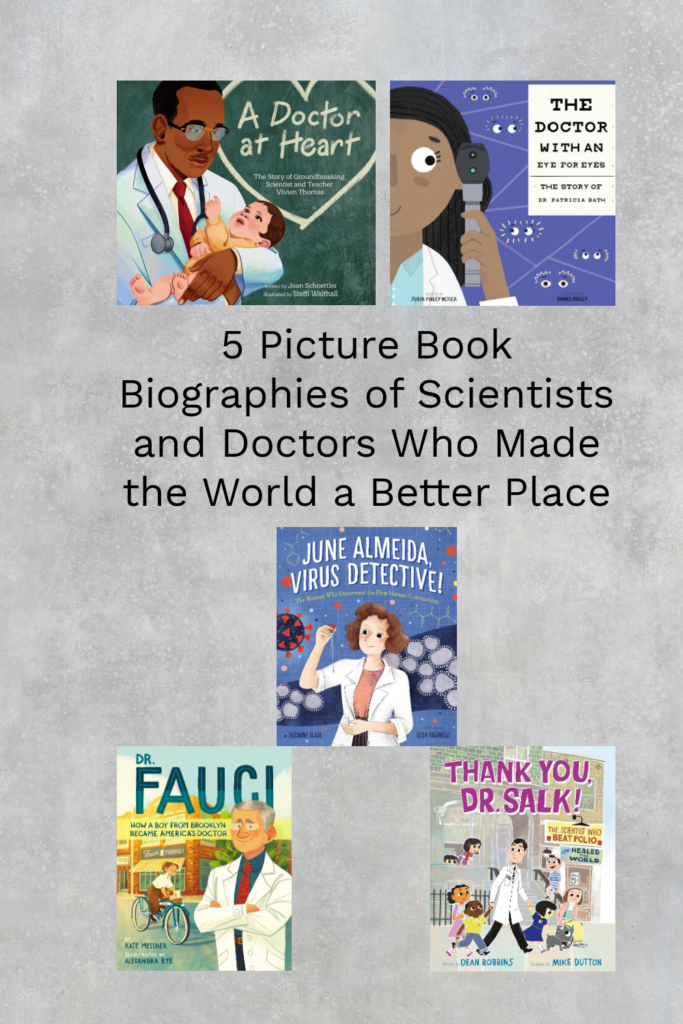
Recently, author Joan Schoettler joined a guest feature to highlight a curated list of five exceptional picture book biographies: A Doctor at Heart: The Story of Groundbreaking Scientist and Teacher Vivien Thomas, Dr. Fauci: How a Boy from Brooklyn Became America’s Doctor, Thank You, Dr. Salk! The Scientist Who Beat Polio and Healed the World, June Almeida, Virus Detective! The Woman Who Discovered the First Human Coronavirus, and The Doctor with an Eye for Eyes: The Story of Dr. Patricia Bath.
United by common threads of curiosity, perseverance, and collaboration, these works demonstrate how dedicated individuals overcame institutional hurdles, systemic injustice, and personal tragedies to revolutionize public health. Through meticulous historical chronicling and vibrant illustration, these books do not merely recount facts—they ignite a lifelong love of scientific inquiry and civic responsibility in children ages four and up.
Detailed Chronology of Medical Pioneers and Their Stories
The path to medical innovation is rarely linear. Each of the biographies featured in Schoettler’s curated selection highlights a distinct historical epoch and a unique scientific discipline, unified by the relentless determination of its subject.
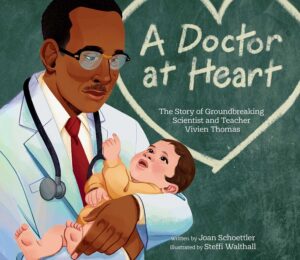
1. Vivien Thomas: Pioneering Cardiac Surgery (A Doctor at Heart)
Subject: Vivien Thomas (Scientist, Teacher, and Cardiac Pioneer)
Creators: Written by Joan Schoettler, Illustrated by Steffi Walthall
Target Audience: Picture book biography, ages 4 and up
Vivien Thomas harbored a lifelong dream of attending medical school to become a doctor. However, his journey was derailed by historical inequities and economic catastrophe. The bank crash of 1930 wiped out his college savings, and pervasive racial injustice closed doors across the higher-education landscape. Despite being forced to let go of his formal medical ambitions, Thomas’s profound passion for science and healing remained unyielding.
Working alongside the brilliant Dr. Alfred Blalock—first at Vanderbilt University and later at Johns Hopkins Hospital—Thomas utilized his exceptional intellect and steady hands to solve complex surgical challenges. Most notably, Thomas and Blalock developed the groundbreaking "blue baby" heart procedure (tetralogy of Fallot correction), a revolutionary open-heart surgery on infants that saved thousands of lives.
Working for nearly fifty years with only a high school diploma, Thomas not only pioneered cardiac surgical techniques but also trained an entire generation of prominent American surgeons. Steffi Walthall’s illustrations capture the nuance of Thomas’s journey, depicting his determination, frustration, and eventual triumph through evocative facial expressions and dynamic perspectives.
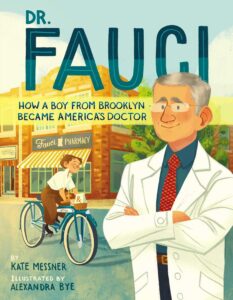
2. Dr. Anthony Fauci: Guiding Public Health (Dr. Fauci: How a Boy from Brooklyn)
Subject: Dr. Anthony Fauci (Immunologist and Presidential Health Advisor)
Creators: Written by Kate Messner, Illustrated by Alexandra Bye
Target Audience: Picture book biography, ages 6 and up
Long before he became a household name advising seven U.S. presidents through some of the nation’s most volatile public health crises, Anthony Fauci was a curious boy growing up in Brooklyn, New York. Kate Messner’s biography invites young readers into Fauci’s early world, chronicling his childhood adventures—whether delivering packages on his blue Schwinn bicycle or absorbing the foundational lessons of resilience and critical thinking.
The narrative traces Fauci’s evolution into a dedicated physician-scientist who specialized in studying infectious diseases and human immunology. Emphasizing the importance of active listening, Messner illustrates how Fauci sought to understand patients’ suffering to develop effective treatments. When the COVID-19 pandemic swept the globe in 2019, Fauci was at the forefront of the American response, coordinating scientific teams and accelerating vaccine research. This book powerfully demonstrates how collective scientific research and public cooperation successfully restored global normalcy.
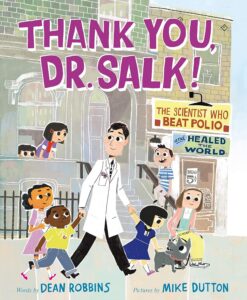
3. Dr. Jonas Salk: Conquering Polio (Thank You, Dr. Salk!)
Subject: Dr. Jonas Salk (Virologist and Creator of the Polio Vaccine)
Creators: Written by Dean Robbins, Illustrated by Mike Dutton
Target Audience: Picture book biography, ages 4 and up
In the mid-20th century, the mere mention of polio struck terror into communities worldwide. Growing up, Jonas Salk witnessed the devastating impact of the disease firsthand. Driven by an unwavering desire to alleviate human suffering, Salk dedicated his academic and professional life to virology and immunology.
Through rigorous experimentation and relentless dedication, Salk developed the inactivated polio vaccine. Dean Robbins’s narrative is enriched by Mike Dutton’s colorful illustrations, which depict brave children and hopeful communities eagerly awaiting a cure—even sending dimes to fund ongoing research. In a remarkable act of humanitarianism, Salk chose not to patent his vaccine, generously giving it away for free to ensure global accessibility.
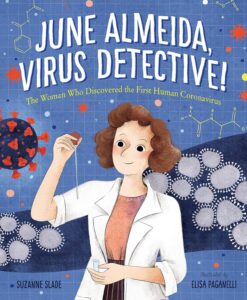
4. June Almeida: Unmasking the First Coronavirus (June Almeida, Virus Detective!)
Subject: June Almeida (Virologist and Microscopy Pioneer)
Creators: Written by Suzanne Slade, Illustrated by Elisa Paganelli
Target Audience: Picture book biography, ages 6 and up
June Almeida’s childhood was shaped by a profound love for school, a passion for photography, and a personal tragedy: the loss of her younger brother to a severe illness. Eager to fight diseases, Almeida faced financial barriers that prevented her from attending college. Undeterred, she secured a job as a laboratory helper, teaching herself how to operate microscopes to analyze biological samples.
Merging her artistic talent for photography with scientific methodology, Almeida became a pioneering virologist. She advanced electron microscopy techniques, producing exceptionally clear images of viruses that had previously eluded researchers. Collaborating with virologist Dr. David Tyrrell, Almeida successfully discovered and identified the very first human coronavirus. Her groundbreaking work laid the foundational visual and structural blueprint for modern virology.
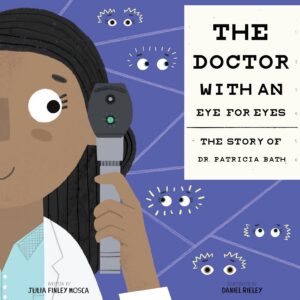
5. Dr. Patricia Bath: Restoring Sight (The Doctor with an Eye for Eyes)
Subject: Dr. Patricia Bath (Ophthalmologist and Laser Surgery Pioneer)
Creators: Written by Julia Finley Mosca, Illustrated by Daniel Reiley
Target Audience: Picture book biography, ages 4 and up
Penned entirely in engaging verse, Julia Finley Mosca’s biographical masterpiece introduces young readers to Dr. Patricia Bath. Fueled by parental encouragement, innate curiosity, and the mentorship of a doctor family friend, Bath navigated racial and gender discrimination with extraordinary grace. She completed high school in just three years and pushed past systemic sexism during medical school.
Dr. Bath remained singularly focused on a monumental goal: preventing and reversing blindness. After traveling to Paris to study cutting-edge technology, she invented the Laserphaco Probe—a revolutionary medical device that uses lasers to safely and painlessly vaporize cataracts. Her invention restored the gift of sight to countless patients across continents, cementing her legacy as a medical titan.
Supporting Context & Metrics: The Impact of Picture Book Biographies
The value of incorporating biographical literature on STEM (Science, Technology, Engineering, and Mathematics) into early childhood education is heavily supported by developmental research and publishing metrics.
Early STEM Engagement: Studies consistently show that children begin forming long-term academic preferences and self-efficacy beliefs as early as elementary school. Introducing diverse historical scientists helps dismantle stereotypes about who can "be a scientist."
Literary Representation: Out of hundreds of children’s books published annually, biographies focusing on marginalized scientists—such as Vivien Thomas, June Almeida, and Dr. Patricia Bath—provide crucial mirrors for underrepresented youth while fostering universal empathy.
Literacy Development: Picture books that balance complex scientific concepts with narrative-driven emotional arcs enhance vocabulary retention, critical reading comprehension, and cross-disciplinary curiosity.
Official Statements and Author Insights
Joan Schoettler, celebrated author of A Doctor at Heart and numerous other multicultural and historical picture books, emphasizes the importance of global perspectives and perseverance in storytelling:
"Common threads of curiosity, perseverance, and collaboration reside in each of these picture book biographies about dedicated scientists and doctors. Each book highlights their unique fields of study and demonstrates the scientists’ and doctors’ love of science that led them to make the world a better place by their determination in their particular areas of study."
Reflecting on her expansive career—which spans elementary school teaching, literacy specialization, and university-level instruction in children’s literature at California State University, Fresno—Schoettler notes that her writing is fundamentally designed to invite readers to explore diverse cultures, historical triumphs, and the boundless joy of reading.
Future Outlook: Inspiring the Next Generation of Innovators
As educational paradigms shift toward holistic, inquiry-based learning, the demand for high-quality narrative nonfiction continues to surge. Books like those highlighted by Joan Schoettler do far more than entertain; they serve as instructional blueprints for resilience.
By familiarizing children with the personal sacrifices, collaborative breakthroughs, and ethical commitments of historical figures like Vivien Thomas, Dr. Anthony Fauci, Dr. Jonas Salk, June Almeida, and Dr. Patricia Bath, educators and parents can help cultivate a generation equipped not only with scientific literacy, but with the profound empathy required to solve tomorrow’s global challenges.






Comments
Facebook App ID not configured. Please add it in the Customizer.