
Executive Overview
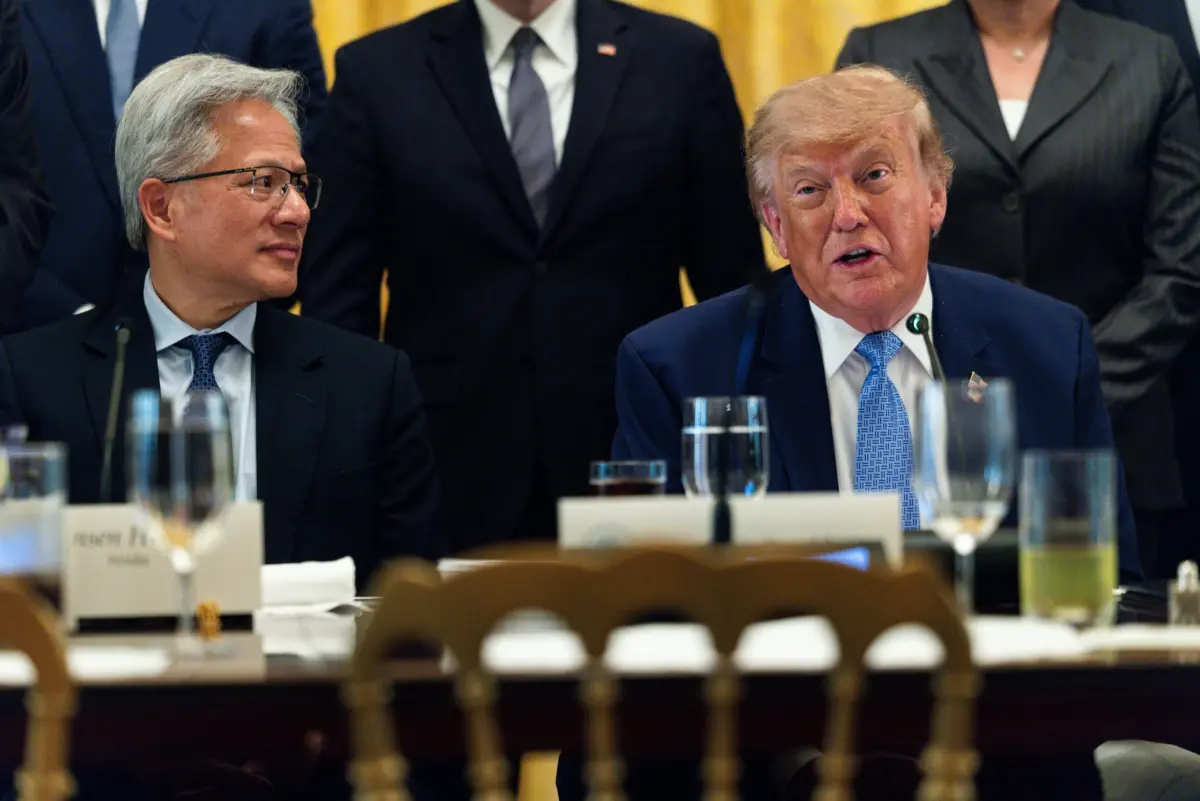
In a political landscape long accustomed to unconventional communications, a recent post on Donald Trump’s Truth Social platform stood out for its singular blend of corporate drama, national security anxiety, and digital satire. The post featured an AI-generated image portraying Jensen Huang, the newly reinstated Chief Executive Officer of Nvidia, blood-splattered and triumphant, raising a fist holding a red underwire bra against a black-and-green corporate logo.
The image directly parodied the iconic photograph taken of Trump following the July 2024 assassination attempt in Butler, Pennsylvania. Beyond its surreal aesthetic, the post signaled a pivotal moment in the intersection of executive power, corporate governance, and technology policy.
       [ TIMELINE OF NVIDIA LEADERSHIP CRISIS ]

  Nov 8: Nvidia opens probe into Jensen Huang & foreign intel links
  │
  Nov 12: Huang resigns following executive affair revelations ──► Market Drops >16%
  │
  Mid-Nov: Trump & Silicon Valley allies (Musk, Sacks) pressure board
  │
  Late-Nov: Nvidia reinstates Huang citing White House input ──► Market Rallies >30%
  │
  Nov 24: Trump shares viral AI image on Truth Social celebrating return
The post arrived immediately after Nvidia’s board of directors made the extraordinary decision to reinstate Huang just eleven days after his resignation. His initial departure had been triggered by an internal investigation into his romantic relationship with Alice Huang, a woman identified by U.S. intelligence as having ties to China’s Ministry of State Security (MSS), alongside allegations of workplace affairs.
Read Also
Trump publicly championed Huang’s return, taking credit for negotiating the board’s about-face during a nearly hour-long CNBC interview.
This intervention underscores the administration’s intense focus on maintaining the momentum of the domestic artificial intelligence sector. However, it also raises critical questions regarding:
- Potential conflicts of interest, given reported executive holdings in Nvidia;
- The consistency of U.S. trade and export control enforcement against foreign intelligence threats; and
- The evolving relationship between the federal government and elite Silicon Valley technology firms.
Detailed Chronology of the Crisis
┌─────────────────────────────────────────────────────────────────────────┐
│                    CHRONOLOGY OF KEY DEVELOPMENTS                       │
├─────────────────┬───────────────────────────────────────────────────────┤
│ May 2026        │ Secretary of State Marco Rubio reportedly warns the   │
│                 │ White House regarding intelligence assessments on     │
│                 │ Alice Huang's connections to Chinese intelligence.    │
├─────────────────┼───────────────────────────────────────────────────────┤
│ November 8      │ Nvidia’s board initiates a formal investigation into │
│                 │ CEO Jensen Huang following foreign counter-           │
│                 │ intelligence inquiries and corporate ethics reviews.  │
├─────────────────┼───────────────────────────────────────────────────────┤
│ November 12     │ Jensen Huang resigns as CEO following reports of      │
│                 │ undisclosed relationships with internal staff. Market │
│                 │ capitalization declines as stock falls over 16%.      │
├─────────────────┼───────────────────────────────────────────────────────┤
│ Mid-November    │ Tech investors Elon Musk and David Sacks mount public │
│                 │ defenses of Huang. Trump floats alternative candidates│
│                 │ before publicly advocating for Huang's reinstatement.  │
├─────────────────┼───────────────────────────────────────────────────────┤
│ Late November   │ Nvidia reinstates Huang, explicitly acknowledging     │
│                 │ consultations with senior executive branch officials. │
│                 │ Stock rebounds by over 30%.                           │
├─────────────────┼───────────────────────────────────────────────────────┤
│ Monday          │ Trump conducts extended CNBC interview claiming credit │
│                 │ for the deal and publishes AI image on Truth Social.  │
└─────────────────┴───────────────────────────────────────────────────────┘
Pre-Crisis Intelligence Briefings
Concerns regarding Huang’s personal entanglements had been quietly circulating within senior administration channels months prior to public revelation. Reports indicate that in May, Secretary of State Marco Rubio warned the White House about counterintelligence assessments involving Alice Huang. The Singapore-based businesswoman was reportedly under scrutiny for her maintaining contacts with an official belonging to China’s top espionage apparatus while working at Megaspeed—a key distribution partner for high-performance microprocessors in Southeast Asia.
The November 8 Investigation and Resignation
On November 8, Nvidia’s board of directors officially announced an internal probe into Huang. The investigation focused on whether sensitive technological disclosures or policy workarounds had occurred during his relationship with Alice Huang. The crisis deepened when reports surfaced detailing two additional undisclosed romantic relationships with internal company employees. Facing mounting corporate governance pressure, Huang tendered his resignation on November 12.
Market Turbulence and Political Escalation
The reaction from global markets was immediate. Nvidia’s stock price plummeted by more than 16%, erasing hundreds of billions of dollars in market capitalization and triggering volatility across the wider tech sector. In response, prominent Silicon Valley figures, including Elon Musk and investor David Sacks, launched a public defence of Huang. Musk publicly remarked that ousting Huang was equivalent to "kicking Michael Jordan off your team when you’re on a winning streak."
Simultaneously, President Trump shifted his public stance. After briefly suggesting former Apple CEO Tim Cook for the top role at Nvidia, Trump pivoted toward advocating for Huang’s direct return, arguing on Fox News that the nation "has to take care of our geniuses" to prevent systemic economic decline.
Executive Reinstatement
Following intense deliberation and direct communications with administration officials, Nvidia’s board announced Huang’s reinstatement as CEO. The corporate press release explicitly cited "input from senior levels of the United States government" as a key factor in their decision. The announcement sparked a dramatic rally, driving Nvidia shares up by more than 30% in subsequent trading sessions.
Supporting Context & Financial Metrics
| Metric / Dimension | Detail / Historical Value | Market & Policy Impact |
|---|---|---|
| Nvidia Stock Shock (Post-Resignation) | Decline exceeding 16% | Erased significant market value; fueled concerns over AI sector stability. |
| Nvidia Stock Rally (Post-Reinstatement) | Surge exceeding 30% | Restored confidence in semiconductor sector; bolstered broad market indexes. |
| Reported Personal Holding | Up to $62 Million in Nvidia equity | Raised scrutiny from ethics watchdogs regarding executive interventions. |
| Export Control Subject Matter | Advanced AI Graphics Processing Units (GPUs) | Megaspeed under DOJ probe for alleged illicit routing of chips to Chinese entities. |
| Midterm Political Landscape | Congressional shifts following economic dissatisfaction | Increased administration focus on market performance and macroeconomic stability. |
Financial Interests and Market Impact
The presidential intervention occurred against a backdrop of macroeconomic sensitivity and personal financial oversight. A Washington Post investigation disclosed that President Trump held up to $62 million in Nvidia equity prior to the public emergence of the controversy. The valuation of these holdings had expanded during a period marked by regulatory adjustments and trade policy shifts affecting the semiconductor industry.
NVIDIA STOCK PRICE TRAJECTORY (ILLUSTRATIVE OF RECENT VOLATILITY)

  Share Price ($)
    ▲
    │      [Baseline Peak]
    │             ╲
    │              ╲   Resignation (Nov 12)
    │               ╲  [Drop >16%]
    │                └───┐
    │                    │   Reinstatement & White House Action
    │                    └───► [Surge >30%]
    │                               ▲
    │                               │
    └───────────────────────────────┴──────────────────────────────► Time
For an administration dealing with the political fallout of recent midterm election losses—widely attributed to ongoing public dissatisfaction over cost-of-living challenges—preventing a sharp retraction in tech equities became a economic priority. Maintaining high market valuations in key artificial intelligence infrastructure providers remains a cornerstone of the administration’s broader domestic economic strategy.
Geopolitical and National Security Implications
The intelligence concerns surrounding Huang’s personal associations touch on core strategic equities:

- Export Controls: The Department of Justice maintains an active investigation into Megaspeed, the Singapore-based firm where Alice Huang was employed. The inquiry seeks to determine whether the company operated as a conduit to bypass U.S. export restrictions designed to prevent advanced AI chips from reaching Chinese military research labs.
- Diplomatic Consistency: The administration’s lenient posture toward Huang’s counterintelligence risk contrasts with its historic enforcement of strict national security standard for academic institutions, federal research programs, and foreign visas.
- Equivalence Arguments: In public comments, the administration minimized the espionage risks associated with the relationship, drawing a parallel between personal counterintelligence exposures and routine state-level diplomatic engagements.
Official Statements & Public Rhetoric
Executive Branch Commentary
During his extended interview with CNBC on Monday, President Trump elaborated on his direct role in reversing the board’s initial leadership choice:
"I convinced them. I made the deal. We have to protect our geniuses, and he’s certainly a genius… Probably [market losses prompted intervention], but the bigger impact was the long term. He’s got other chips in his brain that nobody else knows about, including me."
Addressing counterintelligence questions regarding Alice Huang’s alleged contacts with foreign security agencies, Trump dismissed the severity of the intelligence warnings:
"As far as the woman is concerned: every time you have a Chinese woman that’s good-looking or beautiful, they say she’s a spy… Sex sells, fellas. I’m involved also if you really get down to it, right? Somebody said, ‘Oh, they spy on us,’ and I said, ‘Maybe they do, but we spy on them, too.’"
In a subsequent interview with The Wall Street Journal, Trump pointed directly to the stock market’s upward trajectory as validation of the administration’s intervention:
"The response from the market has been very positive. That really shows the decision was right."
Corporate and Sector Responses
In its official statement announcing the executive transition, Nvidia’s board focused on continuity, leadership stability, and national competitiveness:
"Following comprehensive review and consultation with internal advisors, as well as considering input from senior levels of the United States government, the Board has concluded that Jensen Huang remains uniquely positioned to lead Nvidia through its next phase of technological expansion."
Tech executives and market commentators similarly rallied to support the board’s reversal, emphasizing that corporate governance frameworks must account for the strategic importance of visionary tech founders in maintaining national leadership in artificial intelligence.
Future Outlook
Implications for Corporate Governance
The resolution of Nvidia’s executive crisis establishes a powerful precedent for corporate governance in critical technology sectors. By directly intervening to influence the retention of a Fortune 500 chief executive facing both internal compliance issues and national security inquiries, the executive branch has demonstrated a willingness to prioritize strategic economic capacity and market stability over traditional corporate compliance protocols.
       [ FUTURE MATRIX: STRATEGIC TRILEMMA FOR U.S. TECH POLICY ]

                 National Security & Export Controls
                                ╱ ╲
                               ╱   ╲
                              ╱     ╲
                             ╱       ╲
                            ╱         ╲
   Corporate Autonomy & ───┴───────────┴── Market Stability & AI
   Governance Integrity                    Infrastructure Dominance
Strategic Trade and Counterintelligence Enforcement
Moving forward, federal law enforcement and regulatory agencies face a complex operational environment:
- DOJ Oversight: The ongoing Department of Justice probe into Megaspeed and third-party semiconductor distributors will test the federal government’s ability to enforce chip export restrictions cleanly, independent of chief executive-level interventions.
- Supply Chain Integrity: Federal counterintelligence agencies must balance keeping critical corporate leaders informed of potential foreign espionage threats with the political pressure to protect key domestic technology firms.
- Global Market Perceptions: Foreign partners and competitors are closely monitoring whether U.S. export controls will remain strictly rules-based or subject to strategic, executive-led exemptions based on corporate leadership priorities.
As artificial intelligence hardware remains a vital pillar of both national security and economic growth, the boundaries between private enterprise, executive authority, and national policy will continue to dissolve. The reinstatement of Jensen Huang highlights how corporate governance in the tech sector is increasingly bound to the political imperatives of the federal government.




Comments
Facebook App ID not configured. Please add it in the Customizer.