In an era defined by instantaneous information sharing, algorithmic content feeds, and a proliferation of digital noise, educators face an unprecedented challenge: teaching children not just what to read, but how to think. Addressing this critical educational gap head-on, the non-profit literacy initiative Read Your World has announced the official release of its newest comprehensive teaching resource: "Beyond Screens: Teaching Kids to Think Critically in a Digital World."
Available entirely free of charge to educators, parents, and community leaders, this newly minted curriculum kit arrives at a pivotal juncture in modern education. As young people spend increasing hours consuming online content, the boundary between verified journalism, biased commentary, and outright disinformation has blurred dangerously. "Beyond Screens" offers a timely antidote. Designed as a holistic, multi-format toolkit, the resource equips classrooms with 18 curated children’s books focused on media literacy and fake news detection, free fact-checking tools, hands-on interactive games, ready-to-use lesson plans, and deeply engaging podcast episodes complete with Social-Emotional Learning (SEL) guides and printable worksheets.
This release underscores Read Your World’s ongoing commitment to building equitable, high-impact educational toolkits that address the socio-cultural realities of contemporary youth. By blending traditional literary engagement with modern digital citizenship training, the kit provides a screen-free pathway to mastering essential cognitive skills, ensuring that students develop the mental resilience needed to navigate an increasingly complex media landscape.
Detailed Chronology: The Evolution of Read Your World’s Educational Toolkits
To understand the profound impact of the "Beyond Screens" release, it is essential to examine the strategic evolution of Read Your World’s educational advocacy. Over the past decade, the organization has transitioned from hosting single-day awareness events into a prolific producer of targeted, culturally relevant, and socially conscious classroom resources.
Phase 1: Laying the Foundation of Empathy and Inclusion (2017–2020)
October 2017: The launch of the FREE Classroom Empathy Kit: Immigration & Refugees, which provided teachers with literature-based pathways to discuss complex global migration topics with young learners.
September 2018: The rollout of the FREE Downloadable Classroom Poverty Kit: Understanding Poverty in America, introducing economic empathy into elementary and middle school classrooms.
July 2020: Responding to a heightened cultural awareness surrounding civil rights, the organization introduced the Activists & Activism kit, spotlighting changemakers throughout history and inspiring students to engage in civic action.
Phase 2: Systemic Challenges and Urgent Modern Realities (2021–2023)
September 2021: In the wake of profound national conversations on equity, Read Your World released a groundbreaking Classroom Kit on Structural Racism, offering educators sensitive, age-appropriate frameworks for addressing racial justice.
August 2022: Addressing the psychological toll of global disruptions, the organization delivered a FREE Teacher Classroom Kit for Mental Health Support, prioritizing student well-being during stressful historical periods.
August 2023: Expanding into ecological literacy, the Climate Change and Understanding Environmental Justice Classroom Kit connected environmental science with human rights, bridging the gap between nature and equity.
Phase 3: Linguistic Diversity and the Digital Frontier (2025–2026)
August 2025: The introduction of the Building Community with Bilingual Books classroom kit, celebrating linguistic pluralism and the power of multilingual storytelling in modern classrooms.
August 2026: The official launch of "Beyond Screens: Teaching Kids to Think Critically in a Digital World," marking the organization’s first deep-dive into digital media literacy, psychological resilience against online disinformation, and structured fact-checking for young learners.
Supporting Context & Metrics: The Crisis of Digital Disinformation
The urgency behind the release of "Beyond Screens" is underscored by a growing body of academic and psychological research regarding children’s media consumption habits. According to recent data from organizations tracking youth media usage, children and adolescents now spend an average of over seven hours daily interacting with screen-based media for entertainment and education.
Metric / Focus Area
Current Landscape
Educational Impact
Average Daily Screen Time
7+ hours for tweens/teens
High exposure to unverified content and algorithmic bias.
Information Retention
Rapid skimming over deep reading
Diminished capacity for sustained critical analysis.
Disinformation Susceptibility
High vulnerability in ages 9–14
Difficulty distinguishing sponsored content from objective reporting.
Educator Readiness
Over 65% request training aids
Teachers report a lack of structured materials for media literacy.
The Psychological Impact on Developing Minds
Child development experts have long warned that the rapid, bite-sized nature of modern social media consumption conditions young brains to favor emotional resonance over factual accuracy. Algorithms designed to maximize engagement frequently prioritize sensationalism, outrage, and polarizing narratives. Without structured interventions, children struggle to separate opinion from fact, leaving them susceptible to manipulation, cyberbullying, and sophisticated digital scams.
By curating 18 specialized children’s books that explicitly address media literacy, fake news, and information integrity, Read Your World bridges the gap between complex cognitive theory and accessible classroom literature. Storytelling provides a safe psychological distance, allowing students to explore the consequences of misinformation through characters they relate to, before applying those lessons to their own online interactions.
Official Statements and Creative Insights
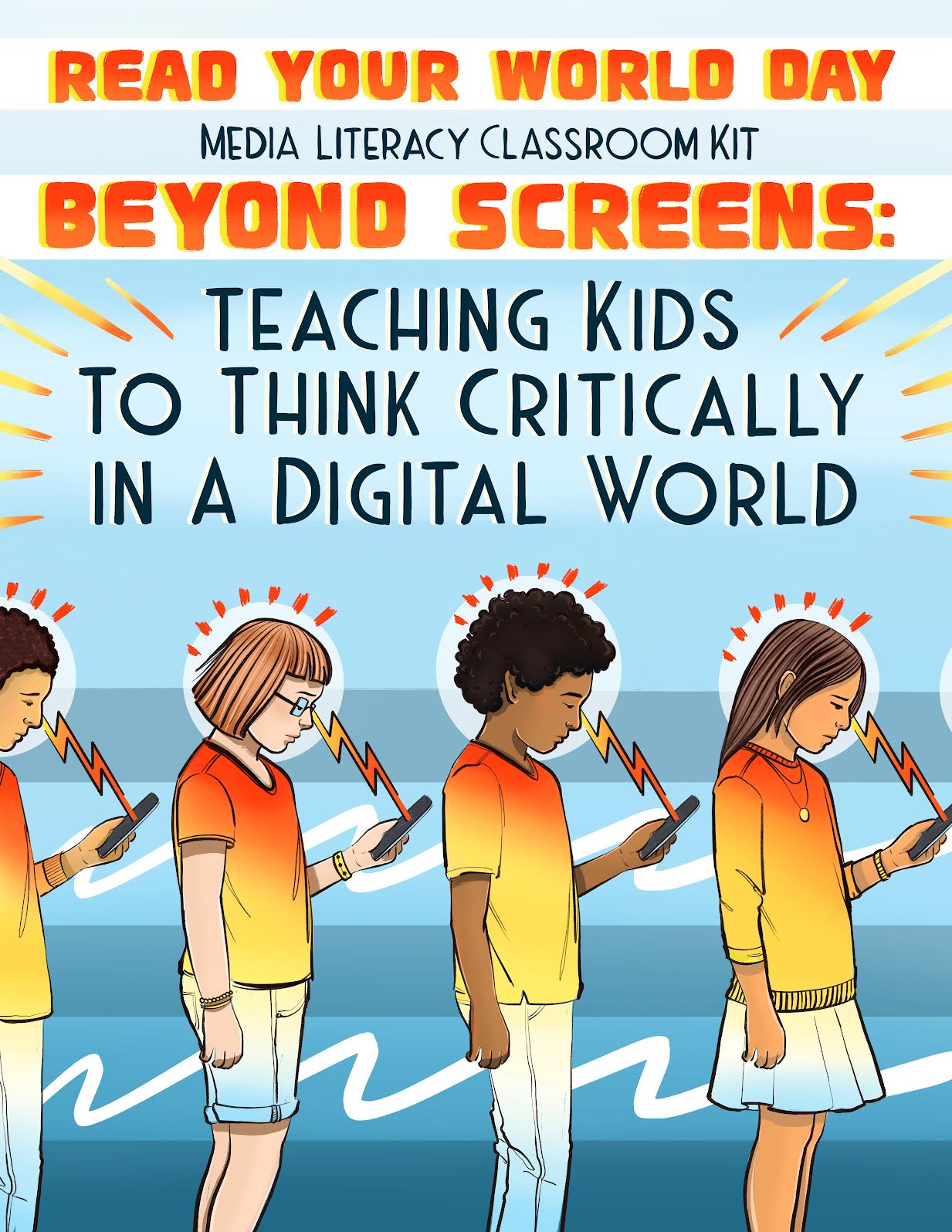
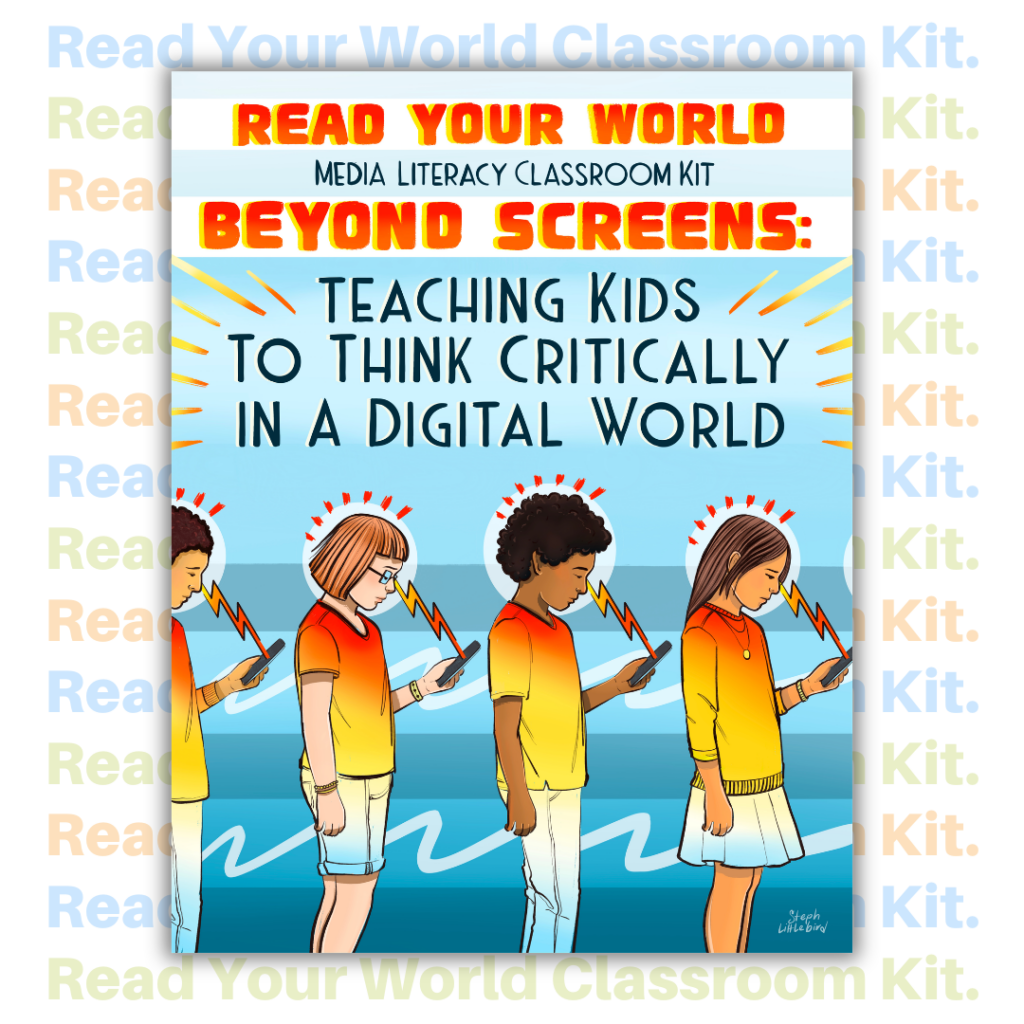
The development of "Beyond Screens" was a collaborative effort involving educators, literacy specialists, and prominent creators dedicated to youth advocacy. A cornerstone of the kit’s visual identity is its striking promotional poster, conceptualized and designed by acclaimed illustrator Steph Littlebird.
In an exclusive behind-the-scenes feature shared via social media, Littlebird discussed the inspiration and conceptual framework driving her artistic contribution:
"When designing the visual narrative for ‘Beyond Screens,’ my primary goal was to personify the delicate balance between our digital connectivity and our innate human intuition," Littlebird explained. "Children today are digital natives, but that doesn’t mean they are born with an innate radar for truth. The imagery invites young viewers to step back from the glowing device, look at the world with clear eyes, and question what is placed before them. Art has the power to make complex cognitive concepts feel approachable, warm, and empowering rather than intimidating."
Educators who have previewed the kit have echoed these sentiments. Dr. Aris Thorne, a middle school curriculum coordinator specializing in literacy instruction, noted:
"For years, teachers have been told to ‘teach media literacy’ without being given the actual tools to do so. We cannot expect instructors to reinvent the wheel while managing overcrowded classrooms. Read Your World has done the heavy lifting. Providing free lesson plans, vetted books, and podcast companions makes this kit an immediate game-changer for schools striving to foster independent thinkers."
Future Outlook: Expanding the Horizons of Children’s Literature and Advocacy
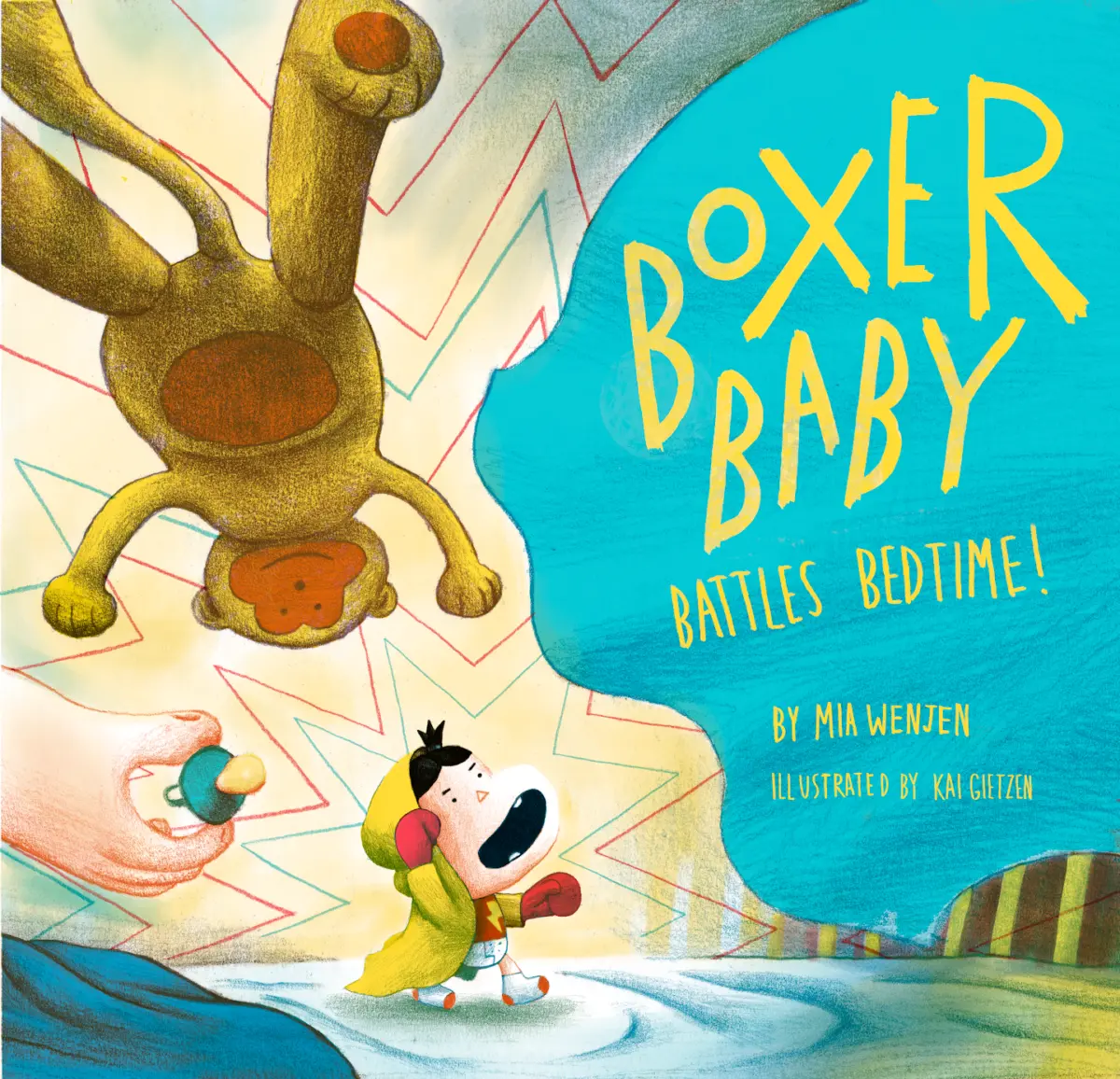
As Read Your World continues to chart the future of multicultural and socially conscious children’s literature, its founders remain deeply anchored by the legacy of impactful storytelling. Alongside the rollout of "Beyond Screens," the literary community has celebrated a robust slate of recent and upcoming works authored by core voices in the movement, including Mia Wenjen. These works further enrich the ecosystem of empathetic, worldly education:
Barbed Wire Between Us by Mia Wenjen, illustrated by Violeta Encarnación (with a comprehensive, free downloadable teacher’s guide).
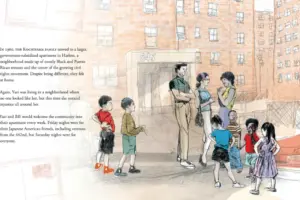
Postcards from Malcolm X: How Yuri Kochiyama Became a Civil Rights Activist (illustrated by Keith Henry Brown), which explores the powerful intersections of cross-cultural solidarity and civil rights history.
Fortune Cookies for Everyone! (Smithsonian): The Surprising Story of the Tasty Treat We Love to Eat (illustrated by Colleen Kong-Savage), blending culinary history with cultural appreciation.
The Traveling Taco: The Amazing and Surprising Journey of Many of Your Favorite Foods, tracing the diverse, global roots of everyday meals.
We Sing from the Heart: How the Slants® Took Their Fight for Free Speech to the Supreme Court, introducing young readers to landmark constitutional battles and advocacy.
Looking Ahead: The 2026 Greater Roxbury Book Fair and Beyond
Building on grassroots momentum, events like the 4th Annual Greater Roxbury Book Fair—highlighted by keynote speaker Lisa Cline-Ransom—demonstrate that physical community spaces for books remain as vital as ever.
The launch of "Beyond Screens: Teaching Kids to Think Critically in a Digital World" is not merely the release of another classroom kit; it represents a proactive defense of intellectual freedom and cognitive independence. By providing educators, parents, and students with the physical and digital tools necessary to question, verify, and reflect, Read Your World is actively shaping a generation of discerning, empathetic, and critically minded global citizens.
The complete "Beyond Screens" classroom kit is available now as a 100% free downloadable resource via the official Read Your World website, inviting classrooms everywhere to step beyond the screen and into deeper understanding.








Comments
Facebook App ID not configured. Please add it in the Customizer.