In the sprawling archives of World War II espionage, few figures boast a pedigree and combat footprint as striking as Francis Lowell Coolidge. A direct descendant of Founding Father Thomas Jefferson, Coolidge lived a life defined by quiet grit, operational audacity, and a steadfast dedication to global liberty. Operating at the razor’s edge of Allied intelligence, Coolidge achieved a rare historical distinction: he parachuted behind enemy lines in both the European and Pacific theaters of World War II as an agent for the Office of Strategic Services (OSS), the wartime precursor to the Central Intelligence Agency (CIA).
For decades, the specifics of Coolidge’s clandestine operations remained obscured beneath the heavy cloak of national security, locked away in classified military and intelligence files. However, with the recent declassification of key records and the public unveiling of a deeply moving, five-page farewell letter written to his wife prior to his perilous jump into Nazi-occupied France, a clearer picture has emerged. This feature-length examination chronicles Coolidge’s harrowing exploits in the French Alps, his subsequent captivity in Communist-controlled China, his postwar rise through the ranks of the CIA, and the enduring legacy preserved by his descendants.
Detailed Chronology: From Concord to the European and Pacific Theaters
The Path to the OSS and Operation Union II
Born into a lineage that valued public service and intellectual rigor, Francis Lowell Coolidge found himself drawn to the physical and moral crucible of global conflict long before the United States officially entered World War II. An experienced veteran of the French Foreign Legion, Coolidge possessed a unique combination of fluency in French, airborne training, and combat discipline. Seeking to apply these specialized skills directly against the Axis powers, he successfully petitioned for a transfer to the OSS Special Operations branch in England in 1943.
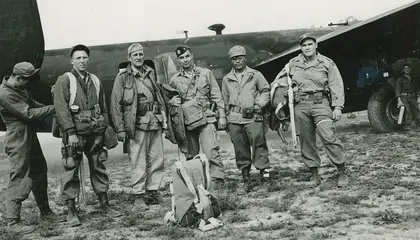
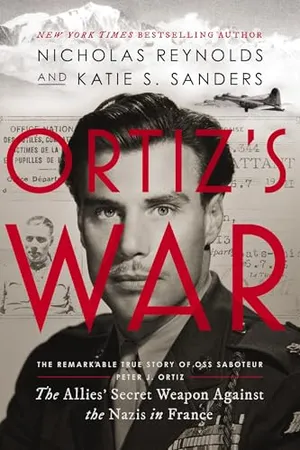
By the summer of 1944, Coolidge was stationed in England, where he reconnected with Major Peter J. Ortiz, a charismatic Marine Corps officer and former comrade from their North Africa Foreign Legion days. Ortiz was assembling an elite team for Operation Union II, a deep-penetration mission designed to reinforce the French Resistance (specifically the Bulle Battalion led by Free French officer Jean Bulle) in the mountainous Haute-Savoie region of France ahead of the Allied invasion of southern France.
On August 1, 1944, Coolidge, Ortiz, and five other OSS operatives boarded a B-17 heavy bomber. They prepared to jump into the Col des Saisies mountain pass at an altitude of less than 500 feet—a dangerously low deployment height meant to evade radar and hostile observation. Accompanying them was an armada of 78 B-17s carrying 864 supply containers filled with munitions and equipment for the maquisards.
+-----------------------------------------------------------------+
|               CHRONOLOGY OF COOLIDGE'S WWII MISSIONS            |
+-----------------------------------------------------------------+
| August 1944  | Parachutes into Haute-Savoie, France (Union II)  |
| August 1944  | Assumes command of Union II after Ortiz captured |
| Sept. 1944   | Returns to OSS London; awarded Silver Star       |
| May 1945     | Parachutes into Fuping, China (Operation Spaniel)|
| Aug. 1945    | Imprisoned by Chinese Communist forces           |
| Sept. 1945   | Released and returned to the United States       |
+-----------------------------------------------------------------+
The Parting Words: The Unpublished Farewell Letter
Understanding the immense fatality rates associated with deep-cover behind-the-lines operations, Coolidge penned a poignant, five-page handwritten letter to his wife, Helen Curtis Coolidge, left behind in Concord, Massachusetts, with their young daughters, Georgina ("Nina") and Mary ("Cuppy").
Published publicly for the first time by Smithsonian magazine, the missive reflects the stark psychological reality faced by wartime families:
"You will only get this letter in case something has happened to me," Coolidge wrote. "You have made my life. You gave me so much, and I gave so little in return. You gave me a purpose and a meaning that I never had before. Thank you, darling, for all that you have done."
He elaborated on the ideological weight driving his service:
"This job for which I gave my life was a worthy one. It was mixed up with the liberation of France and the defeat of the Germans. I felt so strongly that Cuppy and Nina had the right to grow up and live in freedom and in the way they may choose that I was willing to pay any price to help in the defeat of the Germans."
Combat in the French Alps and Ortiz’s Capture
The jump into France was marred by tragedy. Sergeant Charles Perry was killed when his parachute failed to deploy, while Marine Robert LaSalle suffered severe back and ankle injuries upon landing. Following a hasty tactical funeral for Perry, the surviving members of Union II integrated directly with the Bulle Battalion, organizing ambushes, training resistance fighters, and running reconnaissance as German forces began retreating under the pressure of Operation Dragoon (the Allied landing on the French Riviera).
On August 16, near the village of Centron, a German convoy of more than 100 heavily armed troops ambushed the OSS team. Coolidge shouted a warning to Ortiz before enemy machine-gun fire split the group in two. Coolidge took a bullet to the right thigh but managed to evade capture alongside OSS Marine Frederick Brunner. Ortiz and three of his men, completely surrounded, opted to surrender to prevent the Nazi forces from enacting brutal retaliatory massacres against the local French civilian population.
Following Ortiz’s capture, Coolidge stepped up to lead the remaining elements of Union II. He coordinated with resistance units through the final weeks of France’s liberation, even as French resistance leader Jean Bulle was executed by German forces in Albertville while attempting to negotiate an enemy surrender. By late September 1944, Coolidge returned to London, earning a Purple Heart and a Silver Star for leading the operation "with great coolness and ability."
Operation Spaniel: The Pacific Theater and Chinese Detention
Rather than retiring from frontline duty following his recovery in Massachusetts, Coolidge volunteered for a second high-risk assignment, this time in the Pacific theater. Newly promoted to major, he took command of Operation Spaniel, an OSS mission launched into Japanese-occupied China on May 28, 1945.
The mission’s objective was to establish contact with Chinese puppet generals and leverage guerrilla networks to aid Allied forces. However, upon parachuting into the Communist-controlled Fuping region, Coolidge and his four-man team faced an unexpected hazard: instead of cooperating, Chinese Communist forces disarmed and detained the Americans in caves.
While the Communist leadership claimed the detention was intended to protect the commandos from Japanese patrols, the Americans were effectively held prisoner. During this tense captivity, Coolidge suffered a debilitating bout of malarial fever, and back in the United States, his wife gave birth to twins (Ellen and Francis Jr.) on August 4, 1945. American diplomats eventually negotiated the team’s release in exchange for a single utility truck just as World War II came to a sudden close.
Supporting Context & Metrics
The operational scope of the OSS during World War II was vast, relying on a small cohort of highly specialized operatives who integrated irregular warfare with conventional military strategies.
The Elite Few: Coolidge belongs to an exceedingly select fraternity of American servicemen who executed combat parachute insertions in both the European and Pacific theaters.
Casualties and Risks: Drop zones like the Col des Saisies required low-altitude flights (often under 500 feet), compressing reaction times to mere seconds and drastically increasing jump fatalities, as tragically demonstrated by the death of Sergeant Charles Perry.
The Intelligence Transition: Following the dissolution of the OSS by President Harry S. Truman in October 1945, the intelligence apparatus was reorganized, ultimately leading to the creation of the CIA in 1947, which absorbed many former OSS officers, including Coolidge.
Official Statements and Archival Insights
Historians and descendants have spent decades piecing together the fragmented record of Coolidge’s service. Randy Burkett, a former CIA operations officer and agency historian, noted the elusive nature of Coolidge’s career records during interviews with researchers:
"He’s a very challenging individual because he pops up and disappears more than once," Burkett remarked, noting that official records confirm Coolidge’s return to government intelligence work by 1954, eventually rising to become the CIA’s chief of station for North Africa between January 1958 and November 1959.
Lucy Coolidge Trout, Coolidge’s granddaughter, reflected on how family lore preserved his memory:
"Stories shared by relatives painted the picture of someone who preferred adventurous pursuits over the comparatively quiet life one might have expected."
Curtis Lowell Bogetto, another grandson and a U.S. Navy veteran who operates an English-language bookstore in Turin, Italy, attended commemorative ceremonies in France marking the 80th anniversary of Operation Union II. Reflecting on his grandfather’s legacy during the memorial events held in the exact alpine passes where Coolidge jumped in 1944, Bogetto observed:
"I have to think that my grandfather would have really appreciated this."
Future Outlook & Historical Legacy
Francis Lowell Coolidge retired from the CIA in 1963 before serving as the deputy director of the United States Post Office’s international postal service until 1967. He passed away in 1972 at the age of 65, taking many operational secrets with him to the grave.
Today, the declassification of documents related to the OSS, coupled with family heirlooms like his 1944 farewell letter, ensures that Coolidge’s contributions are no longer lost to the shadows of Cold War history. As modern historians continue to re-examine the intricate web of European resistance networks and Pacific theater intelligence operations, Coolidge stands as a definitive archetype of the twentieth-century American commando—a citizen-soldier whose commitment to freedom transcended continents, oceans, and ideological divides.

/https://tf-cmsv2-smithsonianmag-media.s3.amazonaws.com/filer_public/f8/c6/f8c6c426-628a-4133-beac-bc8e5dce1071/coolidge2.png)
/https://tf-cmsv2-smithsonianmag-media.s3.amazonaws.com/accounts/headshot/katie.png)
:focal(750x500:751x501)/https://tf-cmsv2-smithsonianmag-media.s3.amazonaws.com/filer_public/f8/c6/f8c6c426-628a-4133-beac-bc8e5dce1071/coolidge2.png)
/https://tf-cmsv2-smithsonianmag-media.s3.amazonaws.com/filer_public/3f/d7/3fd7330f-8a31-47bd-8d01-21450770823f/e92-f16908-coolidge_francis-photo-1943-caption.jpg)
/https://tf-cmsv2-smithsonianmag-media.s3.amazonaws.com/filer_public/ad/96/ad96a659-1293-48f4-a9e9-a2da4b1dc79c/coolidge-letter.png)
/https://tf-cmsv2-smithsonianmag-media.s3.amazonaws.com/filer_public/a8/b9/a8b90d64-5b11-430b-af30-5e7da4ff2961/1_funeral1944_aug_union_2_members_at_perrys_gravesite.jpg)
/https://tf-cmsv2-smithsonianmag-media.s3.amazonaws.com/filer_public/f6/86/f6860392-f969-4d7c-ba14-240a41412b2c/capitaine_jean_bulle_1913-1944.jpg)

Comments
Facebook App ID not configured. Please add it in the Customizer.