
Executive Overview
In the contemporary literary landscape, poetry often serves as an archaeological dig into the emotional strata of childhood, domestic turbulence, and the private mythologies children construct to survive their environments. Released as the featured Poem of the Week for October 19, 2026, W. M. Lobko’s striking piece, "I Was Braver Than I Thought," captures this excavation with surgical precision.
The poem juxtaposes the gritty, microscopic anxieties of youth—germs on dropped toys, the chilling acoustic shock of a grandmother’s death—with grand, imaginative escapism, such as model spaceships smelling of ozone under an armature light. Lobko’s work, celebrated in prestigious publications like the Iowa Review, Kenyon Review, and Boston Review, invites readers into a deeply reflective space where the dividing line between domestic trauma and imaginative preservation blurs.
This article explores the thematic resonance of "I Was Braver Than I Thought," profiles the artistic background of its Pushcart-nominated author, examines the broader critical response to Lobko’s poetry, and unpacks the intimate mechanics of how stories and myths function as modern devotionals.
Read Also
Detailed Chronology & Background: The Evolution of W. M. Lobko’s Poetic Voice
To understand the emotional and structural complexity of "I Was Braver Than I Thought," one must trace the trajectory of W. M. Lobko’s literary career. Emerging as a distinct voice in American letters through rigorous academic training at the University of Oregon, Lobko developed an aesthetic characterized by acute observational detail, psychological acuity, and lyrical restraint.
Over the past decade, Lobko’s poems, reviews, and interviews have found homes in some of the nation’s most discerning literary journals. His work has appeared in:
- The Iowa Review
- The Kenyon Review
- Washington Square Review
- Boston Review
- Guernica
These placements reflect a steady accumulation of critical praise. Lobko has been nominated for a Pushcart Prize and earned recognition as a semi-finalist for the prestigious 92Y / Boston Review Discovery Prize—honors that place him among the most promising contemporary voices of his generation. Currently teaching just north of New York City, Lobko balances his pedagogy with an active writing practice, culminating in digital hubs like his official author platform (wmlobko.com).
The release of "I Was Braver Than I Thought" as a featured piece marks a continuation of Lobko’s exploration of vulnerability, memory, and spatial metaphors. The poem constructs a bridge between the physical geography of a childhood desk and the vast, indifferent terrain of outer space, tracking how an adolescent mind processes external chaos through internal architecture.
The Text: "I Was Braver Than I Thought" by W. M. Lobko
Cave of the crook of my arm.
Slick heat of my breath on the desk
Lysol would lift away. Only lately having learned
the ghosts that would wake me at 2 a.m.
could be facts, germs in the chrome of the toy green motorcycle
I dropped in the toilet, say,
or the high twist in my mother’s voice
when she learned her mother was dead. It was like
the high E-flat of a bough breaking,
song I was then decades from singing.
I was architect of an ice planet. I was a skull
hearing itself with every graham cracker’s
ashen reverberation. Sounds such as the walls
could keep back, at least that’s what I imagined,
model spaceships in grey plastic
richly smelling of ozone under the armature light I
aimed so relentlessly, faithful
nothing would melt or erupt. The one fight
we caught my mother & father having
so heinous the sitcom characters stopped to watch,
axe through the bucket klieg lights,
axe through the snowbound door, axe through
the umbilical. Still, I loved space,
how inaccessible it was, its famous silence, how
the ships crisscrossing it started out pristine
then of a sudden were blast-scored, emphysemic
buckets of bolts
prayer could hold together.
Supporting Context & Literary Metrics: Deconstructing the Imagery
1. Microscopic Anxieties and Domestic Realism
The opening lines of Lobko’s poem immediately anchor the reader in a claustrophobic, intensely tactile environment: the "Cave of the crook of my arm" and the "Slick heat of my breath on the desk / that Lysol would lift away."
This physical retreat sets the stage for a child’s awakening to existential dread. The realization that nocturnal ghosts are not supernatural specters, but rather hard realities—"germs in the chrome of the toy green motorcycle / I dropped in the toilet"—demonstrates a brilliant transition from vague childhood fears to concrete, microscopic vulnerabilities.

2. Acoustic Resonance and Familial Grief
Sound serves as a primary vehicle for trauma and memory throughout the poem. The speaker recalls the "high twist in my mother’s voice / when she learned her mother was dead," comparing it to "the high E-flat of a bough breaking." This musical and organic metaphor expands into the future, described as a "song I was then decades from singing."
Later, the internal architecture of the mind is rendered through bone-dry sensory details: "I was a skull / hearing itself with every graham cracker’s / ashen reverberation." Every detail is calibrated to evoke the hyper-awareness of a child forced to listen to the silent fracturing of their household.
3. The Metaphor of Outer Space and Model Making
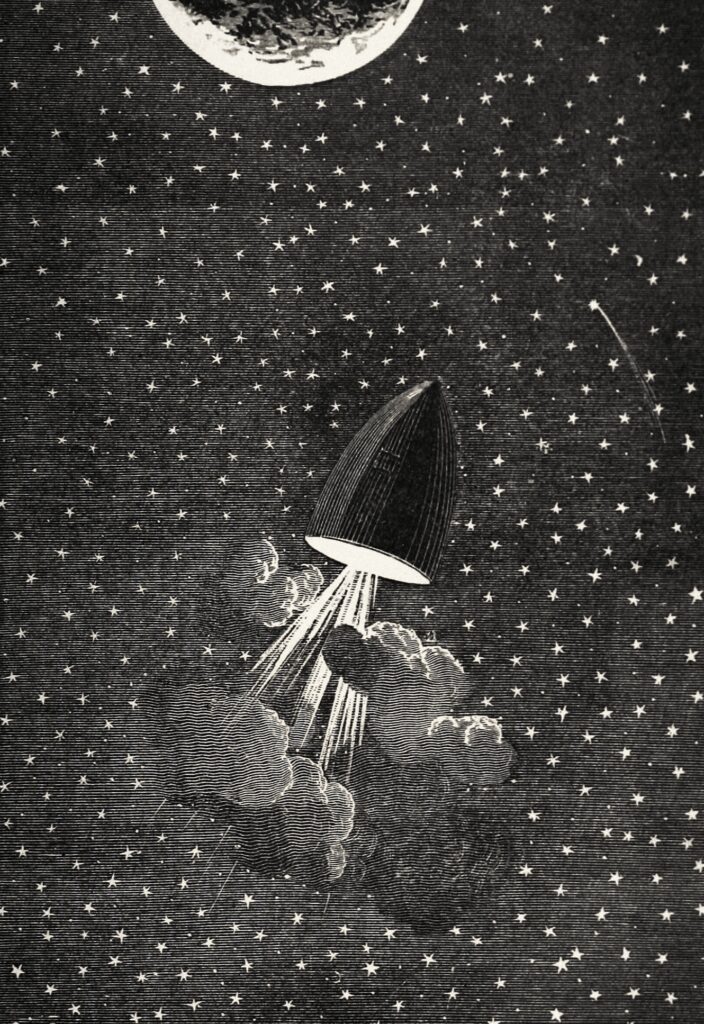
To combat the terrifying domestic reality—exemplified by a parental fight "so heinous the sitcom characters stopped to watch"—the speaker turns to world-building. Armed with an armature light and grey plastic model spaceships "richly smelling of ozone," the child builds an ice planet as a fortress against chaos.
Space represents the ultimate safe haven precisely because of "how inaccessible it was, its famous silence." Yet, even in the safety of imagination, the child’s psychological reality bleeds through: the spaceships start pristine but soon become "blast-scored, emphysemic / buckets of bolts / prayer could hold together." It is a poignant acknowledgment that the vessels we build to carry us through life are inherently fragile, held together by little more than hope and desperation.
Official Statements & Author’s Reflections
In an exclusive author’s note accompanying the publication of "I Was Braver Than I Thought," W. M. Lobko offered profound insight into the psychological shifting that occurred during the poem’s composition:
"At first, I thought this poem was about my family, my parents, me—but I’ve come to see it more as a devotional of sorts to the stories & myths that help us make meaning, whatever they might happen to be."
This perspective elevates the poem from a simple autobiographical recollection to a universal meditation on coping mechanisms. The "myths" in question are not merely the plastic spaceships or the imagined ice planets of childhood; they are the narrative structures human beings construct at any age to metabolize pain, withstand domestic storms, and find coherence in a fractured world.
Future Outlook: The Ongoing Legacy of Lobko’s Work
As "I Was Braver Than I Thought" continues to resonate with readers and critics across national literary platforms, it cements W. M. Lobko’s reputation as an indispensable voice in contemporary American poetry. By blending the vulnerability of domestic remembrance with the expansive, cold beauty of cosmic imagery, Lobko provides a masterclass in how poetry can reconcile the intimate horrors of the past with the enduring grace of imagination.
Looking ahead, poetry enthusiasts and academic critics alike will undoubtedly keep a watchful eye on Lobko’s upcoming projects. Whether through further contributions to premier literary journals or eventual full-length poetry collections, his ability to transform the microscopic terrors of childhood into transcendent art guarantees that his work will be studied, anthologized, and cherished for years to come.





Comments
Facebook App ID not configured. Please add it in the Customizer.