
Executive Overview
In the landscape of contemporary children’s literature, few works bridge historical atrocity and modern socio-political realities with the profound economy of verse found in Barbed Wire Between Us (Red Comet Press, 2026). Written by acclaimed Japanese-Chinese-American author Mia Wenjen and illustrated with striking gravity by Violeta Encarnación, this 48-page picture book challenges readers ages 5 to 12 to confront uncomfortable historical truths. At its core, the book explores a harrowing thematic parallel: the forced removal and wartime incarceration of Japanese Americans during the 1940s, and the modern, contentious landscape of family separation, immigrant detention, and child imprisonment at contemporary U.S. borders.
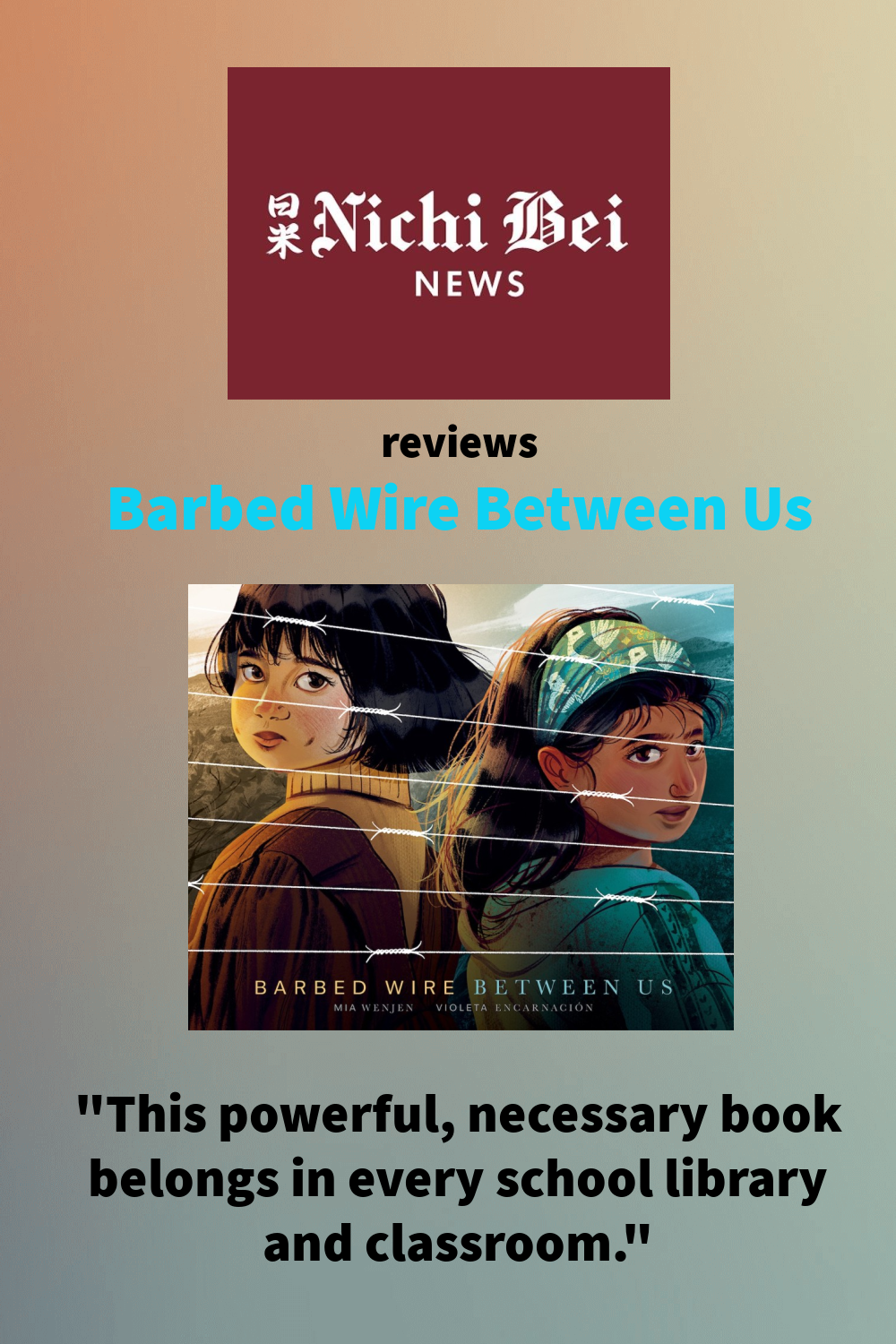
Recent critical reception—most notably a thoughtful review in Nichi Bei—has highlighted the book’s deployment of the "reverso" poem format. Invented by poet Marilyn Singer, the reverso form reads forward to convey one perspective, while its exact backward reading delivers an entirely different, yet inextricably linked, meaning through altered punctuation and capitalization. By marrying this poetic innovation with sophisticated artistic choices, Wenjen and Encarnación construct an authoritative and deeply moving resource for educators, librarians, and young readers navigating civil rights, empathy, and historical accountability.
Detailed Chronology: Parallel Histories of Incarceration
The narrative architecture of Barbed Wire Between Us spans an 80-year chasm, linking two distinct eras through the shared trauma of institutionalized confinement.
Read Also
The 1940s: The Japanese American Experience
The first movement of the book anchors itself in the catastrophic fallout of Executive Order 9066 during World War II. Through spare, evocative verse, Wenjen traces the plight of a young Japanese American girl and her family. Reflecting on their shattered expectations, the verse begins with the poignant realization: "In this land of promise, we hoped to find a place to belong."

Instead of sanctuary, the family faces state-sanctioned displacement. Forced to abandon their homes with little warning, they are permitted to bring only what they can carry. Families are fractured, communities are uprooted, and thousands are funneled into desolate incarceration facilities. The narrative specifically highlights the infamous Fort Sill internment camp in Oklahoma, illuminating a lesser-discussed chapter of domestic wartime imprisonment where individuals of Japanese ancestry—many of them American citizens—were held under armed guard.
The Contemporary Era: Modern Border Realities
Without missing a rhythmic beat, the narrative seamlessly transitions into contemporary America. A second girl and her family arrive on U.S. soil seeking refuge, carrying the exact same foundational dream of building a life "in this land of promise."

However, they encounter a modern apparatus of enforcement that yields an eerily identical fate: state-enforced family separation, detention, and imprisonment. By placing these two timelines in direct dialogue, Wenjen establishes that the machinery of exclusion has not vanished; it has merely evolved, trapping new generations of children behind physical and bureaucratic barriers.
Supporting Context & Metrics: The Mechanics of the Reverso and Visual Symbolism
The Poetic Architecture: The Reverso
To convey the cyclical nature of history, Mia Wenjen utilizes the reverso poem format. In this literary structure, the poem’s second half directly reverses the lines of the first, relying solely on changes in capitalization and punctuation to shift the emotional and contextual weight.

This technical mastery is acutely demonstrated through the recurring phrase, "we came with only what we could carry." Read in the forward trajectory of the first half, the line exposes the panic and abrupt destitution of forced removal during wartime. When read backward in the second half, the same words evoke the desperate hope, resilience, and heavy burdens carried by modern migrants traversing treacherous landscapes in search of safety. Through this linguistic mirror, Wenjen avoids heavy-handed didacticism, instead allowing the structure of the language itself to serve as a metaphor for history repeating itself.
Visual Mastery and Color Theory
Complementing Wenjen’s verse are Violeta Encarnación’s illustrations, executed through a compelling blend of traditional mediums and digital artistry. Encarnación rejects simplistic depictions in favor of somber, atmospheric settings that mirror the psychological weight of confinement.

Crucially, the illustrator employs deliberate color theory to inject agency and humanity into her subjects:
- Shades of Gold: Used to illuminate the Japanese American protagonist, symbolizing historical endurance, cultural heritage, and enduring hope.
- Shades of Turquoise: Applied to the contemporary Latina protagonist, highlighting internal resilience, survival, and the persistent dream of a better future.
Furthermore, Encarnación’s artwork demonstrates rigorous historical and journalistic awareness. In depictions of the 1940s, the long, menacing shadows of American soldiers’ rifles loom ominously over a despondent Japanese American girl boarding a transport train. In the contemporary vignettes, the shadows of coyotes and armed border enforcement stretch across handcuffed adults, while the young protagonist is depicted shielding and carrying a younger sibling. These visual motifs ground the poetic text in verifiable socio-political realities.

Official Statements and Educational Impact
Pedagogical Utility and Classroom Integration
Barbed Wire Between Us has been widely embraced by educators seeking accessible entry points for complex social justice topics. Designed primarily for readers aged 5 to 12, the book functions as a catalyst for classroom discussions centered on civil rights, empathy, and humanitarian obligations.
Educational specialists and reviewers have outlined practical strategies for utilizing the text across different grade levels:
- Primary-Grade Scaffolding: Teachers working with younger children are encouraged to pace readings across three distinct sessions: exploring the first narrative half, analyzing the reversed second half, and finally reading the text as a complete, unified piece. This methodical approach demystifies the complex poetic structure.
- Upper Elementary Independence: Older students can engage with the text independently or in peer-led read-alouds, using the book’s dual narrative to drive critical thinking and comparative historical analysis.
Back Matter and Critical Perspectives
The book includes robust back matter, featuring historical documentation regarding the Fort Sill incarceration camp and an intimate author’s note detailing Wenjen’s personal familial connections to World War II internment. While literary critics have lauded these inclusions, some educational reviewers note that the volume would achieve an even higher degree of structural completeness with expanded contextual framing regarding the modern legal and humanitarian frameworks governing the imprisonment of immigrant children today.
Future Outlook: A Permanent Fixture in Multicultural Literature
As Barbed Wire Between Us gains momentum—securing placements on prestigious reading lists, educational guides, and museum exhibits such as those at the Japanese American National Museum—its long-term cultural impact is becoming increasingly clear.
Mia Wenjen’s collaborative effort with Violeta Encarnación arrives at a critical juncture in American public discourse. By refusing to treat historical injustices as isolated anomalies of the past, the book challenges educators, librarians, and young readers to recognize ongoing systemic failures. It insists that confronting uncomfortable truths is the foundational prerequisite for cultivating genuine empathy and ensuring that the promise of liberty is extended universally, unmarred by barbed wire.

Comments
Facebook App ID not configured. Please add it in the Customizer.