
Executive Overview
In the meticulously planned ecosystem of modern Hollywood marketing, studios rarely stumble into a PR labyrinth entirely of their own making. Yet, the 2026 historical epic The Uprising achieved the impossible. Directed by visionary auteur Paul Greengrass and featuring an all-star ensemble cast including Andrew Garfield, Thomasin McKenzie, and Jamie Bell, the film was initially positioned as a modest dramatic accounting of the 1381 Peasants’ Revolt. However, a cascading series of ambiguous promotional materials, social media posts bearing the subtitle "Witness the Rise of Robin Hood," and a surprising narrative pivot in the film’s final act plunged the internet into a frenzy of speculation.
Was The Uprising a clandestine Robin Hood adaptation, or was it a historical drama cynically retrofitted with folk-hero iconography to capture the box-office zeitgeist? Now that the film has officially landed in theaters, the answers are as elusive as they are fascinating. Far from providing closure, the release of The Uprising has transformed a simple marketing kerfuffle into a complex case study on myth-making, studio cross-purposes, and the malleable nature of cinematic archetypes. This investigative report breaks down the anatomy of the controversy, examines the official statements from bewildered executives, analyzes the historical and textual dissonance of the film’s conclusion, and assesses what this bizarre rollout means for the future of historical blockbusters.
Detailed Chronology
To understand how a grim historical drama about medieval class warfare became tangled up with Sherwood Forest folklore, one must trace the timeline of The Uprising’s tortuous development and promotional rollout.
Read Also
From "The Hood" to "The Uprising"
Long before Andrew Garfield picked up a bow as a character known simply as "Ploughman," the project underwent several conceptual and casting iterations. Industry insiders note that the script was originally developed under the working title The Hood, at one point slated to star Benedict Cumberbatch. As the production evolved through various drafts and shifted hands, it was subsequently referred to as The Rage, with Matthew McConaughey reportedly circling the lead role.
By the time Paul Greengrass boarded the project, the focus had ostensibly pivoted away from conventional Hollywood franchise IP toward the gritty, ground-level reality of the 1381 Peasants’ Revolt—a major rebellion across England sparked by high taxation and feudal oppression under the reign of King Richard II. Yet, the specter of the outlaw mythos clearly lingered in the production’s DNA.
The Marketing Blitz and the "Green Hoodwink"
The modern phase of the controversy ignited on August 20, 2026, when Focus Features dropped the official theatrical trailer for The Uprising. While the footage largely emphasized visceral peasant uprisings, brutal medieval warfare, and Garfield’s charismatic, dirt-caked leadership, eagle-eyed viewers noted fleeting glimpses of the actor clad in familiar forest-green attire, wielding a bow and arrow.
The real gasoline, however, was tossed onto the fire when Focus Features’ digital marketing team deployed a series of promotional posts across Instagram and X (formerly Twitter) featuring the explicit tagline: "Witness the Rise of Robin Hood."
For an internet already exhausted by cinematic universes and brand synergy, the implication was clear: audiences were being stealth-marketed their second Robin Hood movie in a matter of months, following the autumn release of The Death of Robin Hood. Film forums erupted, theories proliferated, and The Uprising transformed overnight from an under-the-radar prestige picture into an internet detective mystery.
Supporting Context & Metrics
While the internet debated the film’s true identity, industry analysts and historians weighed in on the unprecedented nature of the studio’s communication strategy.
- Budget vs. Reach: Produced on a modest historical-epic budget, The Uprising relied heavily on high-concept word-of-mouth. The studio’s gamble to leverage internet intrigue surrounding a potential "secret" franchise entry was arguably an attempt to manufacture viral engagement without inflating the traditional advertising budget.
- Demographic Metrics: Focus Features’ internal testing revealed a distinct generational divide. While older, history-literate demographics recognized the 1381 backdrop immediately, younger audiences surveyed at test screenings responded with enthusiasm to the "origin story" framing of the outlaw legend. According to director Paul Greengrass, this youth-market enthusiasm directly fueled the decision to lean into the Robin Hood messaging on social media.
- Textual Dissonance: Historically, the earliest literary references to "Robin Hood" (or "Robb Hood") appear in the late-14th-century poem Piers Plowman, traditionally dated around 1377—predating the 1381 revolt. By positioning the revolt as the crucible for the legend, the film’s marketing deliberately blurred the lines between historical chronology and mythic inspiration.
Official Statements and Creative Contradictions
As the "Rise of Robin Hood" controversy gained mainstream traction, the fault lines within the promotional apparatus began to show. The resulting statements from regional distribution teams, the star, and the director only served to deepen the mystery.
The Trans-Atlantic Rift
In response to widespread confusion among British filmgoers, Focus Features UK issued a stern clarification attempting to distance the domestic campaign from international messaging:
"The Uprising is a historical epic about the Peasants’ Revolt of 1381, not Robin Hood. The UK marketing campaign does not make any reference to Robin Hood. Marketing materials posted by other countries that may appear in the UK online and on social media referencing Robin Hood are not issued or approved by us."
This blunt bureaucratic firewall essentially threw the U.S. social media team under the bus, implying that overseas markets were running an unauthorized, rogue narrative campaign.
Andrew Garfield’s Archetypal Defense
When pressed by the press to explain the film’s thematic flirtation with the legendary archer, Andrew Garfield offered a philosophical interpretation of his character’s trajectory, emphasizing folklore over franchise branding:
"The Robin Hood aspect is more of an emergent energy and archetype within our story. It’s an archetype and a folk hero that predates the Peasants’ Revolt, but it’s a figure that starts to emerge from the unconscious and the ground during periods of time when common folk are feeling disempowered, abused, violated and separated from the dignity of living their own lives. There is this archetypal energy that starts to rise up, and I love that arc."
Paul Greengrass Fires Back at Critics
Director Paul Greengrass, meanwhile, defended the marketing strategy as a deliberate creative choice designed to reward attentive viewers, pushing back against charges of misleading advertising in an interview with The Hollywood Reporter:
"You can’t lay out everything at the start. You want a campaign that builds. So it was [Focus Features’] idea to entice people with the idea that there’s something more than they think, and there is. It’s the ending, but it’s not a trite ending. The last ten minutes are incredibly well-earned and incredibly entertaining. So I think we’ve been a bit unfairly criticized for the marketing. You’ve got to somehow hint, ‘This is where this film’s going to go. Come and see it.’ … This all came up in the marketing and an American audience didn’t know it. In these screenings, particularly young people by the way, ‘Oh, that’s really cool. We didn’t know that.’ So that’s where it all came from. So you go, ‘OK, well, let’s push a bit of that into social media.’ That made sense to me."
Speaking to IGN, Greengrass elaborated on his historical inspirations, noting that his protagonist’s moniker, "Ploughman," was a direct literary nod to Piers Plowman and the vernacular outlaw tales circulating among the medieval peasantry: "The legend of Robin Hood, the real explosion of the popularity of outlaw stories, is all after the Peasants’ Revolt… There was nobody ever called Robin Hood. He was a superhero, really."
The Verdict: Is The Uprising a Secret Robin Hood Movie?
Now that the film is playing in cinemas worldwide, viewers finally have access to the text itself. The truth, much like the marketing campaign, exists in a murky gray area.
The film spends its first two hours and ten minutes as a visceral, uncompromising depiction of the 1381 Peasants’ Revolt. Garfield’s Ploughman leads a desperate crusade against the abuses of King Richard II, culminating in a tragic betrayal that sees several key rebel figures assassinated following a royal double-cross.
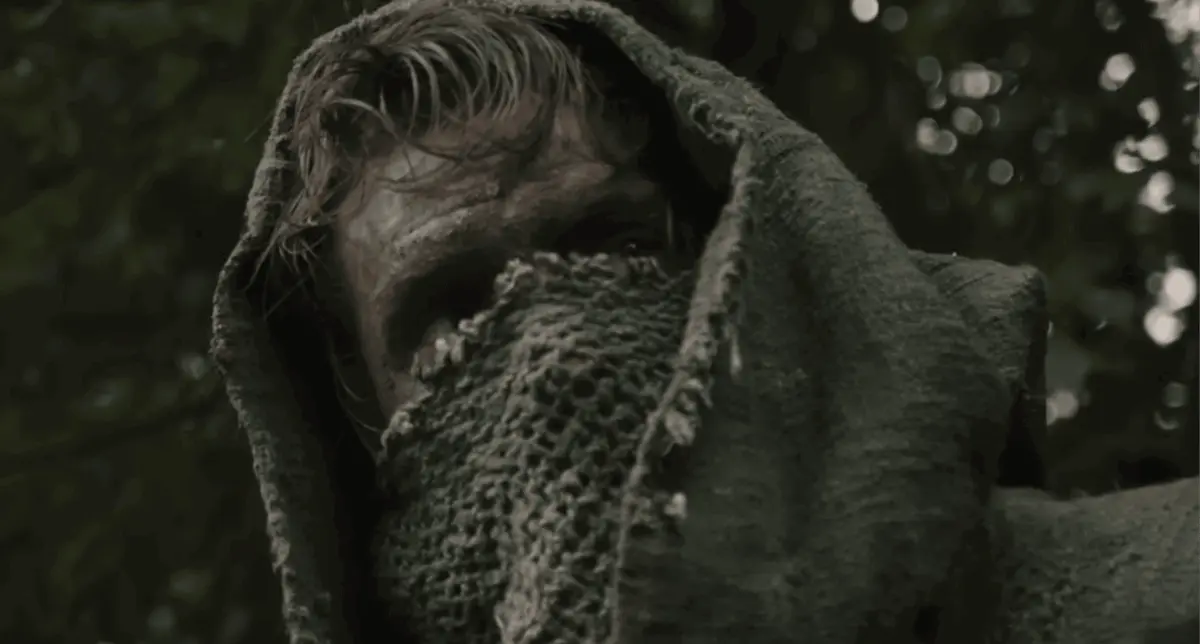
However, the final ten minutes execute a structural time-jump of one year. We witness King Richard’s entourage ambushed in the misty English woods by a band of elusive insurgents. The leader of this ambush emerges from the tree line clad in forest green, armed with a bow and arrow: it is Ploughman. Rather than executing the monarch, he spares the king’s life, issuing a chilling warning that he and his marginalized comrades will wage an eternal campaign of psychological terror in the name of justice.
Myth vs. History
Is this Robin Hood? In spirit and iconography, undeniably yes. The final sequence serves as an undeniable cinematic birth for the legendary outlaw, operating as an origin myth forged in the fires of actual peasant rebellion rather than the classic 12th-century Crusades setting associated with Richard the Lionheart.
Yet, strictly speaking, the character is never explicitly named Robin Hood, nor are his classic supporting cast members (such as Little John or Maid Marian) present. Instead, Greengrass presents the outlaw as a timeless meme or cultural archetype—a manifestation of working-class resistance that takes flight precisely because of the historic traumas depicted in the film.
Ultimately, The Uprising is neither a pure historical biopic nor a conventional franchise reboot. It is a cinematic Trojan horse: a serious, labor-intensive historical drama that weaponizes the ghost of folk-hero mythology to smuggle a profound meditation on class struggle into the modern multiplex.
Future Outlook
As The Uprising continues its theatrical run, the legacy of its chaotic rollout will likely be studied by studio marketing executives for years to come. In an era where audiences are increasingly cynical toward traditional blockbuster trailers, the willingness of a prestige director and an indie-leaning studio to court internet conspiracy theories—even accidentally—demonstrates a new frontier in promotional engagement.
Whether this gamble ultimately pays off at the box office remains to be seen. What is certain, however, is that Paul Greengrass and Andrew Garfield have succeeded in turning a standard historical epic into the most fiercely debated cinematic puzzle box of the year. Whether viewers leave the theater satisfied or perplexed, one thing is clear: the legend of the man in the green hood continues to evolve, proving that some stories are simply too powerful to be left in the history books alone.


Comments
Facebook App ID not configured. Please add it in the Customizer.