
Executive Overview
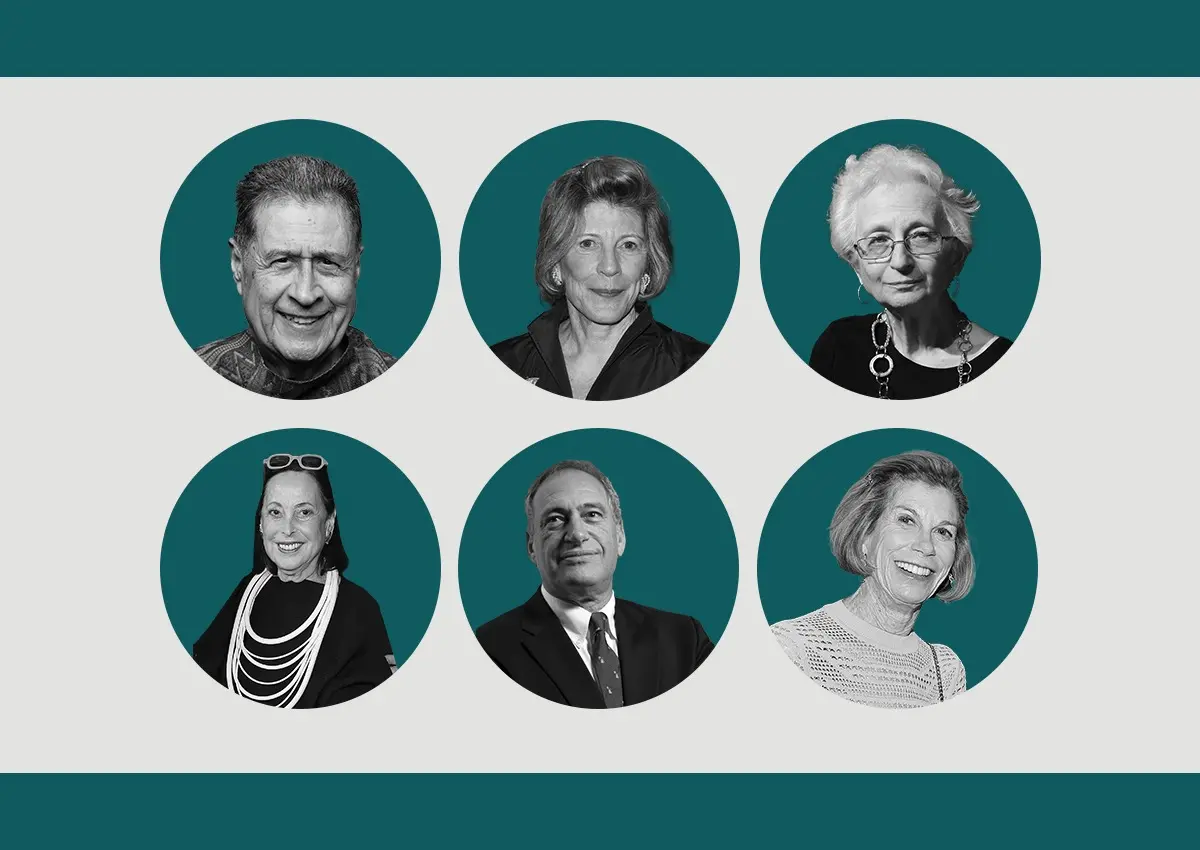
Over the past twelve months, the global art ecosystem has experienced a profound generational shift, bidding farewell to a cadre of extraordinary patrons whose influence extended far beyond the private walls of domestic display. These were not merely accumulators of capital or trophy hunters seeking prestige at auction houses; they were foundational architects of cultural infrastructure. Through decades of discerning acquisitions, visionary philanthropy, and deep institutional partnerships, figures such as Agnes Gund, Barbara Jakobsen, Dorothy Vogel, Susan Marx, John P. Axelrod, and Gilberto Cárdenas fundamentally reshaped the public presentation and educational reach of art in the United States and beyond.
The loss of these six towering collectors over a single year marks the close of a defining chapter in modern and contemporary art philanthropy. Their collective legacies underscore a transition in how public museums operate, moving from exclusive enclaves of the elite toward more democratic, expansive, and representative repositories of human expression. From the hallowed halls of New York’s Museum of Modern Art to regional beacons like the Aspen Art Museum and the Blanton Museum of Art in Austin, Texas, the tangible footprint of their generosity is woven into the very fabric of these institutions.
This retrospective examines the monumental contributions of these cultural titans. By exploring the personal relationships they forged with curators, the strategic brilliance of their collecting methodologies, and the lasting institutional transformations catalyzed by their gifts, we gain a clearer understanding of how private passion builds public legacy. Through exclusive insights and commentary gathered by ARTnews from leading curators and fellow collectors who walked alongside them, this report chronicles the enduring impact of a generation that understood art not as a commodity to be hoarded, but as a public trust to be shared.
Read Also
Detailed Chronology: A Year of Profound Cultural Transition
The passing of these six defining figures within a constrained twelve-month window has forced the museum world into a period of acute reflection. To understand the rhythm of this transition, it is essential to trace the contours of their lives, their pivotal moments of acquisition, and the historical contexts in which their foundational collections were built.
The Mid-Century Awakening and the Rise of Institutional Trustees
The modern era of American museum patronage was largely built on a foundation of civic duty, a ethos embodied by figures like Agnes Gund and Barbara Jakobsen. Longtime trustees of the Museum of Modern Art (MoMA) in New York, Gund and Jakobsen navigated an era of unprecedented expansion in the contemporary art market.

Agnes "Aggie" Gund’s tenure at MoMA was characterized by a fierce dedication to social justice through art. As board president from 1991 to 2002, Gund did not merely write checks; she deployed her formidable social capital to diversify the museum’s holdings and broaden its pedagogical scope. Her historic 1997 sale of Roy Lichtenstein’s Masterpiece (1962) to establish the Art for Justice Fund demonstrated a radical commitment to using private art wealth to combat mass incarceration—a move that redefined the ethical responsibilities of the modern mega-collector.
Simultaneously, Barbara Jakobsen operated with a quiet, persistent efficacy that anchored MoMA’s curatorial departments during times of transition. Jakobsen’s eye for avant-garde movements and her steadfast support of emerging curators ensured that the institution remained agile in the face of rapidly shifting artistic paradigms. Together, Gund and Jakobsen represented a golden standard of trusteeship: deeply engaged, financially generous, and intellectually curious.
The Democratic Collectors: Grassroots Passion Meets National Institutions
While some patrons moved within the highest echelons of metropolitan boardrooms, others proved that monumental institutional impact could stem from modest professional origins. Dorothy Vogel, a postal worker and librarian, alongside her husband Herbert Vogel, achieved legendary status in the art world by assembling one of the most significant collections of minimal and conceptual art in history on a civil servant’s salary.
Living in a modest Manhattan apartment overflowing floor-to-ceiling with works by artists like Sol LeWitt, Richard Tuttle, and Robert Mangold, the Vogels demonstrated that profound connoisseurship requires intellectual rigor rather than boundless capital. Their landmark decision to distribute their sprawling collection—transforming the National Gallery of Art in Washington, D.C., through a massive, strategic donation—bridged the gap between elite institutional holdings and accessible public education. Dorothy Vogel’s passing closes the book on a peerless partnership that proved art collecting could be an egalitarian pursuit.
In a similar vein, Susan Marx approached patronage through the lens of community building and regional empowerment. Working tirelessly on behalf of the Aspen Art Museum, Marx transformed a modest local exhibition space into an internationally recognized crucible for contemporary thought. Her dedication ensured that remote or regional communities had direct, unmediated access to the cutting edge of global artistic discourse.

Curating Connoisseurship and Expanding the Canon
The latter half of the twelve-month period marked the loss of figures who used their collections to correct historical omissions and rewrite the art-historical canon. John P. Axelrod’s relationship with the Museum of Fine Arts, Boston (MFA), stands as a masterclass in focused, deeply personal institutional giving. Axelrod’s gifts—numbering some 700 artworks—fundamentally enriched the MFA’s holdings across multiple departments, introducing a vibrant, idiosyncratic energy into galleries that might otherwise have adhered to traditional academic hierarchies.
Meanwhile, Gilberto Cárdenas engineered a monumental shift in how Latinx art is preserved and studied in the United States. Through his staggering donation of 5,000 works to the Blanton Museum of Art at the University of Texas at Austin, Cárdenas ensured that the lived experiences, aesthetic innovations, and cultural complexities of Latinx artists would no longer exist as a footnote in American art history, but as a central pillar of it. Cárdenas’s vision was holistic; he collected not for speculative gain, but to construct a comprehensive visual archive for future generations of scholars and museum-goers.
Supporting Context & Metrics: The Anatomy of Generosity
To fully grasp the magnitude of these losses, one must examine the quantitative and qualitative dimensions of their philanthropy. The ecosystem of the modern art museum is heavily reliant on private patronage; government subsidies in the United States, for instance, cover only a fraction of operating and acquisition budgets.
The Scale of Giving: A Quantitative Overview
| Collector | Primary Institutional Beneficiary | Estimated Scope of Impact / Key Holdings | Core Collecting Focus |
|---|---|---|---|
| Agnes Gund | Museum of Modern Art, New York | Hundreds of works gifted; millions raised for endowment and social justice. | Modern, Contemporary, Abstract Expressionism |
| Barbara Jakobsen | Museum of Modern Art, New York | Decades of trustee leadership; strategic acquisitions and curatorial support. | Avant-Garde, Post-War Modernism |
| Dorothy Vogel | National Gallery of Art, Washington, D.C. | Over 4,000 works collected jointly with Herbert Vogel; transformative national distribution. | Minimalism, Conceptual Art |
| Susan Marx | Aspen Art Museum | Instrumental in capital development and international programming. | Contemporary Art, Regional Cultural Infrastructure |
| John P. Axelrod | Museum of Fine Arts, Boston | 700 diverse artworks spanning multiple media and movements. | American Modernism, Studio Pottery, Contemporary Works |
| Gilberto Cárdenas | Blanton Museum of Art, Austin | 5,000-work foundational archive of cultural expression. | Latinx Art, Chicano Art, Photography |
The metrics above tell only part of the story. Beyond the sheer volume of objects transferred from private walls to public galleries, these collectors provided the crucial intellectual scaffolding that allows museums to contextualize their holdings. When Dorothy Vogel acquired a Sol LeWitt wall drawing, she was not just buying a physical object; she was acquiring a set of instructions that the National Gallery of Art now has the privilege and responsibility to execute in perpetuity. When Gilberto Cárdenas championed Chicano artists decades before the mainstream market acknowledged their significance, he was engaged in an act of historical reclamation.
The Changing Economics of Museum Patronage
The passing of this cohort occurs against a backdrop of increasing financial volatility in the global art market. As contemporary art prices soared into the tens of millions of dollars over the past three decades, the role of the collector-philanthropist became increasingly complex. Mega-collectors are now frequently courted by competing institutions armed with naming rights, dedicated wing constructions, and tax-advantaged stewardship packages.

However, the six individuals honored here largely belonged to an older, more mission-driven school of patronage. Their relationships with curators were built over decades of shared dinners, studio visits, and intellectual debates, rather than transactional expediency. As ARTnews learned through interviews with curators who worked alongside them, these collectors viewed their homes as extensions of the museum and themselves as temporary custodians of cultural heritage.
Official Statements and Curatorial Reflections
The human dimension of these losses was brought into sharp relief through conversations conducted by ARTnews with the curators, directors, and fellow collectors who shared professional trenches and personal friendships with the departed.
Dr. Eric M. Lee, director of various major institutions, noted the irreplaceable nature of their mentorship:
"When you lose a figure like Agnes Gund or a Dorothy Vogel, you are not simply losing a donor. You are losing a co-conspirator in the pursuit of cultural truth. They possessed an intuitive understanding of what an artwork needed to say to the public, and they empowered curators to take risks that institutional bureaucracy would otherwise have squashed."
Reflecting on the monumental gift of 5,000 works from Gilberto Cárdenas, senior curators at the Blanton Museum of Art emphasized the profound responsibility of stewardship.

"Gilberto didn’t just give us objects; he gave us a mandate," shared one curatorial voice intimately familiar with the Cárdenas collection. "He demanded that we look at American art through a wider, more honest lens. His collection forces the museum to be accountable to communities that were historically marginalized by elite institutions. Carrying that torch forward is both our greatest privilege and our heaviest burden."
Fellow collectors interviewed by ARTnews echoed these sentiments, pointing out the infectious nature of their enthusiasm. Susan Marx’s dedication to Aspen, for example, was described by a peer as a masterclass in regional institution-building.
"Susan understood that culture isn’t something that only happens in New York or London," a fellow trustee remarked. "She brought the world to Aspen, but she also made sure that Aspen’s unique artistic voice resonated globally. Her absence leaves a structural vacuum in our community that will take an entire village to fill."
Future Outlook: The Next Generation of Patronage
As the art world absorbs the loss of these six titans, a pressing question emerges: Who will step into the vacuum left by this generation of visionary patrons, and how will the nature of museum patronage evolve in the decades to come?
The Shift Toward Diverse and Global Perspectives
The legacies of Gilberto Cárdenas and Agnes Gund point clearly toward the future of collecting. Modern philanthropy is increasingly decentralized, digital, and identity-driven. Younger collectors are less interested in assembling traditional canons of Western modernism and are instead actively remapping the art historical landscape to include voices from the Global South, Indigenous communities, and historically excluded diasporas.

However, the institutional frameworks built by Gund, Jakobsen, and Vogel remain essential. The physical infrastructure of the modern museum—its climate-controlled vaults, its conservation departments, its educational outreach programs—depends entirely on the structural endowments and long-term commitments that these legacy patrons understood how to secure.
Challenges for Emerging Curators and Institutions
For contemporary curators, the challenge moving forward will be twofold: navigating an increasingly hyper-financialized art market where speculative flipping often supersedes long-term connoisseurship, and cultivating deep, trust-based relationships with a new demographic of tech- and finance-backed collectors.
The passionate, methodical approach of Dorothy and Herbert Vogel—who built their collection out of a pure, unadulterated love for the object and the artist—feels almost anachronistic in today’s era of art-as-asset-class. Yet, the enduring success of their gift to the National Gallery proves that authenticity and vision will always triumph over mere financial scale.
Conclusion
The passing of Agnes Gund, Barbara Jakobsen, Dorothy Vogel, Susan Marx, John P. Axelrod, and Gilberto Cárdenas over the past twelve months marks the end of an era, but it does not signal the death of patronage. Instead, it serves as a challenge to the living. These six figures demonstrated that a life dedicated to art is a life of profound civic contribution. As museums adapt to the realities of the twenty-first century, the blueprints they left behind—rooted in generosity, intellectual curiosity, and an unwavering commitment to public access—will continue to light the way forward.



Comments
Facebook App ID not configured. Please add it in the Customizer.